Get Full Government Meeting Transcripts, Videos, & Alerts Forever!
Get email alerts on the Humanitarian Crises topic
No spam. Unsubscribe anytime.
UN updates on Gaza, Syria and other crises warn of funding gaps and mass displacement
Summary
UN officials reported ongoing humanitarian operations in Gaza and the West Bank, a severe funding shortfall for Syria, market disruption in eastern Democratic Republic of the Congo and urgent needs in Yemen, while urging protection of civilians and continued access for aid.
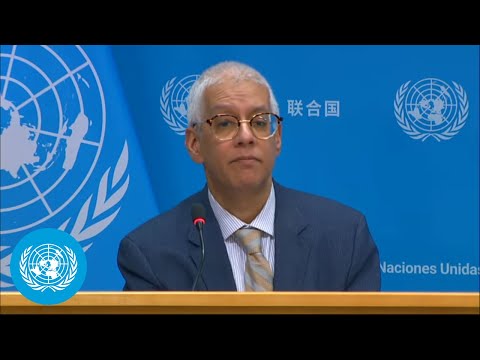
The United Nations spokesperson briefed reporters on multiple humanitarian fronts on issues including Gaza, the West Bank, Syria, eastern Democratic Republic of the Congo and Yemen, stressing that sustained ceasefires and funding are crucial to life-saving operations.
The UN spokesperson said the Office for the Coordination of Humanitarian Affairs and partners remain focused on keeping humanitarian corridors open in Gaza and sustaining a ceasefire to permit aid delivery. The World Food Programme (WFP) reports 25 WFP-supported bakeries operating across Gaza, a recently reopened bakery in Rafah, a reopened kitchen in Beit Lahiya able to produce about 20,000 meals per day, and a smaller kitchen in Rafah serving about 1,500 meals daily. The spokesperson said WFP and partners are expanding capacity in northern Gaza and are pre-positioning supplies to resume operations in Goma and North Kivu when security allows.
UN humanitarian officials gave displacement and casualty figures for parts of the West Bank and Gaza. The briefing reported 44 fatalities in northern West Bank operations since Jan. 21, and listed recent displacement estimates: about 19,000 displaced in Tulkarm, 3,000 in Tubas, and more than 17,000 in Jenin. The spokesperson said Israeli operations in Tubas have ended but that forces continued to operate in other West Bank areas, and that OCHA was receiving reports of casualties and thousands displaced in the north.
On Yemen, the under‑secretary‑general for humanitarian affairs and emergency relief coordinator, Tom Fletcher, told the Security Council that almost 20,000,000 Yemenis need assistance. The spokesperson reiterated calls for funds to restore UN operations to full capacity and urged the immediate, unconditional release of people arbitrarily detained by Houthi authorities.
UN humanitarian colleagues warned of a large funding shortfall for Syria. The briefing said humanitarian partners had received less than 10% of the $1,200,000,000 needed to assist some 6,700,000 Syrians through March and described large numbers displaced and winter needs in the northwest: nearly 2,000,000 displaced in the northwest, many in overcrowded or fragile sites, with continued distributions of heaters, winter clothing and mobile medical teams that have reached hundreds of thousands.
The WFP reported severe market disruptions in and around Goma, Democratic Republic of the Congo. A market assessment found nearly half of shops closed and sharp price increases compared with pre-crisis levels: maize flour up about 67%, salt about 43%, palm oil 45%, peanut oil 21% and rice 17%. The WFP said operations in Goma and North Kivu remain paused for security reasons but that staff are in place to resume when safe.
The spokesperson and humanitarian officials stressed that sustaining ceasefires and secure access, and closing funding gaps, are conditions for aid to reach affected populations. The briefing included operational details — bakery and kitchen counts, displacement estimates, and percent shortfalls — but officials repeatedly tied needs to access, funding and security constraints.
Looking ahead, the UN called for donor support to enable restoration of services and scaling up of distributions where security permits, and for respect for international humanitarian law to protect civilians.