Get Full Government Meeting Transcripts, Videos, & Alerts Forever!
Get email alerts on the Mental Health topic
No spam. Unsubscribe anytime.
Healthy Minds lays out multi-pronged plan on children’s services, crisis response and overdose prevention
Summary
Healthy Minds Policy Initiative briefed the committee on children's mental-health investments, crisis-response coordination (including COPES, 988 and mobile crisis teams) and overdose/methamphetamine strategies; presenters urged continued city engagement and highlighted federal grant-funded programs in Tulsa.
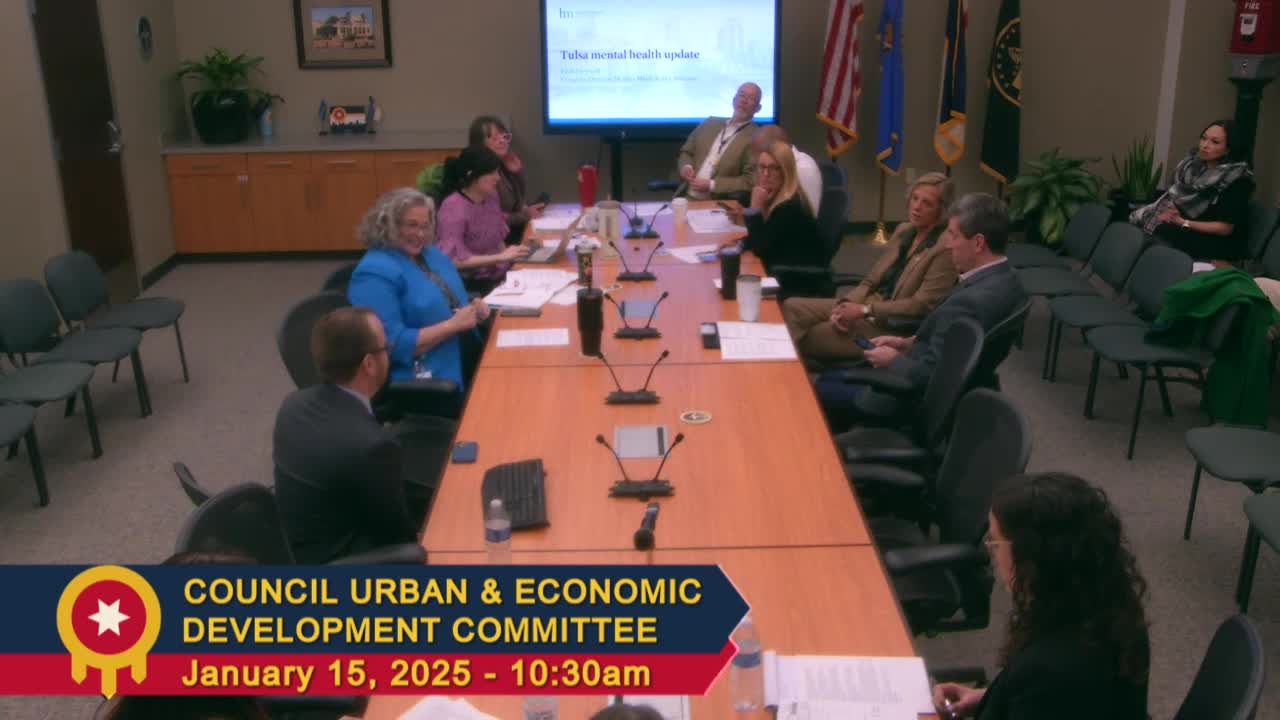
Healthy Minds Policy Initiative representatives gave a broad briefing on Tulsa’s mental-health landscape, focusing on three priority areas: children and youth services, crisis-response capacity, and overdose/methamphetamine prevention and harm reduction.
The presenter described statewide and local data showing unmet need: roughly one in four Oklahoma adults experiences mental illness and roughly half of adults with mental illness do not receive treatment, he said. For children, the presenter cited an increase in emergency-room visits for suicidal ideation and attempts and highlighted local data showing nearly 50% of middle- and high-school students reported sad or depressed feelings in 2021–22.
Speakers described recent local investments: an urgent recovery center for children established with ARPA funds and other partners that has diverted more than 1,000 children from emergency rooms; Project AWARE funds to expand school mental-health services (TPS Thrive); and a $4 million federal grant partnering the city with Healthy Minds for the Tulsa Children’s Mental Health Initiative. The presentation also covered crisis-system coordination: COPES, 988, mobile crisis teams and emerging dispatch integration with 911 to route an alternative response.
On substance use, presenters said methamphetamine and illicit opioids have driven rising overdose deaths and that Tulsa is pursuing a harm-reduction "0 Overdose" approach and expanded detox and bed capacity. Council members asked about workforce capacity, Medicaid reimbursement and sustainability; presenters said Oklahoma still faces clinical workforce shortages and urged the city to continue investments and coordination. Council members requested tours and ride-alongs with crisis responders and asked for ZIP-code data and additional reports.