Get Full Government Meeting Transcripts, Videos, & Alerts Forever!
Get email alerts on the Local Water Infrastructure topic
No spam. Unsubscribe anytime.
Committee approves $50 million-per-year infrastructure proposal to help small systems; SLIB staff outline workload and costs
Summary
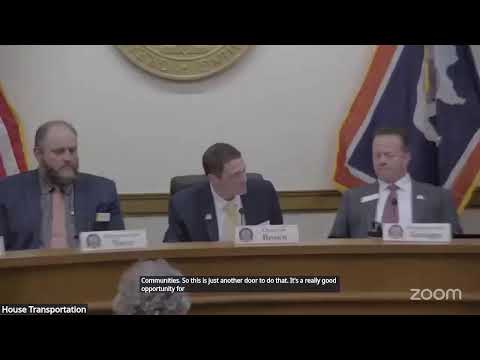
The House Transportation, Highways & Military Affairs Committee voted to advance House Bill 263, which would create a state program to fund planning, predevelopment and capital assistance for local water and wastewater systems.
The House Transportation, Highways & Military Affairs Committee voted to advance House Bill 263 on Wednesday, a bill that would authorize a state-funded program to assist local water and wastewater systems with planning, predevelopment and capital needs.
Representative Dan Harshman introduced the bill and told the committee it is designed to address aging water and wastewater infrastructure across Wyoming's roughly 300 systems. The bill would create a Local Water System Funding program administered by the State Loan and Investment Board (SLIB) and make up to $50 million per year available from investment income guaranteed by the Legislative Stabilization Reserve Account (LSRA) for eligible projects, predevelopment costs, planning and technical assistance, local matching, and costs related to joining regional systems.
Jason Crowder, interim director of the Office of State Lands and Investments, testified that SLIB already manages similar grants and loans but said the office would need additional staff to absorb the proposed work. Crowder told the committee SLIB manages more than $200 million in similar grant and loan programs and the fiscal note includes three new positions (salaries, benefits and equipment) totaling about $400,000 to administer the new program. Crowder also said the bill requires an audit and SLIB included an estimated audit cost of about $45,000 in its fiscal notes.
Beth Blackwell, SLIB's resident grant-and-loan expert, told the committee the program could help communities leverage federal Clean Water and Drinking Water State Revolving Fund (SRF) dollars and other federal funding, and that many Wyoming systems lack the scale and reserves to access SRF loans without assistance. Blackwell said the state has an average of about 219 users per water system and that many communities lack funded depreciation accounts, routine rate adjustments, or the managerial and technical capacity SRF programs expect. She recommended encouraging regionalization because larger systems can spread costs, maintain operators and sustain reserves.
Local officials and industry groups testified in support. Sabrina Kemper, Community Development Director for the City of Mills, described a local tank project whose original estimate of $531,000 grew to $1.8 million after delays and price escalation; the city used ARPA funds but still faced substantial unmet need. Tom Sarvey, city manager for Rawlins (transcript: Rollins), said his community's master plan identified roughly $50 million in infrastructure needs while the city's reserves held about $117,000.
Committee members discussed program design, prioritization factors and constitutional or practical constraints. The bill requires SLIB to consider at least population, ability to repay, existing consumer rates, and potential for regionalization when reviewing applications. Representative Harshman said the program is intended to help towns pay predevelopment, technical assistance and planning costs that are barriers to accessing SRF and other federal funding.
Roll-call procedure and outcome: The committee voted to advance HB 263 by recorded roll call; see "Actions" for the recorded vote and mover/second.
Ending: Supporters described the program as a way to invest state-generated income to help rural utilities modernize and to leverage federal funds; agency witnesses cautioned that interest-rate structure, eligibility rules and administrative capacity influence how much the program can be used in practice.