Get Full Government Meeting Transcripts, Videos, & Alerts Forever!
Get email alerts on the Education Funding topic
No spam. Unsubscribe anytime.
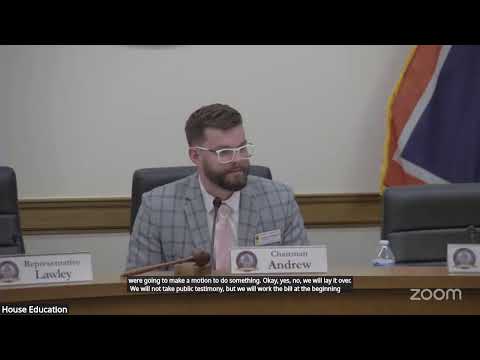
Senate File 162 debated; committee lays over bill to make teacher pay a categorical portion of block grant
Summary
Senate File 162 would split the teacher salary portion of the education block grant into its own categorical grant to prevent districts from reallocating teacher‑funding. Lawmakers and education stakeholders debated fiscal impacts, data availability and timing ahead of recalibration; the committee laid the bill over for further work.
Senator Tim Scott introduced Senate File 162, a proposal to make the portion of Wyoming’s education resource block grant earmarked for teachers and teacher benefits a separate categorical grant that school districts could add to but not reallocate out of. Senator Scott said the change is intended to protect funding for classroom teachers and address concerns raised during past recalibration work about "ghost teachers" and reallocation of model dollars.
"What this does ... is make the portion of the block grant that is for teachers and benefits for teachers a separate categorical grant within the block grant," Scott said. Under the bill districts could move other local block grant funds into the teacher category but could not move teacher funds out for non‑teacher uses.
Committee members and witnesses discussed technical and policy complications, especially the timing of the bill relative to an upcoming recalibration of the funding model. The bill’s Senate draft delayed the effective date until after recalibration; sponsors said that timing is intended to allow recalibration to account for the change.
The Department of Education said it had no formal position but urged removing benefits from the measure and limiting the categorical carve‑out to salaries, noting including benefits would be administratively burdensome and could complicate district reporting. Dickie Schaner for the State Superintendent recommended removing benefits from the bill’s restrictions.
Public testimony included the Wyoming Education Association, which opposed the measure. Tate Mullen, government relations director for the WEA, said the block grant is a funding mechanism, not a spending formula, and districts depend on flexibility within the block grant to respond to local salary levels that currently exceed the model’s baseline: "Without adopting a recalibration, this has necessitated districts to have the ability to fund what is needed within their specific districts," Mullen said. WEA testimony stressed that, in practice, districts shift resources within the block grant to attract and retain teachers and that locking funds prior to recalibration risks underfunding local needs.
Several finance and school‑management witnesses told the committee the state already collects detailed expenditure and employee data that could show how model dollars are deployed. Kirk Schmidt, a former K‑12 finance director, and Jed Ciccarelli, Laramie County School District 1 chief financial officer, pointed to existing department reports (the WDE 601/602/652 reporting structure and the CRU analysis) as sources for recalibration and oversight. Ciccarelli cautioned that making teacher dollars categorical would raise technical questions about reserves, audited statements and how districts that pay teachers above the model would account for the difference.
School governance groups including the Wyoming School Boards Association and the Wyoming Association of School Administrators urged against the bill, arguing that the block grant’s flexibility is intentional and that recalibration — not categorical carve‑outs — is the appropriate forum for correcting funding misalignments.
After roughly an hour of discussion and public comment, the committee agreed to lay the bill over for further work and scheduled extended consideration at a subsequent meeting. Committee members said they planned to continue working the bill so recalibration and ongoing court and study work can inform technical fixes.