Get Full Government Meeting Transcripts, Videos, & Alerts Forever!
Get email alerts on the Facilities Bond topic
No spam. Unsubscribe anytime.
Board advances community engagement as facilities team refines bond options; Siwanoy expansion, HVAC among top priorities
Summary
Board and staff discussed updated cost estimates, potential savings, community engagement steps and a decision-analysis framework for a proposed facilities bond that could include a Siwanoy elementary replacement/expansion and district HVAC work.
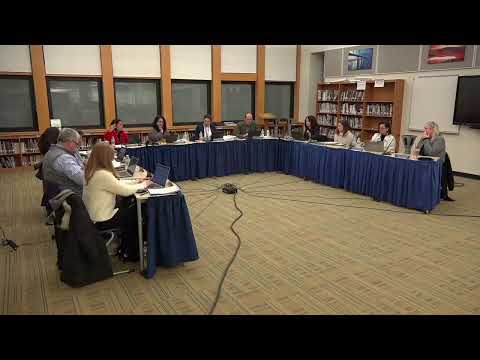
Pelham school leaders and board members on Jan. 22 detailed an evolving facilities and bond-planning process as architects refined options and the administration set community engagement milestones ahead of any vote.
Administrators and the architecture team reviewed updated cost comparisons for multiple options at Siwanoy Elementary School and at the high school, and they presented reductions in previously provided estimates after identifying duplicated work for HVAC and heating-system upgrades. The architects’ follow-up reduced an earlier, larger cost estimate for one Siwanoy option by roughly $7 million by avoiding duplicate hydronic/heating and air-conditioning line items; a revised Pelham Memorial High School air-conditioning proposal also showed approximately $6 million in overlapping-cost savings, administrators said.
Engagement and timeline The board approved a schedule of community engagement including three informational sessions in early February (in-person high school session Feb. 3, virtual Feb. 5, Siwanoy in-person Feb. 6 with a 6:30 p.m. building tour and 7 p.m. presentation), follow-up neighborhood mailings for directly impacted neighbors, a March World Cafe for deeper qualitative feedback, and a possible May bond vote if statutory notification timelines can be met. Administrators warned a March 26 approval date would leave little margin for required translations, legal review and bond-counsel signoffs; they proposed adding a contingency meeting on March 19 to provide the board additional time to finalize scope and ballot language.
Options and tradeoffs Architects returned with revised scenarios: (a) renovate and expand the existing Siwanoy footprint; (b) remove two wings and build a larger replacement that would preserve only a front entrance or facade, and (c) other permutations. Administrators said option C (larger replacement) now approaches cost parity with option B once duplicated infrastructure costs are removed, and that option C would yield more long-term reduction in deferred maintenance because much of the facility would be newly constructed. Board members and neighbors raised design, preservation and outdoor-space concerns — particularly the effect on playgrounds and programs that use campus outdoor space during afterschool hours.
Why it matters: Facilities decisions determine long-term safety, learning environments and tax impacts. Board members pressed for clarity about staging, the timing of tax impact relative to the district’s debt schedule, and how projects would minimize disruption to students and preserve community uses of the site.
Public comment Resident Adam Milkowitz, speaking during public comment, urged the board and architects to consider off-school-hour community uses of Siwanoy’s playground and outdoor areas: "Please come to the community. Please ask us how it fits into how the community actually works," he said, warning that loss of outdoor space could disrupt local afterschool programs that serve multiple elementary schools.
Next steps and board directions - Architects will return to a Feb. 4 work session with updated renderings and program clarifications (classroom counts, locations for art, music, library and special-education classrooms and associated restrooms). - Finance staff and the district’s financial advisor will prepare indicative tax-impact scenarios tied to different project packages so the community can see likely homeowner impacts and timing (net tax-neutral windows were discussed as possible offsets when existing debt drops off in coming years). - Administration will distribute a planned community survey and catalogue questions raised at February sessions; the board set a March 11 World Cafe to solicit structured qualitative feedback.
Ending: The board scheduled additional meetings and tours to weigh design tradeoffs, tax impacts and timing; administrators said a final recommendation will depend on community feedback, refined cost estimates and the schedule for legal bond notifications.