Get Full Government Meeting Transcripts, Videos, & Alerts Forever!
Get email alerts on the School Calendar topic
No spam. Unsubscribe anytime.
Pelham board reviews draft 2025–26 school calendar; district proposes Diwali observance
Summary
Superintendent presented a recommended 2025–26 school calendar that largely mirrors the current year but proposes recognizing Diwali on a floating October date, preserves two superintendent conference days in August, and keeps parent-teacher conferences split between elementary and secondary.
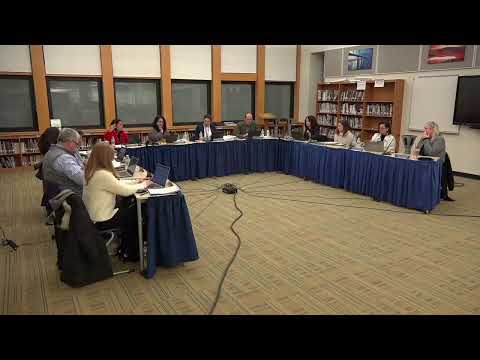
The Pelham Board of Education on Jan. 22 reviewed a draft 2025–26 school calendar that administrators described as largely consistent with the current year’s schedule but with several specific adjustments intended to increase cultural responsiveness and preserve instructional time.
Superintendent Dr. Champ told the board the draft follows the district’s long-standing contract provisions for teacher start dates (teachers return after Labor Day unless their membership votes otherwise) and for compensatory days related to snow days. The draft proposes the first day of classes for students the Tuesday after Labor Day, with a half day for grades K–6, two superintendent conference days in August, preplanned PLC early-release days, and a spring parent-teacher conference structure the district piloted this year.
Diwali and cultural responsiveness Administrators proposed adding a day off for Diwali on Oct. 20, 2025, in response to parent-community requests and cultural-competence committee recommendations. Dr. Champ said the move was possible this year because Lunar New Year will fall on a nonduty day and because the district found a date with some scheduling flexibility; she cautioned it may not be possible to guarantee Diwali as a year-to-year holiday if calendar constraints reappear. Board members asked administration to consider a longer-term approach to rotating culturally significant days when feasible.
Parent-teacher conference timing and instructional time The superintendent reiterated reasons for maintaining split conference windows — early November for elementary (trimester-based) and December for secondary — to let teachers share curriculum-based information at times that are not tied to report cards. The draft also preserves the district’s approach of returning to predominantly in-person conferences and continuing embedded professional development time for staff.
Why it matters: The calendar shapes instructional time, contracting, childcare and community programming. Board members asked administrators to solicit community feedback via the board wrap-up survey planned for February and to return a final calendar for approval at the next meeting.
Quotes "I am, suggesting that we consider putting that on October 20, as recognition for Diwali," Dr. Champ said when discussing cultural responsiveness and calendar choices.
"We did that to better align with the conversations that teachers wanted to have with parents about this child's academic progress," Dr. Champ said describing the calendar structure for elementary conferences.
Next steps and implementation The administration will circulate the calendar draft for community feedback, collect survey responses, and present a revised draft for board action at a subsequent meeting. The superintendent noted that the teacher contract includes a mechanism for a membership vote if administration requests earlier return dates for teachers in a future year.
Ending: Board members asked administration to highlight potential childcare impacts of half-day conference releases and to coordinate with Recreation and PTA groups to support families on those days.