Get Full Government Meeting Transcripts, Videos, & Alerts Forever!
Get email alerts on the Early Numeracy topic
No spam. Unsubscribe anytime.
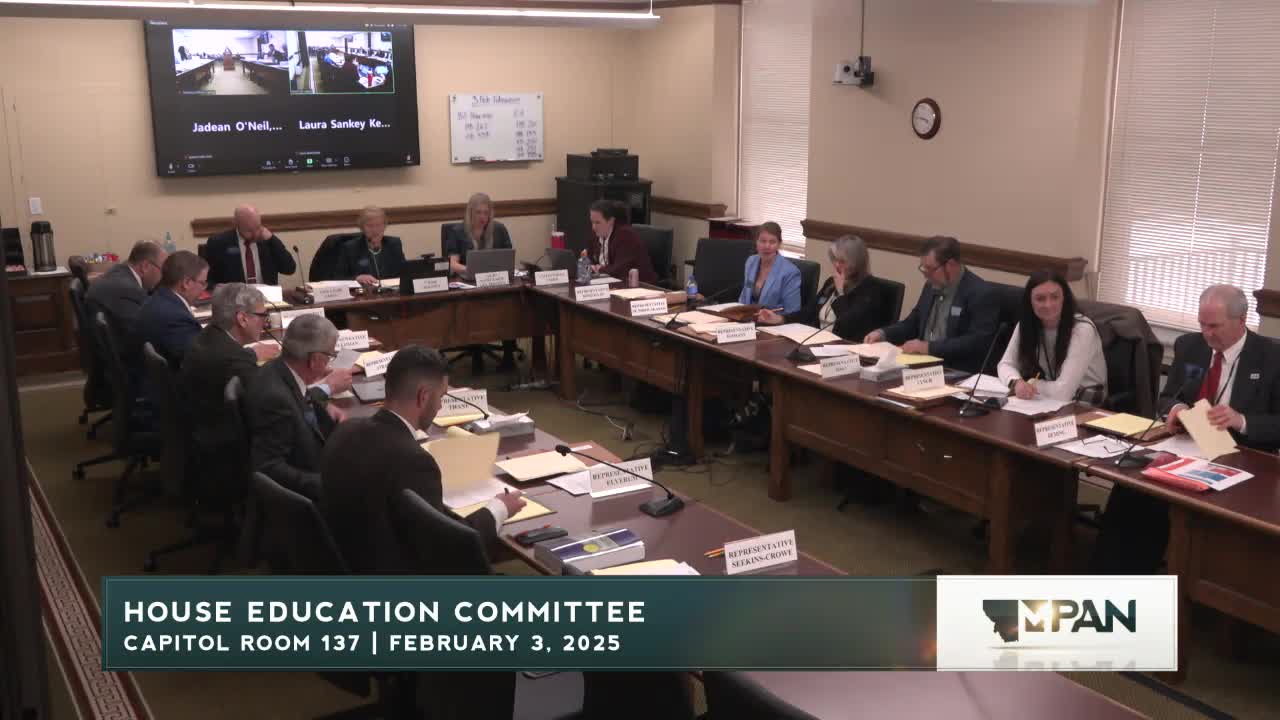
House Education Committee hears expansion to early intervention law to add numeracy
Summary
Vice Chair Melissa Romano sponsored House Bill 338 to expand the state's early targeted literacy program to include early numeracy interventions; proponents said early math skills predict later outcomes and asked for voluntary participation and assessment flexibility.
Vice Chair Melissa Romano opened the hearing on House Bill 338 by saying the measure would expand Montana’s early-targeted literacy program to add early numeracy intervention, give schools flexibility in assessment timing and methods, and preserve voluntary participation. "This bill to me represents a crucial step forward in strengthening educational outcomes for Montana's children by expanding early intervention programs for numeracy," Romano said.
Romano told committee members the bill inserts references to math and numeracy beginning on page 20 of the draft, expands assessment windows and allows schools to choose developmentally appropriate, cost‑effective, research‑based methods selected by the Board of Public Education. Participation in the program would remain voluntary, Romano said, so parents would be able to opt in or out.
Proponents included early-childhood and education organizations and practitioners who testified that early numeracy predicts later academic success and warrants investment. Caitlin Jensen of 0 to 5 Montana said brain development in the first five years makes early numeracy critical, and cited a poll her group conducted showing public support for early intervention funding. Kim Popham (MFPE), Larry Crowder (Montana Rural Education Association and CAMPS), Taylor Floming (school psychologist), Polly Becker (Montana Chapter, American Academy of Pediatrics) and Susie Hedlund (Office of Public Instruction superintendent) all testified in support and emphasized implementation supports.
Taylor Floming described a case from his practice: a student who received early reading intervention progressed to grade level in reading but was not similarly identified for math intervention and later fell further behind in mathematics. “The intensive early intervention worked” in reading, Floming said, while the student’s math gap widened because early numeracy was not addressed.
Board of Public Education Executive Director McCall Flynn and OPI Superintendent Susie Hedlund appeared as informational witnesses. Flynn said the board would likely reconvene its early literacy advisory group and consider additional members to address numeracy. Hedlund said OPI supports including numeracy, described existing screeners and data-collection requirements, and noted that districts participating in existing literacy grants may already have pathways to adopt evidence‑based curricula and interventions. Committee members asked whether screeners and implementation practices exist for early numeracy; witnesses said validated options exist but are fewer than for literacy and that the state would need to identify appropriate tools.
No committee vote on HB 338 was recorded in the transcript; the sponsor closed the hearing and the committee recessed for caucus before beginning executive action on other bills.