Get Full Government Meeting Transcripts, Videos, & Alerts Forever!
Get email alerts on the Zoning Congregate Living topic
No spam. Unsubscribe anytime.
Fairfax County staff propose zoning changes to expand and clarify rules for congregate living facilities
Summary
Staff presented a draft zoning-ordinance amendment that would broaden where congregate living facilities can locate, clarify the definition of those facilities to include people experiencing homelessness and certified recovery residences, and add development and submission standards intended to protect surrounding land uses.
Fairfax County staff on Tuesday presented a draft amendment to the county zoning ordinance that would expand where congregate living facilities can locate, clarify which populations those facilities serve and add development and submission standards to guide review.
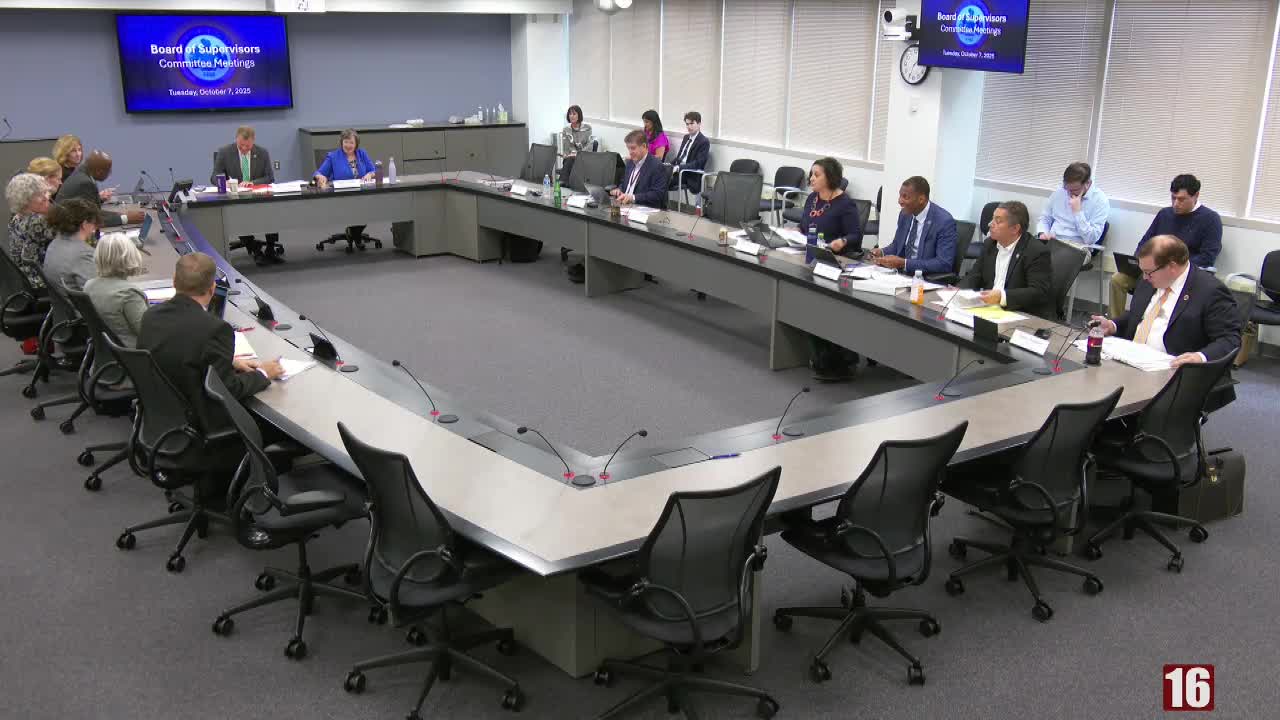
Staff member Janine Kato, of the Zoning Administration Division, told the Land Use Policy Committee the proposal "revises and clarifies the definition" of congregate living facilities to explicitly include "persons experiencing homelessness, survivors of violence or abuse, youth in crisis, families in medical crises," and certified recovery residences with more than eight residents. "By identifying these populations, the ordinance will better reflect the facilities already operating and it also ensures clarity for applicants and for staff and distinguishes this use from others," Kato said.
The draft would retain special-exception review for congregate living facilities but add commercial districts C5 through C8 and industrial districts I2 through I4 to the list of locations where a facility could be considered; staff said it does not propose expanding permissions into heavier industrial I5 and I6 districts. Under current rules, congregate living facilities are permitted by special exception in conventional residential districts (except rural agricultural) and in commercial C1–C4 districts; staff said six special exceptions for congregate living uses have been approved since the use was first added in 2003.
To maintain compatibility with surrounding areas, staff proposed several development standards. Facilities in commercial and industrial districts would be reviewed for proximity to public transit, community services and employment areas so residents could access supports and opportunities. A separate standard would bar congregate living facilities from three areas designated as industrial on the comprehensive plan's concept-for-future-development map; staff said that preserves industrial land while allowing facilities in mixed-use center areas. Staff also proposed a requirement for on-site staff and supportive services, except for certified recovery residences, and a new submission requirement that would have applicants describe the population served, the number of residents and staff, services offered, expected length of stay, and licensing and intake criteria.
Committee members asked questions about enforcement, different facility types and clustering. Supervisor Jimenez asked, "So once facilities are permitted, what ongoing oversight or compliance monitoring will the county require, and what enforcement tools are there in place?" Kato and other staff replied that oversight would generally follow other land-use approvals — special-exception conditions, building inspections and complaint-based code enforcement — and that state licensing for some facilities could provide an additional avenue for oversight.
Supervisor Alcorn sought clarification about how the county treats public shelters and permanent supportive housing. Staff said many county-operated homeless shelters are treated as a public use and are permitted in zoning districts subject to bulk regulations; a private shelter could instead apply under congregate living provisions. On permanent supportive housing, staff said that the program is often a service model rather than a single facility type and "it could" or "could not" meet the congregate living definition depending on the physical form and service arrangements.
Supervisor Stork asked whether the county can limit clustering of such facilities. Staff said the zoning ordinance does not currently set a minimum distance between congregate living facilities and that limiting clustering is generally addressed case by case through special-exception conditions; staff cited a past McLean-area situation where several group residential properties raised similar concerns.
Supervisor Herrity questioned the proposed proximity-to-transit standard, noting existing facilities in his district sit on large lots away from transit. Staff said the transit/community-services criterion is meant to guide siting when expanding permissions into commercial and industrial districts, and that the board would review each special exception and could modify standards where warranted.
Staff outlined next steps for outreach and hearings: present to the Planning Commission's land-use process review committee on October 23, continue outreach through December, seek board authorization in January, and — if authorized — staff expects a Planning Commission public hearing in February followed by a board public hearing in March.
The committee did not take a formal vote on the draft during the meeting; staff said the text is intended to gather further input before formal public hearings.
The proposal revises a use first added to the zoning ordinance in 2003, narrows where congregate living facilities would be excluded (three industrial areas on the comprehensive plan map), and proposes new review criteria and submission materials to inform special-exception decisions. Committee members generally expressed support for updating the ordinance but asked staff to clarify public-facing materials and outreach to service providers so applicants and neighbors can better understand distinctions among group households, group residential facilities, assisted living, dormitories and congregate living facilities.
For now, the amendment remains a staff draft undergoing outreach and refinement before potential Planning Commission and board hearings in early 2026.