Get Full Government Meeting Transcripts, Videos, & Alerts Forever!
Get email alerts on the Firearms Policy topic
No spam. Unsubscribe anytime.
Bill would let citizens seek punitive damages over local gun restrictions, sponsor says
Summary
At a first hearing, Senator Johnson told the Senate Local Government Committee that Senate Bill 278 would allow citizens to collect punitive damages from municipalities that enact unconstitutional gun-control ordinances; sponsors and committee members discussed recent Columbus ordinances and data on gun deaths but no vote was taken.
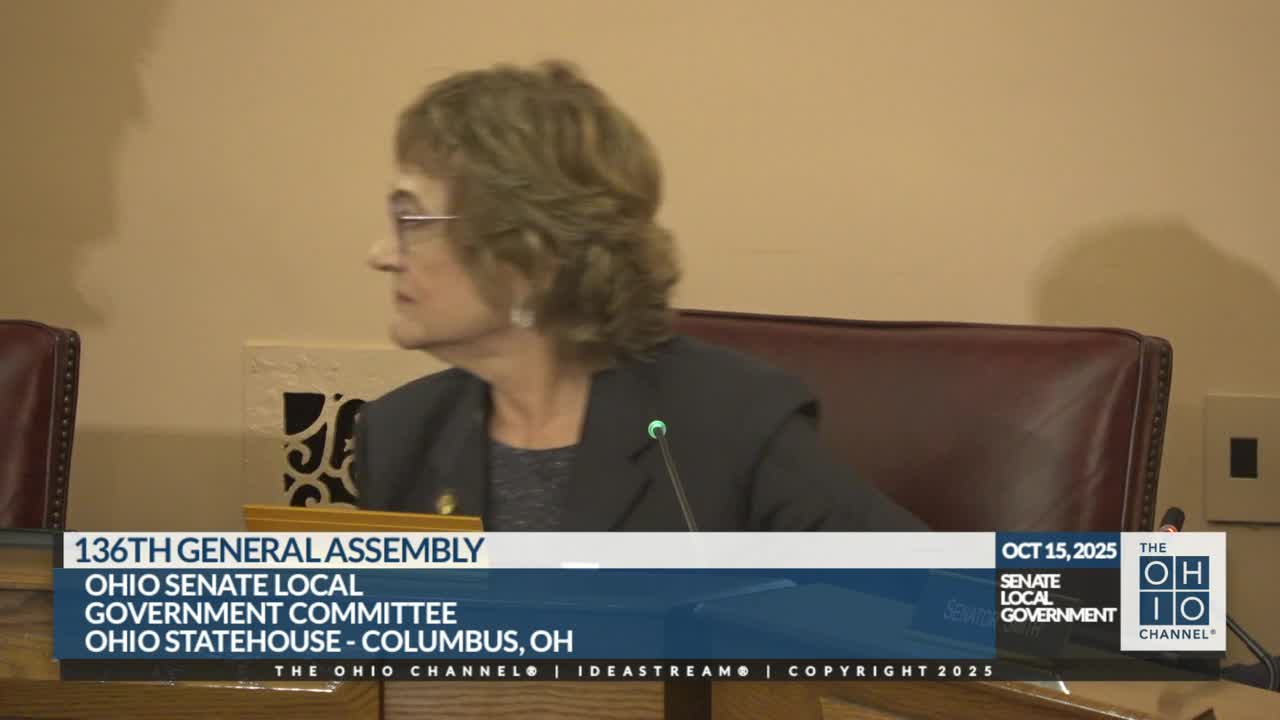
Senate Bill 278 would authorize punitive damages against municipalities that enact what the bill describes as unconstitutional gun-control measures, sponsor Senator Johnson told the Senate Local Government Committee during a first hearing. The committee heard sponsor testimony but took no final action.
Senator Johnson told the committee: "This legislation will allow citizens to see punitive damages against municipalities who enact unconstitutional gun control." He said the bill is intended to reduce the financial barrier for citizens who challenge local restrictions, arguing municipalities have "deep pockets and lots of lawyers and the average citizen does not." He added, "I believe strongly in home rule" but said the state must draw a line where local laws conflict with the constitution.
The bill and the discussion cited two Columbus ordinances that are currently the subject of litigation, which Johnson identified as "3176-2022" and "0680-2023," and referenced Ohio's firearms uniformity law and prior state court rulings. "There's currently nothing preventing these municipalities from continually running this gauntlet and restricting the right of our citizens," Johnson said, and he described the proposal as a way to "impose potential financial repercussions for these cities who so frivolously trample on the rights of their residents."
Committee members asked questions about the factual basis and potential consequences of the bill. Senator Smith asked whether any recent cases inspired the proposal and whether litigation is ongoing involving the Columbus ordinances; Johnson replied, "we'll be happy to do a scour and take a look and get it back to the chairwoman." Smith later raised a separate data question and said: "the numbers have gone up about 50% from when from 2006 to 2024," referring to total gun deaths over the 15 years since a cited statutory section was enacted. Johnson responded that, looking at Centers for Disease Control and Prevention figures, "since 2021, it has been falling, the the total number," and offered to provide the CDC data to the committee.
Other committee members framed the bill as clarifying preemption and addressing a patchwork of local ordinances. Senator Taylor described personal travel concerns about differing state lines and said the bill would reduce uncertainty for law-abiding citizens traveling within Ohio. Vice Chair Senator Theresa Gavarone asked whether the bill would be triggered by enactment or enforcement of a local law; Johnson said the bill is intended to give citizens a tool to contest local restrictions and to create a deterrent effect by exposing municipalities to financial risk.
The committee held a question-and-answer period but did not take a vote on Senate Bill 278 at the hearing. Chair Senator Sandra O'Brien closed the first hearing on the measure and the committee moved on to the next agenda item.
Ending: The committee conducted only a first hearing on Senate Bill 278; there was no committee vote or formal action on the bill. Senator Johnson said he would provide additional materials, including CDC numbers, if requested.