Get Full Government Meeting Transcripts, Videos, & Alerts Forever!
Get email alerts on the Nuisance Abatement topic
No spam. Unsubscribe anytime.
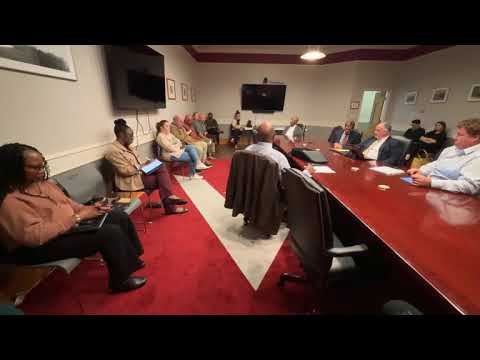
Council members question low bids for grass-cutting, discuss liens and funding limits
Summary
At a work session, council members reviewed bids for grass cutting and lot cleanup on 47 properties, raising concerns about low per-lot bids, recurrence of abated properties, state-owned parcels and how abatement costs become liens against property titles.
Council members reviewed bids to abate nuisance vegetation and debris on 47 lots put out for bid, raising concerns about unusually low per-lot prices and the city’s ability to maintain repeatedly abated properties.
Councilmember A said he had inspected “a dozen of them” and questioned the low bids, asking, “I don’t see how someone’s cleaning them up for $250 or $200.” Mister Brown, a city staff member involved in code enforcement, said the work is performed through a competitive bid process and that unit prices often fall when a contractor bundles multiple properties. Brown said “the burnout structures… are being done safe structures” and that fire damage can lower cleanup time and cost because “there’s not as much to clean up during process.”
Council members also discussed the recurring nature of some properties on the abatement list. Councilmember B noted the city had previously accumulated roughly 600 properties on an abatement list and said the city does not have budget capacity to maintain that many privately owned lots. Brown explained how abatement costs are handled: funds used to abate a property are placed as liens against the land, and anyone who redeems a liened property must satisfy those liens before taking title.
Councilmember A suggested creating a dedicated pool of funds and bidding work to small local businesses, provided contractors meet bonding and insurance requirements, as a way to support local business while addressing neighborhood concerns about rodents and safety near unmaintained lots. Brown and other staff discussed that demolition or teardown decisions depend on severity and safety risk, and that not all properties require demolition.
No formal motions or votes were recorded in the transcript for this agenda item.