Get Full Government Meeting Transcripts, Videos, & Alerts Forever!
Get email alerts on the Pesticide Regulation topic
No spam. Unsubscribe anytime.
Committee restores supervised-use rules for restricted pesticides in House Bill 10 amendment
Summary
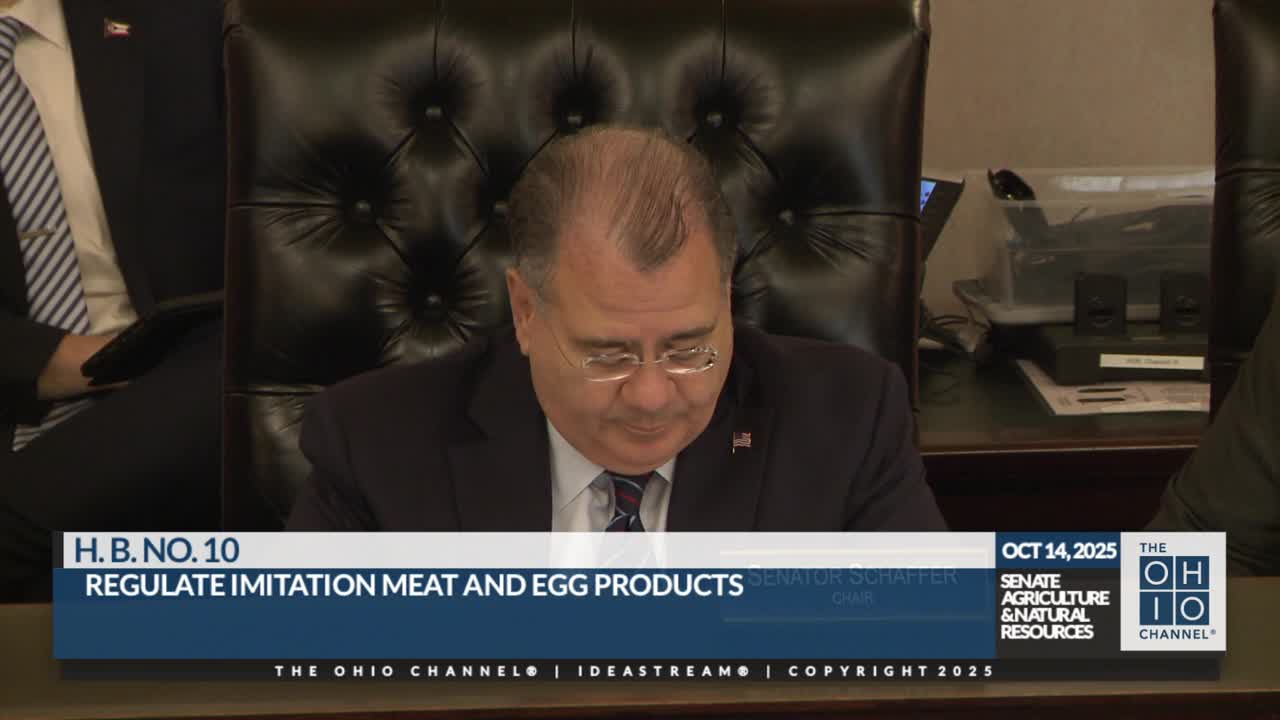
The Senate Agriculture and Natural Resources Committee accepted an amendment to House Bill 10 that reinstates supervised application rules for restricted-use pesticides, requires training standards set by the director of agriculture, and expands the statutory definition of "immediate family."
The Senate Agriculture and Natural Resources Committee accepted an amendment to House Bill 10 that restores prior rules allowing trained service personnel and immediate family members to apply restricted-use pesticides under the direct supervision of a licensed applicator, with training required as prescribed by the director of agriculture.
The change, offered in amendment AM 130-67-98 and explained to the committee by Vice Chair Kaler, reenacts provisions removed earlier by House Bill 96 and adds a training requirement: the amendment requires that trained service personnel and immediate family members be "trained in accordance with the standards prescribed by the director of agriculture." Tony Segers, representing Ohio Plant — an association of pesticide, landscape, agriculture, nursery and turf companies — told the committee the amendment "puts the law back the way it was, and it is in compliance with federal law." He said the amendment restores supervisors’ ability to allow trained but nonlicensed workers to perform pre-application and related tasks without each person obtaining a full applicator license.
The amendment also clarifies that "use" of a pesticide includes supervising its use by a noncertified applicator and defines "immediate family" in detail; the clause lists spouse, parents and stepparents, foster parents, parents-in-law, children and stepchildren, foster children, sons- and daughters-in-law, grandparents and grandchildren, siblings and siblings-in-law, aunts, uncles, nieces, nephews, and first cousins.
Segers said the changes mirror requirements under the Federal Insecticide, Fungicide, and Rodenticide Act (FIFRA) and related federal rule changes the U.S. Environmental Protection Agency issued starting in 2017, which the state had to implement. He said the removal of supervised-use language in prior state budget-related legislation would have required many employers to have more employees obtain individual applicator licenses, increasing costs and operational burden. "There is increased training for trained service personnel… and that's what the amendment does talk about, that they should be trained in accordance with the director's prescribed rules," Segers said.
Ranking Member Hicks Hudson questioned the scope of the amendment's family definition, calling it broader than traditional definitions of "immediate family." Kaler and Segers responded that the language mirrors the federal regulation, which expands the list beyond the narrower definitions some members expected.
Vice Chair Kaler moved to accept AM 130-67-98. With no objections, the committee accepted the amendment.
Why it matters: the amendment affects who may legally handle and perform pesticide-related activities in Ohio without obtaining a separate applicator license, while placing a training requirement on those supervised personnel and clarifying the legal scope of "use." Supporters said the change restores longstanding practice while aligning Ohio law with federal requirements.
The committee later accepted a second, separate amendment to the same bill (see related article on food labeling and procurement). The hearing on the substitute amended House Bill 10 then proceeded to public testimony and was recorded as the bill's third hearing.