Get Full Government Meeting Transcripts, Videos, & Alerts Forever!
Get email alerts on the Data Practices Fee topic
No spam. Unsubscribe anytime.
Committee hears bill to cut Minnesota Data Practices Act filing fee from $1,000 to $200; laid over
Summary
The House Judiciary Finance and Civil Law Committee heard testimony on House File 414, which would reduce the filing fee for complaints under the Minnesota Data Practices Act from $1,000 to $200. Lawmakers asked about fiscal impacts and how the Office of Administrative Hearings handles costs and refunds. The bill was laid over for later action.
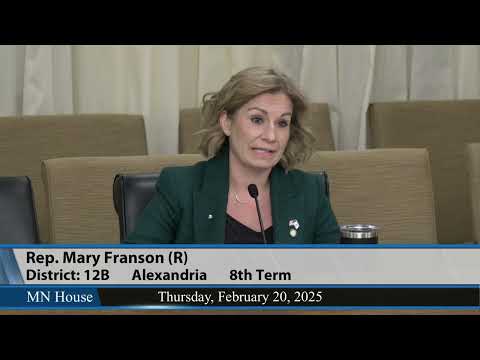
Representative Ruth Franson, author of House File 414, told the Minnesota House Judiciary Finance and Civil Law Committee on Feb. 20 that the bill would lower the filing fee for complaints under the Minnesota Data Practices Act from $1,000 to $200 to reduce barriers for lower-income Minnesotans.
"By reducing the fee from $1,000 to $200 we are ensuring the right to file a complaint is available to everyone," Representative Franson said. She argued the current fee creates "an unnecessary barrier to seeking justice" and that aligning this fee with other rates used by the Office of Administrative Hearings would make the process more accessible.
The bill’s supporters and several committee members said they agree with the aim but pressed for more detail on the mechanics and fiscal effects. Representative Heather Finke, citing her background in journalism, said the $1,000 charge "does seem to me to be wildly, exorbitant," and asked for information comparing the filing fee to the actual agency cost of complying with data requests.
Nonpartisan staff member Nathan Hopkins told the committee that a comparable initial civil filing in Minnesota district court is typically $285, and he described how the Office of Administrative Hearings (OAH) applies refunds. "If the complainant substantially prevails, they're entitled to a full refund of the fee less $50," Hopkins said. If the complainant does not substantially prevail, the refund may be reduced by the costs incurred by OAH; in some cases a complainant could receive no refund.
Committee members also discussed the role of bonds mentioned in the statute and how bond costs would vary in the private market. Representative Tina Liebling raised concerns about the statutory labeling and purpose of the $1,000 amount, calling it more of a deposit or escrow to guarantee payment of costs than a traditional fee.
A preliminary fiscal review cited by a committee staffer estimated an annual revenue reduction of about $5,000 to the fund that receives the filing fees; the Office of Administrative Hearings currently operates with a general appropriation and supplemental transfers to cover shortfalls in its operating fund. Committee members requested a formal fiscal note from OAH before further action.
After questions and discussion, the committee laid the bill over for possible amendment and further analysis.
Votes at the committee were procedural; the bill was laid over and no final committee vote on passage was recorded.
Ending: The committee asked the bill sponsor to pursue a fiscal note and other technical clarifications. The author and members said they are open to amendments that clarify how bond mechanisms and refunds operate and to reviewing OAH cost estimates before advancing the legislation.