Get Full Government Meeting Transcripts, Videos, & Alerts Forever!
Get email alerts on the Environmental Remediation topic
No spam. Unsubscribe anytime.
Aransas Pass council tables remediation decision for harbor-site contamination, asks staff for excavation cost estimate
Summary
City staff presented options to address soil and groundwater contamination at the harbor site; council directed staff to obtain a price for a six-foot excavation and tabled formal action while it gathers more information and confirms state and GLO preferences.
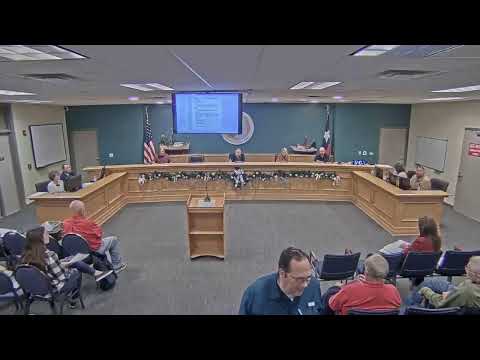
The Aransas Pass City Council on Dec. 2 heard a staff presentation on remediation options for the Coastline Resource site and voted to table a final decision while staff obtains a price estimate for excavation.
Consultant Amy Heseltine said the response action plan developed under a professional services agreement recommends two approaches for soil and separate measures for groundwater. "For groundwater to establish a plume management zone and for soil to put impervious cover over that," Heseltine told the council, describing the option the plan used as its baseline.
The recommendation presented to the council identified two soil options: an engineered impervious cover (for example, a two‑foot clay cap or a paved parking surface) that would remain in place and restrict future uses, or full excavation and off‑site disposal of contaminated soil. Heseltine said excavation would provide a "clean closure" but is considerably more expensive than capping.
Council members and staff debated costs, construction implications and long‑term restrictions. A staff member estimated the clay cap or surface cap option would require two feet of cover, while excavation would likely require removing about six feet of material from roughly a 90‑by‑90‑foot area and hauling it to an approved disposal facility. The consultant cautioned that confirmation sampling after any excavation could show contamination extends deeper or wider, increasing cost.
On groundwater, Heseltine said the plan uses a plume management zone with monitored natural attenuation—continued monitoring while contaminants naturally diminish—consistent with the application developed for the Texas Commission on Environmental Quality (TCEQ). She said TCEQ would likely issue a conditional certificate for the plume management approach, but staff must confirm whether the Texas General Land Office (GLO), a potential grant or permitting partner, would accept a conditional certificate or prefer full removal.
Public works staff told the council they can solicit a price from a disposal firm such as US Ecology and can provide an excavation estimate by the next council meeting. Councilmember discussion repeatedly returned to balancing cost, schedule and the harbor development plan: a capped area could constrain future development while excavation could allow unrestricted use if testing shows clean fill.
After discussion, the council voted to table the remediation options and directed staff to obtain a cost estimate to excavate and dispose of the material (the six‑foot excavation scenario discussed) and to follow up with the GLO about its preference. The motion to table carried by voice vote.
Council members and staff said they will return with the excavation cost estimate and additional information about regulatory acceptance before asking the council to select a remediation option.