Get Full Government Meeting Transcripts, Videos, & Alerts Forever!
Get email alerts on the Municipal Utility Liens topic
No spam. Unsubscribe anytime.
Committee reviews substitute to Senate Bill 118 limiting municipal utility lien actions; no committee vote
Summary
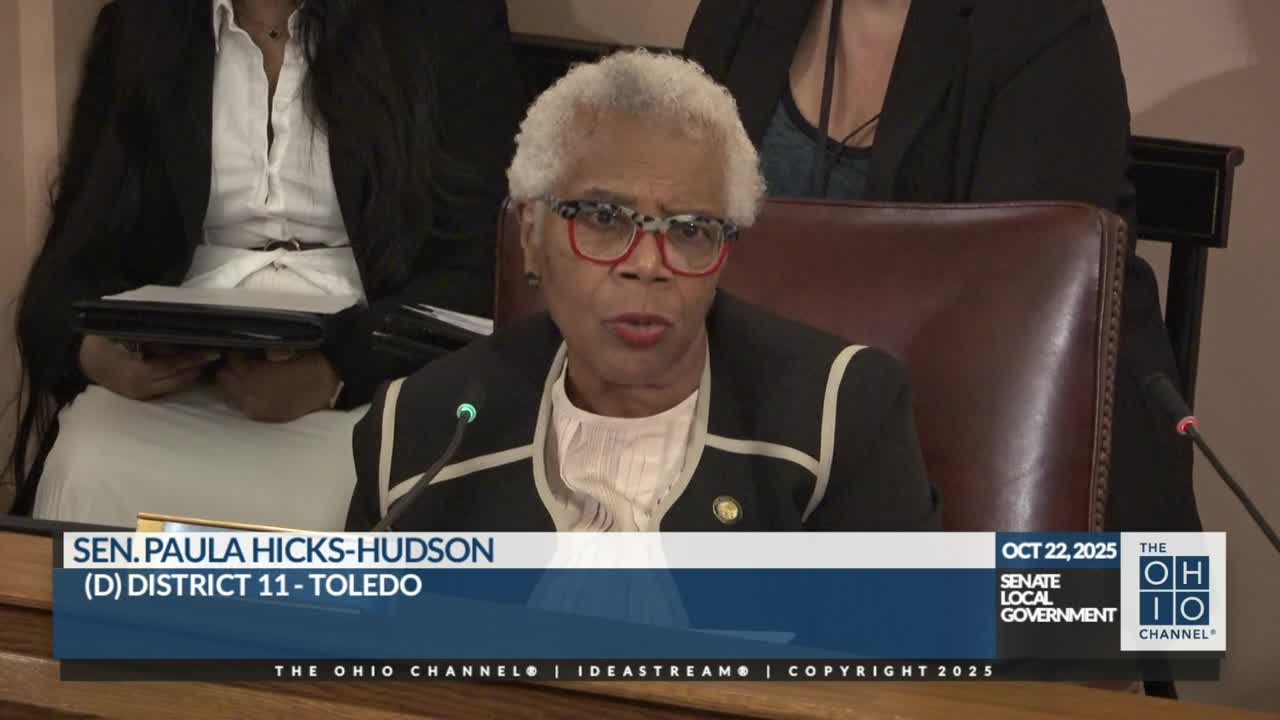
At a fourth hearing on Senate Bill 118, a committee member moved to amend the working document with substitute bill 0689-1. Committee members discussed changes that narrow municipal authority to file liens or disconnect service for charges tied to a former occupant; the bill was not marked for a committee vote and was not reported out.
The Senate Local Government Committee held a fourth hearing on Senate Bill 118 and considered substitute bill 0689-1, but the measure was not placed on the committee's agenda for a vote.
Vice Chair Gavarone moved to amend the working document with substitute bill 0689-1 and then explained the principal changes contained in the subbill. The committee did not record a formal vote on the substitute during this meeting, and the chair said the bill would not be reported out of committee that day.
The substitute as explained to the committee makes several substantive changes to municipal authority over utility billing and liens. According to the explanation offered on the record, the subbill: - Removes a previously used rebuttable-presumption framework and generally simplifies the prohibition on municipalities filing liens or bringing actions based on charges attributed to a former occupant; - Permits a municipal corporation to bring an action or file a lien only for amounts the current tenant or landlord directly benefited from the service provided to the former occupant (rather than tying recovery to a termination amount); - Prohibits municipalities from disconnecting or refusing to provide service to the owner or tenant of property because of charges owed by a former occupant; - Permits municipalities to adopt ordinances allowing collection of a security deposit from a tenant who fails to pay for municipal utility service; - Permits municipalities to disconnect service to a tenant of a property after 30 days of nonpayment; - Prohibits local governments and landlords from contractually waiving the bill-provisions (i.e., prevents private contract terms from overriding the statutory billing rules); - Permits landlords to pursue eviction proceedings against tenants who fail to pay municipal water, sewer, or utility charges; and - Removes a municipal lien-appeal process and associated rebuttal language, and removes an “improper billing” framework that had been in earlier drafts.
Committee members were offered the opportunity to ask questions or object to adopting the substitute as the working document; the hearing concluded without a recorded committee vote. The chair stated the substitute had been placed in front of members and closed the fourth testimony for the bill.
Because the bill was not marked for a vote, committee staff indicated it would not be reported out of committee that day. No formal roll-call vote or recorded tally on the substitute appeared in the hearing record.