Get Full Government Meeting Transcripts, Videos, & Alerts Forever!
Get email alerts on the Medical Transport topic
No spam. Unsubscribe anytime.
Bill would let dedicated organ‑recovery vehicles use lights and sirens in limited circumstances
Summary
Sponsors told the Transportation Committee that H.B. 367 would authorize flashing lights and sirens on dedicated organ recovery vehicles for time‑sensitive deliveries; supporters said Ohio is currently the only state that does not permit the practice and that the change would be budget‑neutral.
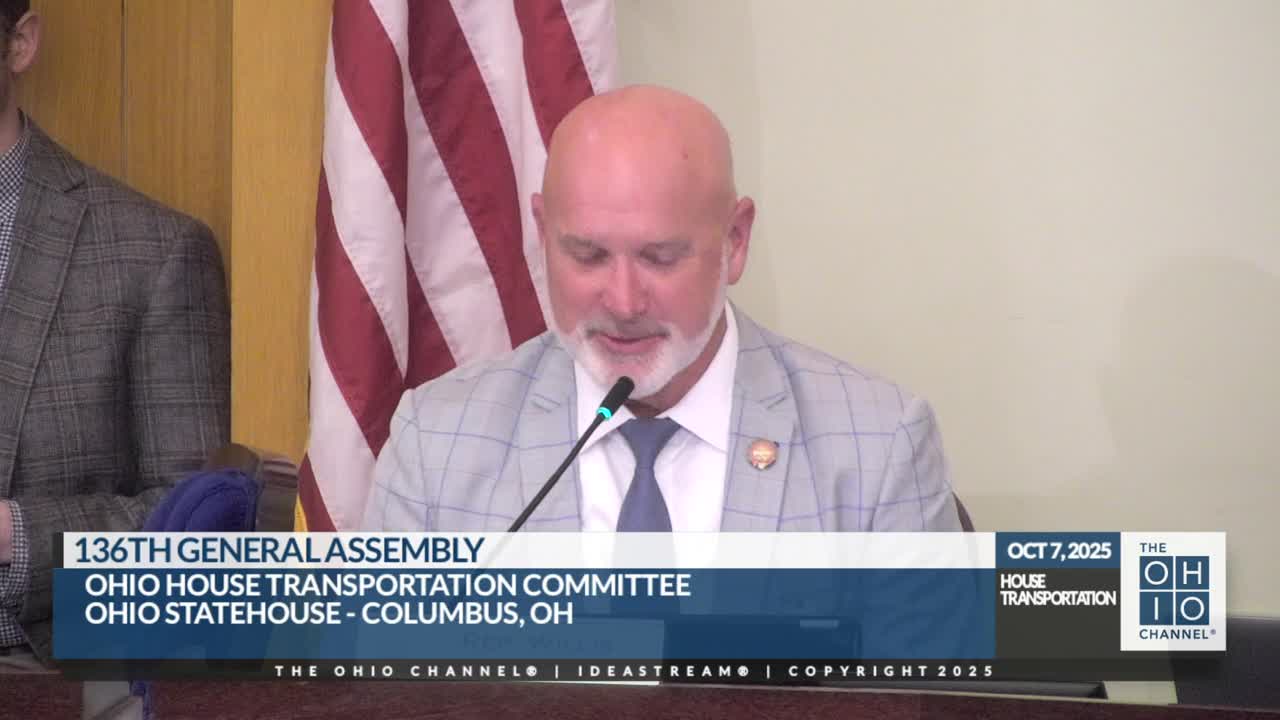
Representatives Joe Miller and Vice Chair Daniels presented sponsor testimony on Oct. 7 for House Bill 367, which would authorize the limited use of lights and sirens on dedicated organ‑recovery vehicles (DORVs) when medically necessary to expedite time‑sensitive organ transport.
Sponsors said delays in transporting procured organs can fatally reduce viability and that the change is intended to protect both the organ and the medical personnel transporting it. Under the bill, only vehicles that meet specified criteria — contracted with an organ procurement organization, clearly marked as an “organ recovery vehicle,” operated by a trained and qualified driver, and dedicated to organ transport — would be permitted to use lights and sirens. Sponsors emphasized the authority would be narrowly applied, for example when transporting hearts or lungs where timing is critical; routine lab samples and non‑time‑sensitive items would not warrant lights and sirens.
Vice Chair Daniels said organizations such as the Nationwide Organ Recovery Transport Alliance (NORA) operate similar vehicles in 31 states, and the bill would align Ohio with common practice elsewhere. Miller and Daniels said the change would be budget‑neutral and that drivers would receive training and direction to activate lights and sirens only when necessary to ensure timely delivery.
Committee members asked about potential downstream choices — for example, whether drone delivery or other new technologies would be subject to similar rules — and sponsors said the bill focuses on ground vehicles and the limited use of visual and audible signals. The bill had its first hearing; no committee vote was taken during the Oct. 7 meeting.