Get Full Government Meeting Transcripts, Videos, & Alerts Forever!
Get email alerts on the Consumer Products Labeling topic
No spam. Unsubscribe anytime.
State lawmaker outlines bill to require ingredient labeling on menstrual products
Summary
A Utah representative presented a bill to the Health and Human Services Committee that would require manufacturers to list intentionally added substances and certain contaminants on labels for tampons, pads, cups and similar products beginning Jan. 1, 2027.
A state representative presented draft legislation to the Utah House Health and Human Services Committee proposing mandatory ingredient labeling for menstrual products, saying the measure is intended to inform consumers about heavy metals, PFAS and other chemicals found in some tampons, pads and reusable products.
The bill would require menstrual products — including tampons, sanitary napkins, menstrual cups and similar items — to carry a label listing substances contained in the product “in the order of predominance by weight,” the sponsor said. “These labeling requirements would begin 01/01/2027,” the sponsor told the committee.
The sponsor summarized research and concerns cited in the bill draft: studies that detected heavy metals (lead, arsenic, cadmium, mercury and nickel) in multiple brands, the presence of PFAS (per- and polyfluoroalkyl substances) in some reusable and single-use products, trace dioxins from older bleaching processes, pesticide residues in conventionally-grown cotton, and undisclosed ingredients in fragrances. The sponsor framed the requirement as a labeling approach rather than an immediate ban, noting other states have taken different paths.
Amy Schuen, associate general counsel and drafter for the committee staff, told members she can provide technical follow-up but is not speaking for or against the bill. “I can give some follow-up information as drafter of the bill but I’m not speaking on behalf of the on behalf of the bill for or against it,” she said. Schuen noted some states have both labeling and bans for certain chemicals and that the regulatory approaches vary by chemical and state.
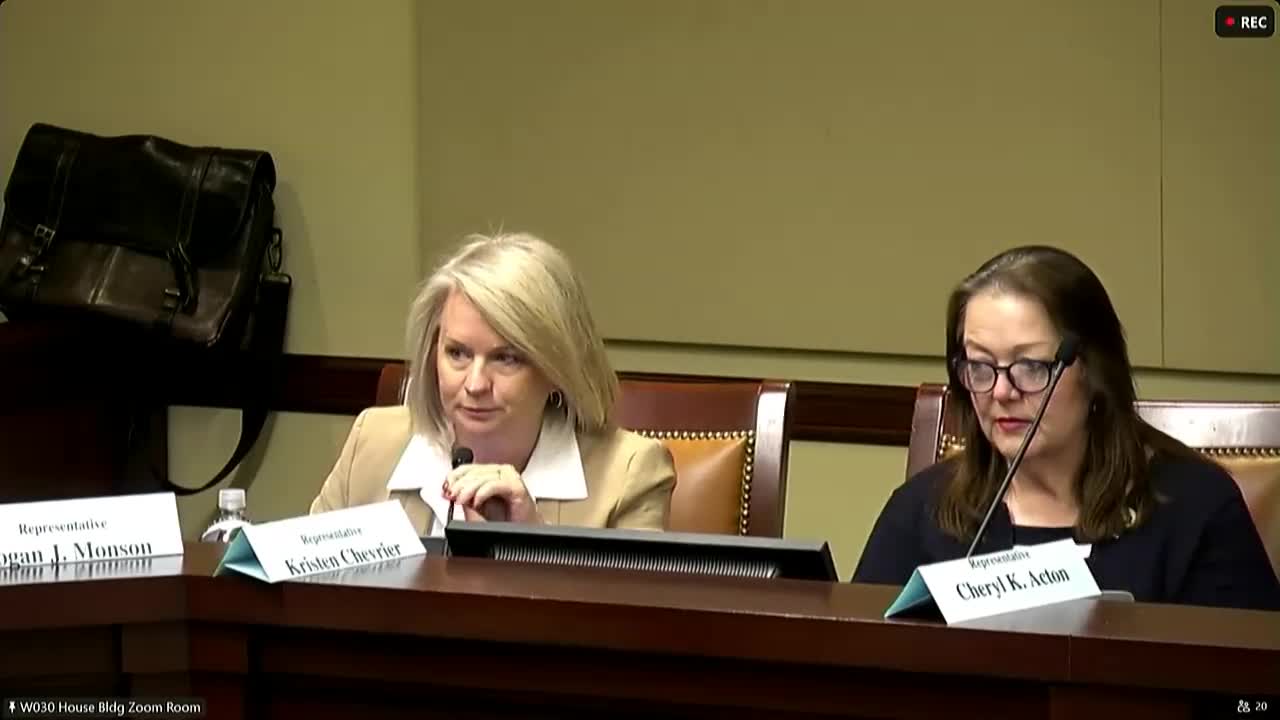
Committee members asked for follow-up on several practical points, including whether online-only products would be covered and how manufacturers would verify ingredients. Representative Monson asked whether the measure should do more than require labeling. Representative Ward asked how the labeling requirement would apply to products purchased across state lines or online; the sponsor said she would research those questions.
Committee discussion centered on transparency and feasibility rather than immediate action. The sponsor said the bill is a starting point and that she is open to feedback from members and stakeholders. The committee did not take public comment or a vote on the measure at the meeting.
The bill draft lists sampling and testing studies as supporting material and references other states’ labeling rules (Minnesota, Nevada) and the federal Food and Drug Administration’s limited role on tampon testing and labeling as described in the presentation.
Next steps: the sponsor asked for committee feedback and said she will supply additional research and draft language before seeking a vote at a later meeting.