Get Full Government Meeting Transcripts, Videos, & Alerts Forever!
Get email alerts on the Gig Economy Delivery topic
No spam. Unsubscribe anytime.
Lawmakers hear proposals to classify delivery drivers as employees, add small surcharge on app-based deliveries
Summary
At a Massachusetts legislative hearing, advocates and unions urged passage of H1339/S1305 to establish employee protections and data transparency for delivery network companies; witnesses also discussed adding a small delivery surcharge and a separate proposal to change how transportation network company fees are assessed.
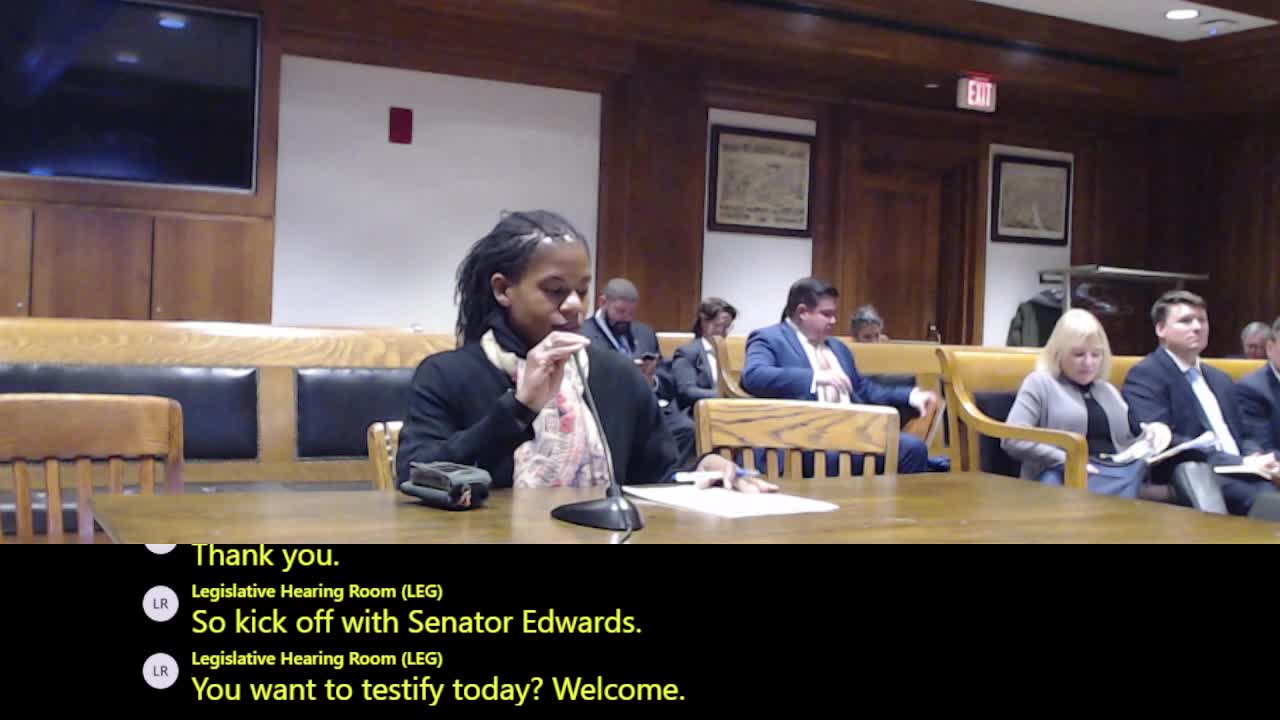
Senators and witnesses at a joint legislative hearing in Boston on app-based driving and delivery services urged new state rules to protect delivery drivers and to consider a small surcharge on app-based deliveries to raise revenue for cities and the Commonwealth.
Senator Edwards urged lawmakers to support House Bill 1339 (and its Senate counterpart S1305), saying the measure would "affirm employee standards and, pay" for delivery network company (DNC) workers, ensure mileage reimbursement and create a safer and more level playing field for communities and consumers. "No one's gonna not have their Uber Eats for 40 cents," Edwards said, arguing a modest surcharge would not deter customers but could generate local and state revenue.
The Massachusetts AFL-CIO told the committee it strongly supports H1339 and emphasized the Commonwealth's existing ABC employment test. "App-based companies use a business model across the world that is based on skirting those employment laws," Kevin Russo, secretary-treasurer of the Massachusetts AFL-CIO, said. He said H1339 would require data transparency from DNCs, give delivery workers a way to challenge deactivation, and would not prevent companies from allowing scheduling flexibility.
Speakers also linked the DNC proposals to existing transportation-network company (TNC) fees. The Metropolitan Area Planning Council (MAPC) testified in favor of House Bill 1251, a separate measure to change the TNC fee structure from a flat per-ride assessment to a percentage-based fee aligned with the state sales tax (6.25%). MAPC estimated that shifting to a percentage fee could increase annual revenue for transportation purposes to an estimated $120 million to $140 million, which would be split between municipalities and statewide transportation funds.
Supporters said the DNC legislation and a delivery surcharge would mirror rules already applied to rideshare services and could be used to fund local needs such as economic development or environmental programs. Senator Edwards described the current TNC surcharge as a modest per-ride fee that has generated "millions of dollars," with about half returned to localities, and urged the committee to treat delivery similarly.
Opposing testimony specific to H1339 or a delivery surcharge was not recorded during this hearing. The AFL-CIO also stated opposition to H1108 (described by the union as a corporate-backed alternative to H1339).
The committee took testimony from labor advocates, municipal planners and delivery proponents. No formal committee vote on H1339, S1305, HB1251 or related surcharge proposals was recorded at the hearing.