Get Full Government Meeting Transcripts, Videos, & Alerts Forever!
Get email alerts on the Special Education topic
No spam. Unsubscribe anytime.
Special education report: district says staffing is full, funding rules changing for next year
Summary
The district’s special education presentation to the school board highlighted updated enrollment/eligibility figures, improved staffing (nurses, SLPs, therapists), and state funding-rule changes that will alter the timing and mechanism of special education funding next year.
Granite Falls School District staff presented the annual special education report at the Oct. 22 board meeting, telling the board the district is fully staffed in key special education roles and describing state funding-rule changes that will alter how special education funds are delivered.
Rachel Quarterman, who introduced the special education update, said the district’s October student count is the main number that drives funding. Quarterman noted some building-level shifts in eligibility rates: Mountain Way’s reported special education rate is down to 25.9% from 28.8% in the prior year’s state report card; Crossroads’ rate is about 33.6%; preschool eligibility is high (about 30%). Quarterman said the district is cleaning up reporting systems that had previously merged early-learning preschool data into Mountain Way and that the cleanup should correct those figures going forward.
Quarterman described several staffing and program improvements: the district is fully staffed for nursing (a nurse on every campus), has three in-person speech-language pathologists plus one telehealth provider retained for continuity, occupational and physical therapists in place, an in-person teacher for visually impaired students, and a student engagement coordinator focused on identifying students experiencing homelessness and coordinating supports.
On funding, Quarterman described recent state changes: the enrollment cap for funded students with disabilities has been removed, the excess cost multiplier has been increased, districts must use BEA funds rather than tapping other funding sources, the statement threshold is lowered, and funding for the district will be delivered quarterly. She told the board, "We don't have more money coming into special education. What's changing is how that money is rolling out to us." The district expects to budget about $1 million for Safety Net submission next year; last year the district submitted about $1.9 million and was awarded roughly $1.912 million.
Quarterman also described operational improvements: improved data systems (CDARS to Skyward to IEP system), weekly review of eligibility and caseloads, new templates and checklists for case managers, IEP customer-service family surveys after meetings, and work to align accommodations and statewide testing decisions. She said those system improvements reduce compliance risk with OSPI (Office of Superintendent of Public Instruction) and free special educators to focus on students rather than paperwork.
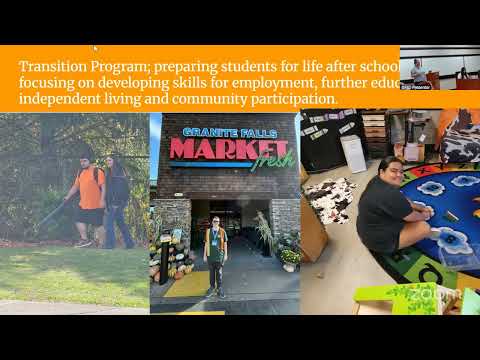
Programs highlighted include a growing inclusionary preschool (the district opened an additional classroom when enrollment exceeded projections) and a transition program with vocational partnerships in the community. Quarterman said staffing additions and better data workflows have supported smoother transitions and compliance.
Questions from the board were limited and supportive. The presentation did not include detailed per-student cost figures for the upcoming year; Quarterman said budgeting and Safety Net submission work is ongoing.