Get Full Government Meeting Transcripts, Videos, & Alerts Forever!
Get email alerts on the Budget topic
No spam. Unsubscribe anytime.
Selectmen push for 0% budget target; finance and education boards caution over insurance and facilities costs
Summary
Boards of Selectmen, Finance and Education met Oct. 23 to discuss early budget guidance; selectmen signaled an aim for a 0% town-side increase while finance members warned of, and offered differing estimates for, rising insurance costs and school officials cited deferred maintenance and staffing pressures.
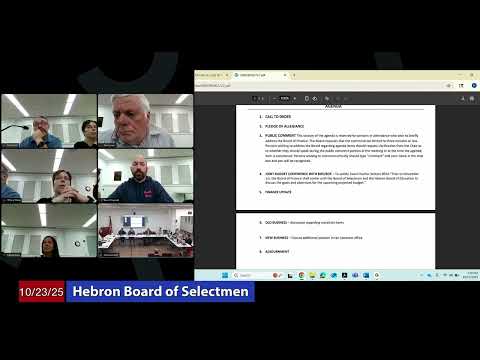
Boards of Selectmen, Finance and Education met in a joint session Oct. 23 to confer on the goals and objectives that will frame the 2025-26 budget process. The meeting produced competing signals about how aggressive the townshould be in holding overall spending.
A number of Selectmen said they will aim for a 0% increase in next years town-side budget and urged staff and boards to try to identify efficiencies. One selectman stated plainly that the board will "try everything in our power to get as low as possible" and said they were not targeting the 4.5% figure that had been circulated previously.
Members of the Board of Finance urged caution. Matt Wagner, a finance board member, told the assembled boards that the insurance renewal appears to be a substantial expense: "Insurance increase sounds like it's going to be somewhere in the neighborhoods... 50%," he said, calling it a "huge increase" in dollar terms and noting it is a largely fixed cost. Another speaker later referenced a different estimate of 15% for the renewal; presenters characterized these as early, uncertain figures.
School officials said departmental budgets were still being prepared, that the district had an open family survey and that they were closely monitoring special-education needs. A board speaker noted the district was "very, very concerned" about underfunding in several areas and emphasized the need to retain top talent and maintain assets.
Finance and school board members also highlighted deferred maintenance. One board member, speaking as a member of the buildings/facilities committee, said a recently received facilities report identified nearly $70,000,000 of repairs and upgrades that would be required to bring buildings to current standards.
Public comment at the meeting emphasized clearer communication from the Board of Finance to the Board of Education on budget guidance. A resident urged the finance board to provide more specific guidance on priorities rather than a single percentage target, saying percent targets risk "shoving down communication" with school leaders.
Board members agreed the process is in an early stage, that targets issued at this point are not binding and that the boards will hold workshops as the budget season progresses. Several participants asked that the boards exchange more detailed information about staffing, program priorities and specific accounts that have historically been underfunded before final targets are set.
Why this matters: early budget guidance sets the starting point for departmental requests, collective bargaining and capital planning. Insurance, staffing and deferred facilities needs are drivers that may force a higher increase than a zero-percent goal would allow; boards signaled they will continue workshop-level work and information exchange before formal budget decisions.
The boards did not adopt a formal binding target at the meeting; members said additional workshops and data will shape the final recommendation to voters.