Get Full Government Meeting Transcripts, Videos, & Alerts Forever!
Get email alerts on the Aging Disability Implementation Plan topic
No spam. Unsubscribe anytime.
Interagency plan outlines actions to expand affordable housing options for older adults and people with disabilities; committee seeks coordinator and elevator‑s
Summary
An interagency implementation plan translating a needs assessment into 49 actions seeks to expand appropriate affordable housing and critical supports for older adults and people with disabilities; advocates pressed the commission to fund an implementation coordinator and permanent elevator‑repair capital funding.
Department staff presented the Aging and Disability Affordable Housing Implementation Plan, a cross‑agency work plan that translates recommendations from a city needs assessment into 49 concrete actions to improve affordable‑housing outcomes for older adults and adults with disabilities.
What the plan covers: The plan grows from a December 2022 needs assessment and steering‑committee work involving the Planning Department, Department of Disability and Aging Services (DAS), Mayor—s Office on Disability (MOD), Mayor—s Office of Housing and Community Development (MOHCD/MOCD), and Department of Homelessness and Supportive Housing (HSH). It describes six objectives spanning production of new housing suitable for older adults and people with disabilities, preservation and accessibility upgrades to existing affordable housing, easier access to subsidized units, culturally competent service delivery, programs to enable aging‑in‑place and an improved interagency data and accountability framework.
Priority actions and funding needs: Staff and steering‑committee members highlighted several near‑term priorities and funding needs discussed in public testimony: - Elevator modernization and ongoing maintenance for city‑funded affordable housing (HSH has dispersed $10 million to elevator modernization; MOCD/HSH capital improvements totaled ~$30 million in 2023 and 2024). Advocates urged a permanent capital line for elevator repairs to avoid residents being trapped when vertical access fails. - A pilot for an "affordable assisted living" model; staff said a credible pilot would require substantial capital (staff estimated roughly $150,000,000 if a large assisted‑living site were pursued) along with advocacy for project‑based assisted‑living operating subsidies from the state or federal level. - Creation of a disability operating subsidy and use of recently passed local revenue (e.g., Proposition G rental subsidy funds) to cover acutely low‑income households who fall below typical affordable project income targets. - A coordinated, funded implementation coordinator (staff estimated the steering committee needs a funded coordinator for at least two years to track and advance actions across agencies).
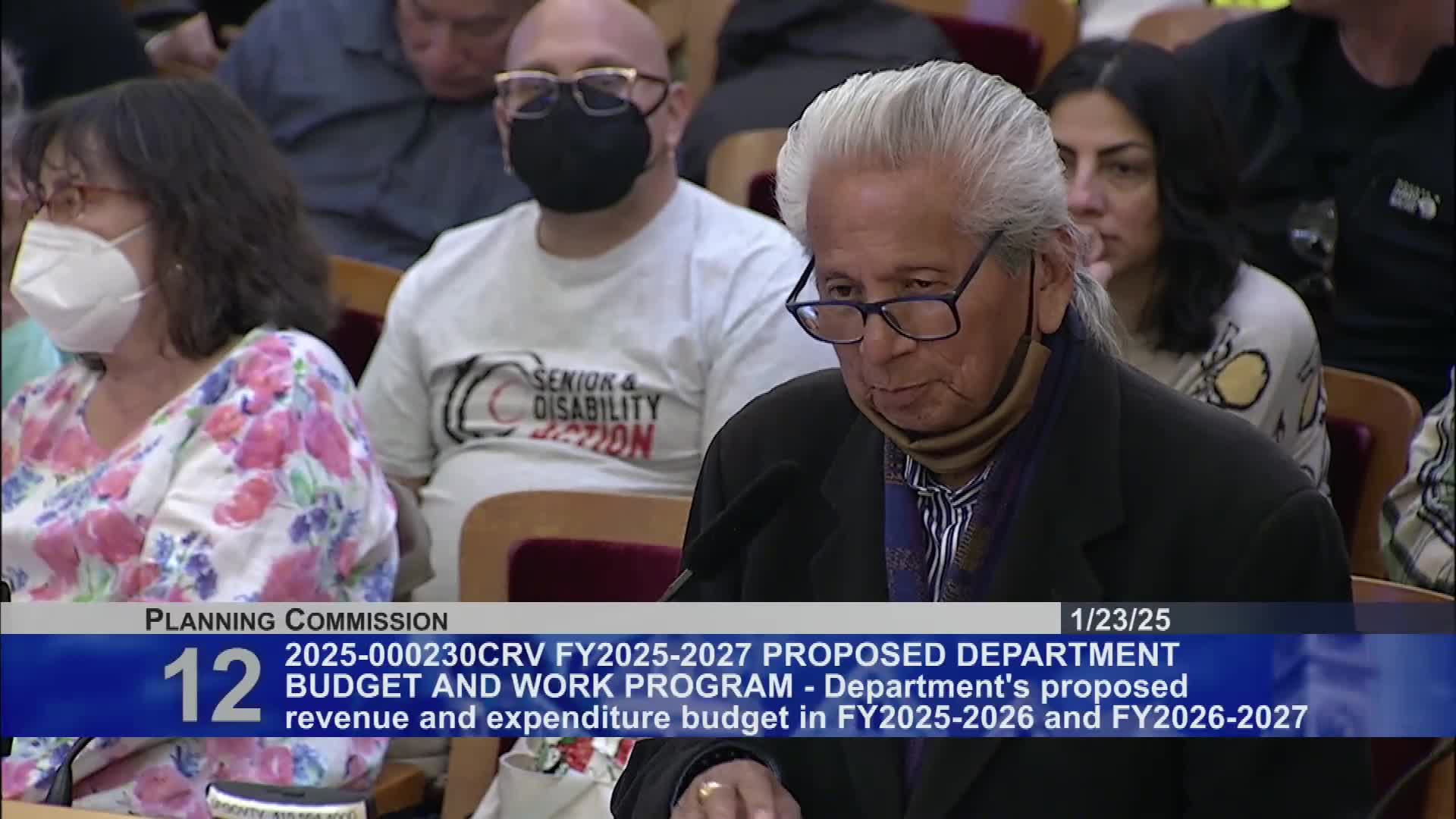
Public comment and commission response: Senior and Disability Action and other advocates praised the plan and urged the commission and the mayor to fund the implementation coordinator and elevator funds. New Mayor's Office on Disability director Eli Jelarden and steering committee staff endorsed the plan; commissioners asked staff to prioritize actions that could be started within the current work program and to return with budget and tracking details.
Next steps: Agencies will continue to implement the plan as resources allow; the steering committee recommended seeking dedicated funding for a coordinator and advocated for placing elevator repairs on a recurring capital list.
Ending: Commissioners and community advocates described the plan as a significant step toward meeting rising needs for older adults and people with disabilities; they asked staff to return with budget requests, timelines and progress reports.