Get Full Government Meeting Transcripts, Videos, & Alerts Forever!
Get email alerts on the Planning Budget Community Equity topic
No spam. Unsubscribe anytime.
Planning Department presents budget plans; community groups press to protect and expand Community Equity Division
Summary
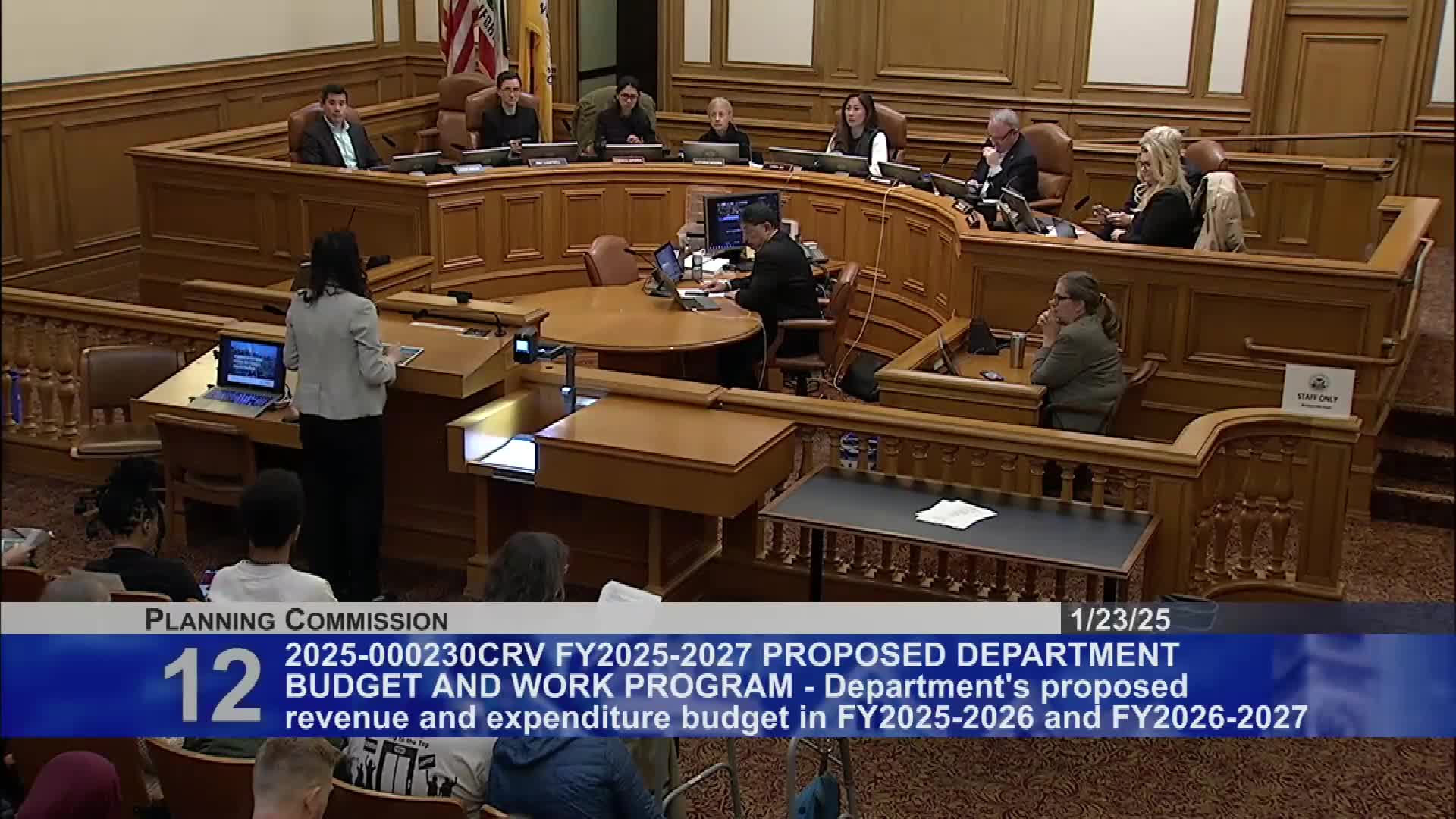
City planning staff introduced a two‑year budget and work program that relies on a combination of grant revenue and vacancy management to meet an expected citywide general‑fund reduction, while dozens of community groups urged the commission to protect and expand the Community Equity Division's liaison and neighborhood programs.
Planning Department Director and staff presented a proposed two‑year budget and work program for fiscal years 2025–2027 and outlined a required reduction in general‑fund support as part of a citywide effort to close an expected $250 million shortfall. The department requested a general‑fund reduction (roughly $1.4 million) and proposed to offset budget pressure largely through grant awards and vacancy management.
Major grant prospects and financials: Staff said the department has prospects and confirmations for several sizeable grants: a HUD housing grant ($7,000,000 over five years, described as confirmed), an EPA grant for approximately $3,000,000, a California Ocean Protection Council grant of about $1,500,000, and other smaller federal and state grants (including a Bay water‑quality EPA award the department estimated at $2,000,000). Staff emphasized that these awards would be budgeted under “projects” and that the department would still aim to maintain core planning services and manage personnel costs through vacancies where possible.
Community Equity Division drew sustained public comment: Dozens of community organizations, neighborhood representatives, cultural‑district leaders and service providers spoke in support of preserving or increasing funding for the department—s Community Equity Division and planning liaison positions. Presenters included representatives from the Tenderloin Community Action Plan, Friendship House Association (American Indian services), Mission Housing, Mission Economic Development Agency, the Pacific Islander SALT Association, and SOMA Pilipinas. Speakers said the liaison and neighborhood planning work produced tangible results: coordinated safety programs, small‑business assistance, SRO policy work, youth programming, neighborhood action plans and technical help with grants.
Staff and commissioners' response: Director Deborah Landis and other staff told the commission the plan included prioritizing grants, using vacancies where possible to meet general‑fund reductions and a two‑year rolling budget cycle. Staff conceded the out‑year grant numbers are uncertain and said they would update figures as formal award letters arrive. Commissioners asked whether changes in federal administrations could affect grant availability; staff said they were moving quickly to finalize grant agreements and cited the HUD award as relatively secure.
Why it matters: Commissioners and dozens of public speakers framed the budget choice as a values question. Many community organizations argued that cutting the Community Equity Division would harm vulnerable neighborhoods, derail working partnerships (for example, the Tenderloin community plan and Bayview outreach) and undercut efforts to keep cultural and commercial corridors viable.
Next steps: Staff will return with a formal resolution in the coming weeks; commissioners suggested the department consider contingency plans in case expected grants do not materialize and discussed mid‑year reporting to show how program priorities adjust as revenues change.
Ending: Commissioners thanked community groups for showing up en masse and encouraged continued outreach; staff reiterated that the budget remains a work in progress and will return for formal adoption in the next commission cycle.