
Bayview neighbors press Planning Commission after proposal to convert 4100 Third Street from group housing to social services
Get AI-powered insights, summaries, and transcripts
Sign Up Free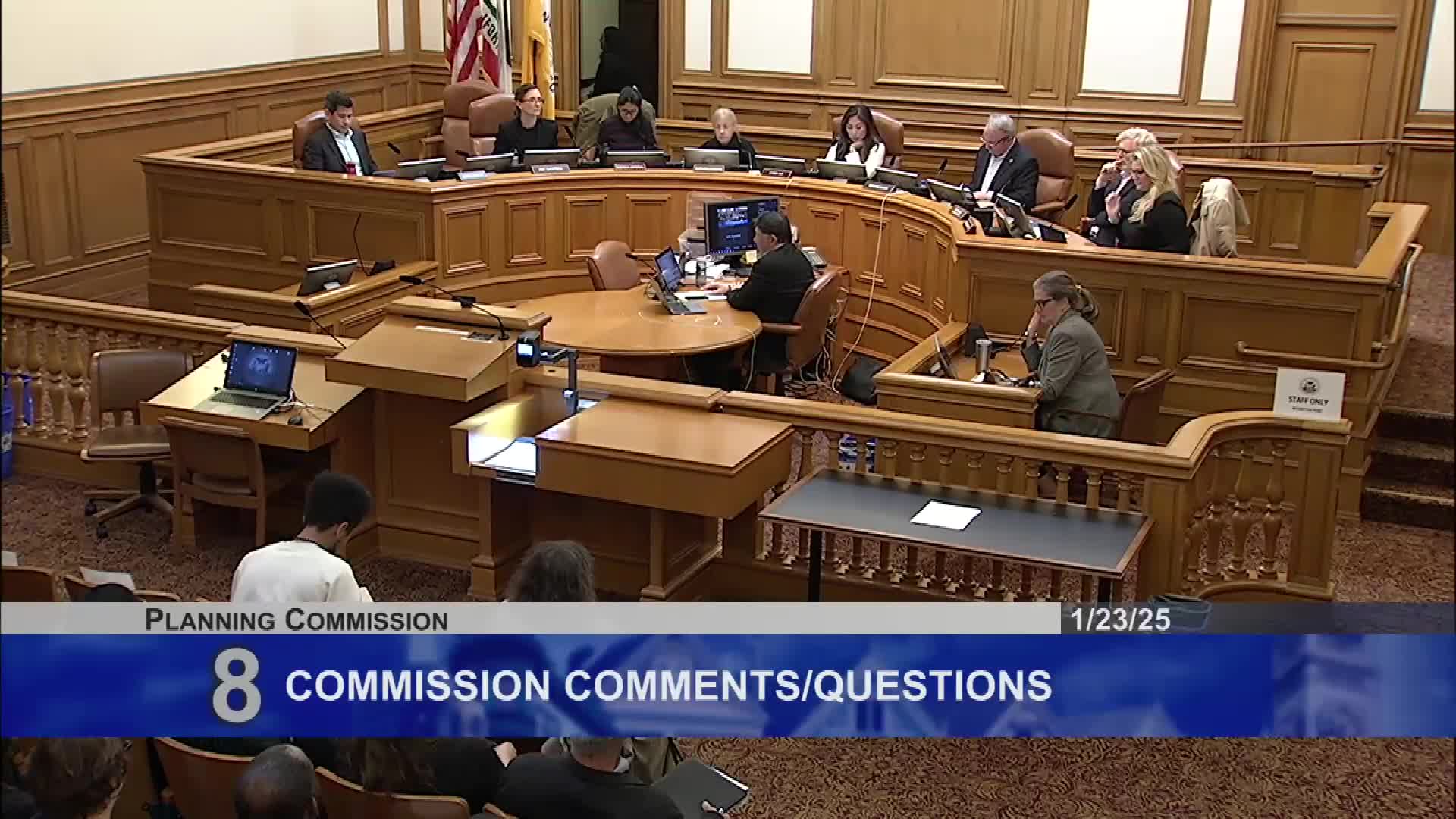
Summary
Friends of the Children requested approval from the Planning Commission to legalize social‑service use at 4100 Third Street by removing a prior group‑housing land use, drawing strong public comment from Bayview Hunters Point small‑business owners and residents who said the proposal lacked community outreach and could remove occupied affordable housing.
Friends of the Children, a nonprofit, asked the San Francisco Planning Commission to legalize social-service operations at 4100 Third Street by removing a prior group-housing designation and allowing the site to operate principally as a social-services facility.
Neighbors, small-business owners and community advocates from Bayview Hunters Point said the application did not reflect local conditions and that the project team failed to do robust community outreach before filing. Several speakers told the commission they had recently used the building, that people had lived upstairs within the last few years, and that converting the building away from housing would remove scarce affordable units along the Third Street commercial corridor.
Why it matters: The corridor is an identified cultural and small-business district for Bayview; speakers said continued conversion of storefronts and upstairs units to service or nonprofit uses has reduced street‑level retail and harmed foot traffic for microenterprises. Commissioners noted the tension between the city’s zoning (which generally permits social services on ground and second floors) and neighborhood priorities for retail and housing preservation.
What supporters and the sponsor said: Michael Rugen of Friends of the Children said the nonprofit has staff ready to operate at the site and that the organization is prepared to answer commissioners’ questions. Rugen said the group had not held pre‑application community meetings but asserted the sponsor hoped to work with neighbors.
Tiffany Carter and other Bayview small-business owners urged the commission to reject the application or require further community engagement. They said nonprofit use of retail spaces has displaced restaurants and other for‑profit small businesses that generate foot traffic. Babette Brackett, a longtime neighborhood organizer, said the sponsor’s application misstated the building’s occupancy history and that people had lived upstairs as recently as last year; she asked the commission to treat those claims as factual concerns to be checked before approval.
Commission discussion and staff notes: Planning staff told commissioners that the project before them was a conditional action limited to removing an existing group‑housing land use (a “housing removal” conditional use). Staff reminded the commission that social‑service uses are principally permitted in the zoning for much of the building, and that the action required from the commission was narrowly cabined to legalizing the prior conversion from group housing to institutional use.
Several commissioners emphasized the need for a stronger community-liaison requirement. Staff said a community‑liaison condition was already included as part of the project’s proposed terms and that contact information would be kept on file with the Planning Department. Commissioners said they expected the sponsor to undertake meaningful, ongoing outreach with Supervisor Shamann Walton’s office and neighborhood advisory committees and suggested the commission consider corridor‑wide planning in its work program and upcoming budget discussions.
Next steps and context: The commission did not adopt a final decision on the record at this meeting beyond continuing committee matters and discussing outreach and implementation. Commissioners signaled interest in exploring longer‑range options to preserve retail and limit social‑service conversions on Third Street — including possible zoning amendments — during upcoming budget and work‑program discussions.
Ending: Neighbors and the project sponsor left with clear direction from the commission to increase community engagement; commissioners flagged Third Street corridor issues for future planning work but did not make regulatory changes at this hearing.