Chesapeake constitutional officers give annual MOU briefings; Commonwealth's Attorney, sheriff and commissioner outline use of city supplements

2397236 · February 25, 2025

Loading...

AI-Generated Content: All content on this page was generated by AI to highlight key points from the meeting. For complete details and context, we recommend watching the full video. so we can fix them.

Summary

At a February 2025 council work session, the Commonwealth's Attorney, the Sheriff and the Commissioner of the Revenue presented retrospective reports tied to memoranda of understanding that govern city supplements. Each described staffing, major program activity and how funds were used in 2024; none made a new funding request for the coming year.

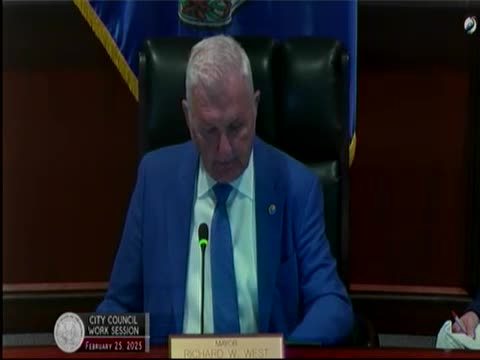
Commonwealth's Attorney Hamill, Sheriff Dave Rosato and Commissioner of the Revenue Victoria Prophet presented retrospective briefings to the Chesapeake City Council during the council’s February 2025 work session, describing how city supplements were used under memoranda of understanding signed last year and answering council members’ questions about operations and priorities.

Hamill said the office prosecutes felonies and certain misdemeanors in the city and described organizational structure and workload. He told council the office comprises about 30 prosecutors and roughly 25 support staff; the city fully funds eight prosecutor positions while the remainder are largely funded through the Virginia Compensation Board. Hamill said last year’s total office budget was “slightly more than $6,000,000,” that about 93% of the budget is personnel, and that roughly one-third of the office’s funding comes from the state and two-thirds from the city. Hamill said the office is not requesting an increase above the current budget in its budget submission and emphasized investments in staff as the primary expense.

Sheriff Dave Rosato gave a detailed account of the Chesapeake Sheriff’s Office operations and programs. He said the office employs about 472 paid positions (403 sworn and 69 civilian) and reported a 2024 budget of $65,292,874, covering payroll, benefits, operating and capital outlays. Rosato said the correctional facility’s rated capacity is 747 offenders and the average daily population exceeded 700. He described a newly planned mental health therapeutic unit at the Chesapeake Correctional Center staffed by deputies and behavioral health clinicians to treat offenders with mental-health and substance-use needs and to reduce recidivism. Rosato described expanded school resource deputy coverage (14 SRDs and two sergeants) and summarized inmate programs — work center, GED, substance-use supports — that he reported saved the city money and helped with reentry.

Commissioner Victoria Prophet described the Commissioner of the Revenue office’s work on personal property assessments, business licensing, tax relief and exemptions. She reported assessing more than 300,000 vehicles for personal property, noted a recent Schedule C project that identified previously unreported businesses and generated new revenue, and said her office has been reducing a longstanding backlog in delinquent business accounts. Prophet described tax relief and disabled‑veteran exemption work, reporting thousands of applications processed and some pending applications; she said the office is working to bring processing current.

Council members asked for more detail on specific programs — including disabled‑veteran exemptions and the sheriff’s mental‑health unit — and the city manager and staff said they would follow up with additional information before the formal budget hearings in May. Neither Hamill nor Rosato asked the council for an increase to the supplements at the meeting; Hamill said the office’s submission “was not looking for any additional funding” beyond last year.

Why it matters: the presentations are part of memoranda of understanding adopted in 2024 requiring constitutional officers and the public defender to brief council annually on the use of city supplements. Council members said the briefings are intended to give them situational awareness in advance of budget decisions and asked staff to provide additional, more granular material for the upcoming budget process.

Council follow up and next steps: the city manager said staff will collect additional clarifying data (detailed counts, staffing rostering, breakdowns of personnel vs. non‑personnel spending and time‑sensitive needs) and present that information with the formal budget package and in follow‑up communications to council members.