Get Full Government Meeting Transcripts, Videos, & Alerts Forever!
Get email alerts on the Rezoning And Housing Element topic
No spam. Unsubscribe anytime.
Council declines to adopt LaRue/Canal rezoning tonight, asks developer for project details
Summary
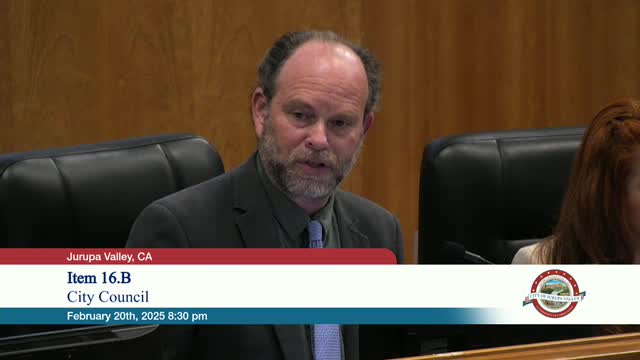
Jurupa Valley’s city council on Thursday did not adopt a proposed rezone for a 3.06‑acre parcel at the southeast corner of LaRue Street and Canal Street, after the motion to approve failed to obtain the three affirmative votes required for a zoning ordinance change.
Jurupa Valley’s city council on Thursday did not adopt a proposed rezone for a 3.06‑acre parcel at the southeast corner of LaRue Street and Canal Street, after the motion to approve did not secure three affirmative votes required for a zoning ordinance change.
The property has a general plan designation of Highest Density Residential (HDR) and had been identified in the city’s housing element as a potential housing site. The owner/applicant later proposed condominiums (the application materials described 52 units and were revised to 57 during review) with an affordability component: staff said the proposal includes a plan to designate 35% of units for low‑income households and 65% for very‑low‑income households as defined by state RHNA categories.
Nut graf: Council members said they supported housing goals in general but wanted more concrete project commitments because state law and density‑bonus provisions could allow the eventual unit count and concessions to change. The measure fell short of the votes needed; councilmembers asked to meet with the property owner and directed staff to return the item with further detail.
Public testimony and legal limits: Residents raised concerns about Canal Street’s condition, the narrow railroad corridor nearby, and whether necessary roadway improvement funding exists. Staff said the site is included in the housing element and that a future developer could seek density bonuses governed by state law; councilmembers asked staff to return with clarifications about the city’s discretion under state housing statutes and how to ensure the site’s proposed affordability and design commitments are enforceable.
Outcome and next steps: The council voted and the initial ordinance motion failed because it did not receive three affirmative votes. Council then voted to table the item and directed staff to hold a meeting with the developer and neighborhood representatives and return with more information, including whether the applicant is an entitlement company or a builder and what legally enforceable commitments could be attached to a rezoning.
Ending: Staff emphasized the city must balance state housing obligations against local infrastructure and neighborhood safety; council members asked for the item to be brought back after the requested meetings and legal review.