Get Full Government Meeting Transcripts, Videos, & Alerts Forever!
Get email alerts on the Autism Services Rural Access topic
No spam. Unsubscribe anytime.
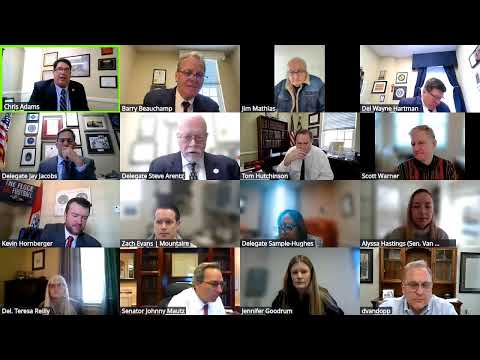
New Lower Shore Autism Community asks delegation for services, diagnostics and training
Summary
Leaders of a recently incorporated group told the Eastern Shore delegation they face long waits for diagnosis and therapy and want more local training, services and partnerships with schools and agencies.
Barry Johansen, founder and immediate past president of Lower Shore Autism Community, and Clay Belgy, the group’s current president, told the Eastern Shore delegation on Feb. 21 that families on Maryland’s Lower Shore face long waits for diagnosis, scarce therapy slots and limited local supports.
The nonprofit, incorporated in December 2022, said it serves Wicomico, Worcester, Dorchester and Somerset counties and runs monthly family-support meetings, a social group for teens and young adults on the spectrum and direct family assistance. ‘‘Ninety percent of the phone calls and the emails that I receive are people asking for help,’’ Belgy said.
Johansen recounted his family’s experience: his grandson was diagnosed at age 2 and today is 16. He said rural parents often must travel long distances for specialty evaluations and cited Kennedy Krieger Institute as the only nearby specialty option; families report waits of a year or more for services. ‘‘If you have a family that say is in Pocomoke City, it’s a 7, 8 hour round trip,’’ Belgy said.
Both leaders described practical work the group provides on the shore: outreach to school systems, resource referrals, social supports, and one-off interventions such as advising the Fruitland Police Department on a safety plan for a child who eloped. ‘‘We were able to get them resources…and they felt they'd had no more attempts to elope,’’ Johansen said.
The organization has obtained local grants and partners including United Way, UMES and the Community Foundation; Johansen cited a Henson grant and other local philanthropic support and said the group has two contracted workers (under 20 combined hours per week) and seven board members. The group also wants more data: Johansen said national autism monitoring excludes many rural areas and that researchers ‘‘don’t really count’’ the Eastern Shore in the same way urban areas are counted.
Delegates asked about school-district coordination; Johansen and Belgy said schools and juvenile services do reach out and that judges have at times ordered services that local systems struggle to meet. Johansen said the group is working with county school systems and advocates for building more local capacity.
Why it matters: Delegates and speakers framed the issue as a rural-access problem: families face travel and wait-time barriers to diagnosis and therapy, and local organizations play a key role filling gaps. Delegates encouraged continued outreach and asked for follow-up contacts; Johansen and Belgy said they welcome collaboration with the delegation and school districts.
Ending: The delegation thanked the presenters and pledged to circulate the group’s information to local partners; Johansen and Belgy left contact information for follow-up.