Get Full Government Meeting Transcripts, Videos, & Alerts Forever!
Get email alerts on the Labor Worker Safety Wage Theft topic
No spam. Unsubscribe anytime.
Tacoma labor leaders urge transparency ordinance, labor standards to curb wage theft and unsafe worksites
Summary
Labor representatives told the Tacoma Economic Development Committee that wage theft and unsafe jobsite practices are widespread in construction and warehouse sectors and urged the city to adopt a contractor transparency ordinance, labor standards in permitting, and community workforce agreements.
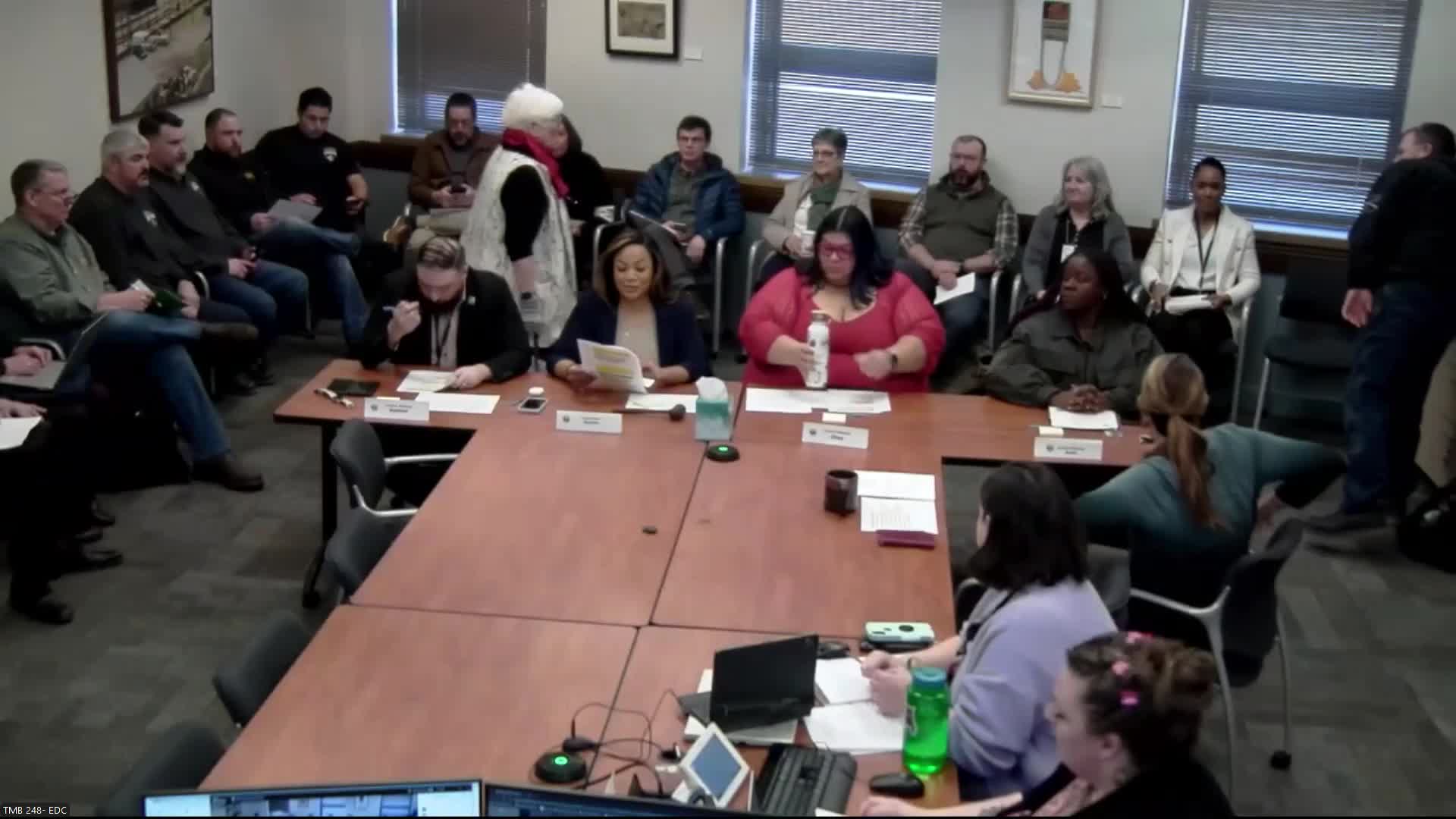
Tacoma council members and labor leaders on Feb. 11 held a roundtable on worker safety and wage theft, during which union representatives described widespread under‑the‑table pay, misclassification of workers, unsafe jobsite conditions and bid‑shopping on private and public construction projects and urged city action including a contractor “transparency ordinance.”
Council Member M. Diaz, who organized the session, said the meeting was “for informational purposes. It's to give all of us as council members an opportunity to hear from our labor partners on how this issue impacts…their members and their future members.” Diaz said the group limited the discussion to worker safety and wage theft so the committee could focus on concrete problems and next steps.
Speakers representing seven labor organizations described recurring problems they said they encounter on Tacoma projects: subcontracts that pay under the table, short or delayed pay, crews working unsafe conditions, employers classifying workers as independent contractors to evade prevailing‑wage and benefit obligations, and bid‑shopping that drives a race to the bottom. Jared Ross, executive secretary of the South Building Construction Trades Council, said the video shown to the committee captured the kinds of conditions his members see and urged adding labor standards to the city permitting process: “A good place to add those labor standards are when you authorize permits,” Ross said.
Chris Celes, a bricklayers union field representative, cited a state study reported in Olympia showing the scope of the underground economy in construction. Celes summarized the Washington State Institute for Public Policy finding that in 2021 one in seven construction workers was affected by the underground economy; that year the institute estimated nearly $200 million in lost wages and benefits to workers and about $60 million in lost state unemployment and workers' compensation premiums, and concluded losses to workers and government exceeded a half‑billion dollars.
Union speakers proposed several city actions: (1) adopt a contractor transparency ordinance requiring contractors bidding or working in Tacoma to declare past safety or wage‑theft violations and to register for a City of Tacoma business license before permits issue; (2) include labor standards or prevailing‑wage and certified payroll requirements when the city awards subsidies such as multifamily tax exemptions; and (3) pursue community workforce agreements or project labor agreements on city‑funded projects to require responsible bidding, local hiring and apprenticeship utilization. Jared Ross said such agreements “put one more set of eyes in between low man on the totem pole and the person paying the bill.”
Some union representatives said wage theft and misclassification are more visible on private and low‑income housing projects than on public works, where union representation and contract oversight help limit abuses. Dave Baca, business agent for Teamsters Local 313, said he has fewer unresolved wage‑theft reports on the public‑works projects he covers, which he attributed to inspection and contractual oversight.
Speakers also described enforcement and practical gaps they want the city to address: better use of permitting and code enforcement to verify the permit holder is the contractor actually working on site, routine collection of certified payroll records where subsidies are involved, and clearer accountability when firms use labor brokers or subcontractor chains. Several speakers recommended the city review existing Seattle and King County models for community workforce or project labor agreements.
Council Member Daniels and staff agreed to follow up: staff will compile and share materials the unions provided, including a video, draft transparency ordinance language and the Washington State Institute for Public Policy report; committee members and staff discussed next steps to evaluate draft language and related ordinances. Council Member Diaz said the roundtable would continue and that labor and city staff would collaborate on potential ordinance language and implementation details.
The session was informational; no ordinance or formal code change was adopted at the meeting.