Get Full Government Meeting Transcripts, Videos, & Alerts Forever!
Get email alerts on the Lead Hazard Control topic
No spam. Unsubscribe anytime.
Spartanburg updates lead-hazard and healthy-homes work; officials report 35 homes remediated
Summary
City staff described a five-year HUD-funded lead-hazard control and Healthy Homes program that inspected 50 units, completed full remediation on 35 houses and leveraged federal, state and local funds including CDBG match and other partner contributions.
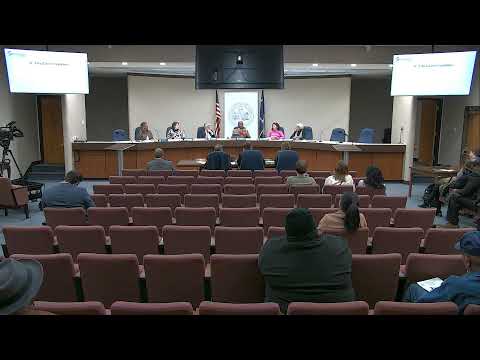
Spartanburg city staff on Jan. 28 summarized five years of a lead-hazard control and Healthy Homes initiative funded through HUD and local sources, saying the program inspected 50 properties and completed full remediation work on 35 homes across the city.
Neighborhood Services Community Director Martin Livingston introduced the update and turned the presentation over to David Maha, who described program requirements, eligible properties and results since the grant began. "We started out with $1,299,994," Maha said, describing the original funding and subsequent adjustments to the project budget. He said the grant paid for lead remediation and healthy-home measures and that the city supplemented the award with Community Development Block Grant (CDBG) funds when needed.
The presentation said Crossroads Environmental, a local woman-owned firm, performed 50 third-party inspections that tested components including windows, floors and walls; inspectors returned after work to re-test completed houses. Maha said 35 homes received a full scope of work, 204 new energy-efficient windows were installed across the project, eight homes received new HVAC systems and two additional homes received full ductwork. Work also included full roof replacements for seven houses, vinyl siding installations and three comprehensive paint jobs in the historic district using encapsulant over known lead paint.
Maha provided demographic and program uptake details: from 2020–2021 the program completed five homes; from 2022–2024 it completed 30; the program identified 28 full-time child occupants and 26 visiting children across treated households; 24 treated homes included at least one resident age 60 or older. He estimated roughly 75 households showed interest in the program during outreach and intake work.
Staff emphasized that the program combined lead abatement with broader healthy-home assessments to identify problems such as mold, plumbing or roof failures and that some homeowners contributed toward costs to make projects feasible. Maha described three temporary relocations paid for while work occurred and said some property owners invested personal funds (examples: $7,400 toward a $40,000 roof, $2,600 toward window replacements) to complete needed repairs.
City staff named partners involved in delivery and outreach, including Crossroads Environmental, Regenesis and Piedmont, and neighborhood nonprofits such as Northside Development Group and Rebuilding Spartanburg (formerly Christmas in Action). They said the city also used COVID and ARPA-era funding in part to stand up an HVAC program that has helped 16 households and that the city is awaiting word from the state disaster assistance program (DAP) administrator on a separate, state-funded disaster program for tree removal and roof repairs expected to help about 35–40 households over 18 months. "That is through the state, yes," a staff member said when asked about the DAP funding source.
Staff said they plan to apply for another HUD lead-based paint grant if one is offered; Maha told council members, "Applications typically come out in July or August." Council members thanked staff for the work and for the team’s outreach to seniors and historically affected neighborhoods. Martin Livingston said binders with case-level details, maps and before/after photographs were available for council review.
The presentation also noted gaps: some eligible households lacked children under age 6 and therefore did not meet lead-priority rules; the disaster assistance program as described will prioritize homeowners and does not yet include a renter-specific pathway. Staff said homeowners who receive multiple city-administered repairs (for example HVAC plus Rebuilding Spartanburg work) may be eligible for additional funding up to program caps (staff cited an aggregate cap of about $30,000 per household across certain city-administered repair streams).
City leaders framed the program as meeting elements of the comprehensive plan (housing and community resiliency), supporting small local contractors and addressing long-standing housing needs in the city’s core neighborhoods. Staff requested continued support for grant applications and for outreach to increase participation.
The council did not take a formal vote on the presentation; staff said they would apply for future grant rounds and continue program delivery pending available funding.