PBM and Insurer Groups Testify Against Bill Limiting Midyear Formulary Changes
Loading...
Summary
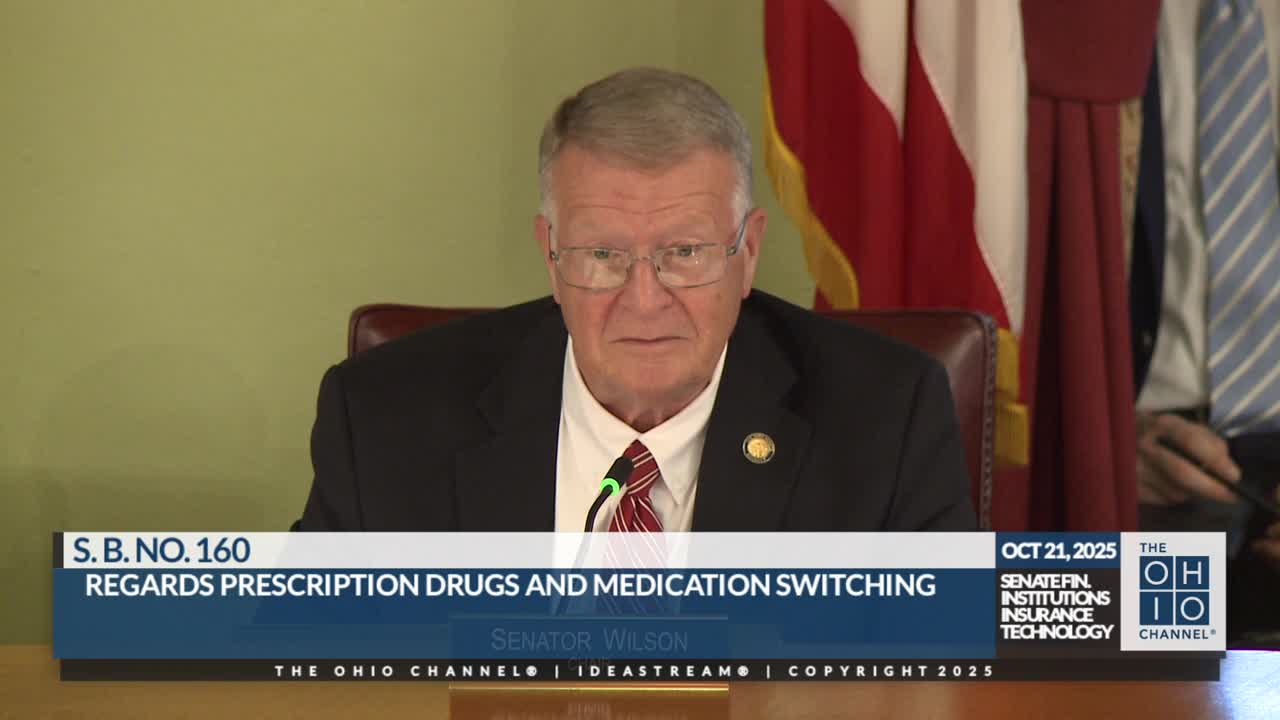
Opponents including the Pharmaceutical Care Management Association and Ohio Association of Health Plans told the Senate committee that Senate Bill 160, intended to limit nonmedical switching midyear, could raise costs for employers and plans and complicate formulary management.
Sean Stevenson, representing the Pharmaceutical Care Management Association (PCMA), testified in opposition to Senate Bill 160, which the bill sponsor says would prevent nonmedical switching of prescription drugs during a plan year. "The intent of Senate Bill 160 is to prevent non medical switching of prescription drugs during a planned year," Stevenson said, adding that prescription drug formularies sometimes change during the year due to new medications, generics, safety updates or price changes.
Stevenson warned that limiting plan changes could freeze list-price-driven formulary adjustments and potentially shift cost to employers and patients. "While the intent of the bill is to help patients stay on their medication, it may have the opposite effect since it freezes the ability for employers to prioritize a lower-cost drug equivalent or biosimilar so an employer may be forced to increase premiums or reduce benefits to all employees," he said.
Megan Richwine, director of government affairs for the Ohio Association of Health Plans, also opposed the bill, arguing formularies are an essential tool for managing access and overall cost. "Formularies are a key tool used by health insurers to manage both access to medications and overall costs," Richwine testified. She said member plans must balance patient access with purchasers' (primarily employers') expectation that benefit designs can respond to a changing drug marketplace.
Committee members asked about appeals and timelines. Senator Morrow questioned how long appeals take and how often they succeed; witnesses said timelines vary by plan and offered to follow up with specifics. Senator Liston noted the bill includes exceptions for generics and a cap of five percent plus inflation; Richwine confirmed the cap can still produce sizable increases for high-cost drugs and said the generics exception in the bill may not fully address her members' concerns.
No committee vote was taken during the hearing; the committee concluded the third hearing on Senate Bill 160 after opponent testimony and member questions.