Get Full Government Meeting Transcripts, Videos, & Alerts Forever!
Get email alerts on the Corrections Capital Maintenance topic
No spam. Unsubscribe anytime.
DCAM outlines $1B+ deferred maintenance and multi‑billion decarbonization need across correctional portfolio
Summary
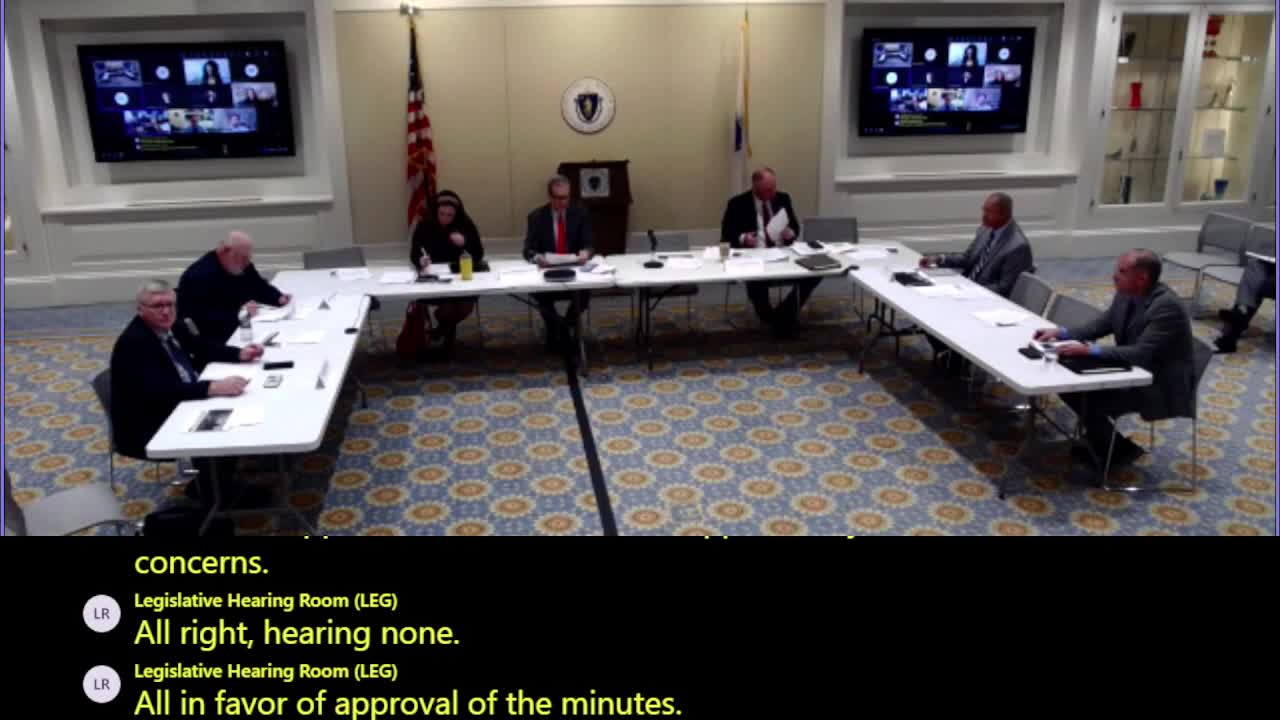
Sen. Will Brownsberger, chair of the Special Commission on Correctional Consolidation and Collaboration, opened the commission’s Oct. 17 meeting by introducing a DCAM presentation on the state correctional portfolio and capital needs.
Sen. Will Brownsberger, chair of the Special Commission on Correctional Consolidation and Collaboration, opened the commission’s Oct. 17 meeting by introducing a DCAM presentation on the state correctional portfolio and capital needs.
Adam Bakke, Commissioner, Department of Capital Asset Management and Maintenance (DCAM), told commissioners that DCAM manages roughly 61,000,000 square feet across about 1,700 state buildings and that correctional facilities represent about one‑sixth of that portfolio. “We are responsible for a variety of things from fundamental real estate,” Bakke said, explaining DCAM’s role in building maintenance, planning, design and capital construction.
Bakke summarized DCAM’s findings: the correctional portfolio includes 36 identified correctional sites (19 Department of Corrections sites and 17 sheriff’s facilities), of which 12 DOC sites currently house active populations; the average building age is about 51.1 years for DOC facilities and about 52.3 years for sheriff facilities; documented deferred maintenance across the correctional portfolio is roughly $1 billion; and estimated costs to fully eliminate fossil fuels across these facilities are in the low‑to‑mid billions of dollars, depending on overlap with deferred maintenance work.
The presentation explained why those numbers are large: many public‑safety facilities were built rapidly during periods of population growth and were not constructed for long useful life or modern programmatic needs. Bakke also said deferred maintenance estimates reflect the cost to replace components that have reached or exceeded expected useful life, not solely items that have failed. “Preventative maintenance is when you replace things on a schedule ahead of the end of their useful lives. Deferred maintenance is basically when the useful lives have been exceeded and things have not yet been replaced,” he said.
Bakke described three drivers of capital cost in corrections: programmatic change (including a shift toward rehabilitation, medical and accessibility needs), deferred maintenance, and statewide decarbonization mandates. He noted that the Commonwealth has an executive order and legislation aiming for deep decarbonization of state assets (target year 2050) and that decarbonization work can overlap with deferred maintenance but may also increase near‑term costs when both are done together.
DCAM detailed how it currently supports the DOC and the sheriffs. For DOC, Bakke said DCAM provides about $10 million per year for delegated deferred maintenance projects and manages larger capital projects above delegation thresholds; DCAM is managing major projects at Framingham, Gardner and Norfolk and early‑design decarbonization work at Bridgewater. For sheriffs, DCAM said the current capital plan includes a new five‑year pledge to each sheriff (allocations range roughly from a little over $1 million to just under $4 million per sheriff, by formula) and a competitive program for larger projects with $25,000 “mini‑grants” to help sheriffs prepare applications.
Sheriffs, commissioners and other members pressed DCAM on prioritization and on operational issues that affect capital needs: aging infrastructure that is heavily used 24/7, lack of replacement parts for obsolete equipment, plumbing and water quality concerns, the effects of past overcrowding on wear and tear, accessibility needs for an aging incarcerated population, and the higher per‑square‑foot costs of health‑care and correctional construction. Sheriff Kochie praised the presentation, saying Bakke “portrayed the knowledge of the Department of Corrections and the Sheriffs” and asked how to shift resources toward preventive maintenance to avoid larger future costs.
Bakke and others described process and procurement details: threshold rules that trigger broader ADA and life‑safety upgrades (for example, certain dollar thresholds require additional accessibility work), the role of the Designer Selection Board in procuring architects and engineers, and the use of “house doctor” indefinite‑quantity designer contracts to speed delegated projects.
The commission concluded the session by agreeing to solicit public input and schedule public listening sessions before its next meeting. Commissioners discussed holding public meetings and invited input from people with lived experience in the correctional system; they also asked DCAM for additional, more granular data (for example, age breakdowns by decade and separations between active and dormant facilities).
Votes at a glance: The commission unanimously approved the minutes from its Sept. 15 meeting (motion to approve; transcript records unanimous approval; exact tally not specified in the record).
The presentation and discussion produced requests for follow‑up information from DCAM, including: a breakdown of facility ages by decade, deferred‑maintenance detail for dormant versus active sites, and clarification of funding allocations and delegation thresholds. The commission directed staff to solicit public input and to schedule public hearing opportunities ahead of the commission’s next meeting.