Ohio Senate approves 'success sequence' curriculum requirement after heated debate
Loading...
Summary
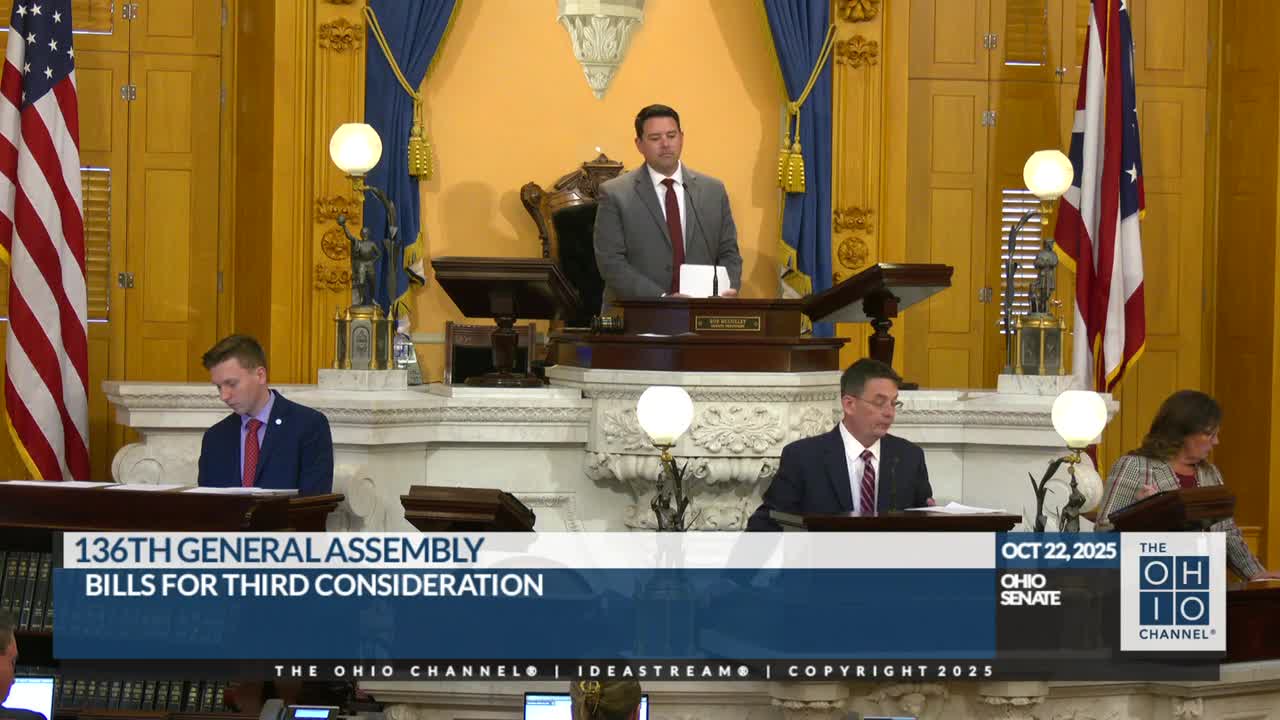
The Ohio Senate on Tuesday passed Senate Bill 156, directing the Department of Education and Workforce to develop standards and a model curriculum for a "success sequence" for grades 6–12, by a 24–9 vote.
The Ohio Senate on Tuesday passed Senate Bill 156, directing the Department of Education and Workforce to develop standards and a model curriculum for a so‑called “success sequence” for students in grades 6 through 12, by a 24–9 vote.
Supporters said the short curriculum — which encourages graduating high school, obtaining full‑time work and marrying before having children — is a low‑cost, practical step to give students tools to avoid long‑term poverty. Opponents said the proposal overemphasizes individual behavior, underplays structural causes of poverty and risked presenting the sequence as the only path to success.
Senator Joe Catrona, the bill sponsor, framed the measure as a state obligation to provide guidance to young people. “We have an obligation to the next generation,” Catrona told colleagues, calling the bill “a step in the right direction” and saying the three‑pronged approach is supported by longitudinal data he said showed high rates of economic improvement for those following the sequence. The bill requires the department to establish a committee to review and propose the standards and a model curriculum that school districts could use.
A proposed amendment from Senator Sandra Ingram would have explicitly required local school boards to allow parents to review the curriculum and to permit students to be excused from instruction on parental request, with a district‑approved alternative assignment for excused students. Ingram said the amendment aimed to “restore this right of parental choice” and aligned the bill with a previously passed Parents’ Bill of Rights provision. The motion to table that amendment passed 24–9, effectively removing it from consideration.
Opponents raised broader concerns about the bill’s scope and messaging. Senator Mariah Smith read from the book Poverty, by America author Matthew Desmond and cited multiple academic critiques, arguing that the success sequence “overemphasizes personal responsibility” and “neglects structural issues such as racism, gender discrimination, underfunded schools, and economic dislocation.” Senator Antonio warned that teaching an exclusive sequence beginning in sixth grade risks presenting “only one way” for students to succeed and could marginalize children from nontraditional family backgrounds.
Senator Paul Brenner, who supported the bill, said the model curriculum would be voluntary for districts to adopt and that state standards and a review committee would help ensure quality and consistency. Senator Catrona reiterated that the measure is designed to provide information, not to punish or dictate choices: “We’re just saying, here are the facts. I hope you make the best decisions going forward.”
The final roll call recorded 24 yeas and 9 nays. The chamber also agreed to the bill’s title before adjourning; implementation details and timelines for the department’s committee and curriculum development were not specified during floor debate.
The bill now proceeds to the enrollment/titling process required before being transmitted to the governor.