Get Full Government Meeting Transcripts, Videos, & Alerts Forever!
Get email alerts on the Oversight topic
No spam. Unsubscribe anytime.
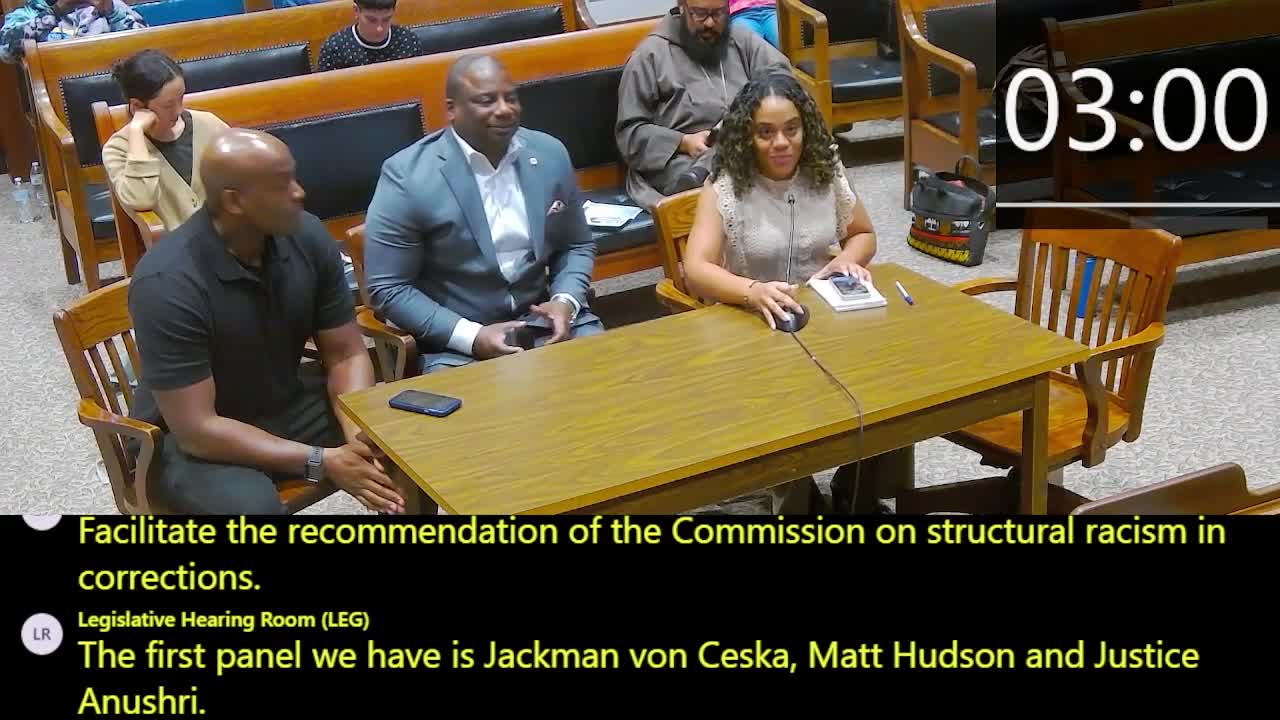
Supporters tell committee independent correctional oversight would raise transparency, address racial disparities
Summary
Witnesses including people with lived experience, former commissioners, and advocates urged the committee to create an independent correctional oversight office (S.1725/H.2636). Testimony cited past commissions and noted that lack of external oversight makes DOC policies difficult to change or enforce.
Supporters of S.1725 / H.2636 told the committee an independent correctional oversight office is necessary to hold the Department of Correction accountable and to implement several recommendations from the Special Legislative Commission on Structural Racism in Corrections.
Witnesses included currently and formerly incarcerated people, exonerees, former DOC staff, clergy and restorative‑justice practitioners. Testimony emphasized two recurring themes: first, a lack of independent data and enforcement means policies (on classification, visitation, use of segregation, programming) are inconsistently applied; second, structural racism and intergenerational staffing patterns were cited as causes of unequal treatment for people of color.
Advocates described oversight offices in other states (Philadelphia, Arizona, Nebraska, Maryland, New York, Virginia, Washington) as examples and argued Massachusetts needs a similar entity with powers to collect data, investigate complaints, publish findings and recommend corrective action.
Ending
The committee heard broad support for S.1725 / H.2636 and testimony asserting that oversight would make other bills — on visitation, medical parole and conditions — more enforceable. No committee votes took place during the hearing.