Get Full Government Meeting Transcripts, Videos, & Alerts Forever!
Get email alerts on the Wildlife Horseshoe Crab topic
No spam. Unsubscribe anytime.
Mass. hearing spotlights science, fisheries and biomedical uses in debate over banning horseshoe crab bait harvest
Summary
Witnesses at the Joint Committee on Environment and Natural Resources hearing urged passage of H.898 to end taking horseshoe crabs for bait, citing shorebird declines and alternatives; commercial fishery and biomedical industry witnesses said current data and substitutes merit caution.
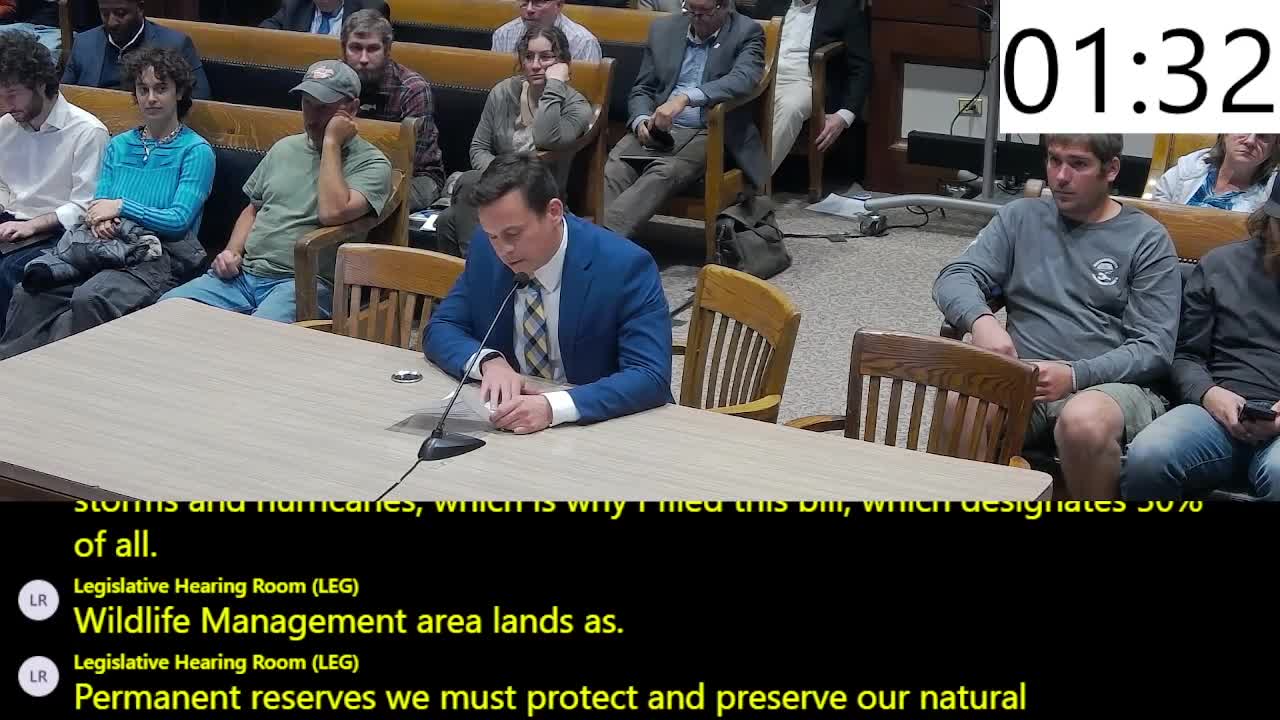
Lawmakers heard competing science and economic testimony on H.898, a bill to prohibit taking horseshoe crabs for bait in Massachusetts, during a hybrid hearing that drew conservation scientists, commercial fishers, biomedical manufacturers and coastal residents.
Supporters said abundant evidence links horseshoe‑crab eggs to the survival of migrating shorebirds and that recent federal and state reviews show populations under sustained pressure; they asked the committee to bar bait harvest while allowing narrowly drawn scientific and educational exceptions. Proponents pointed to peer‑reviewed studies and regional management actions as reasons Massachusetts should follow neighboring states that have restricted or paused bait harvests.
"Horseshoe crabs are a 450,000,000‑year‑old species," said Sarah Shahabi of the Conservation Law Foundation, urging the committee to act. Mass Audubon’s Sam Anderson testified that Mass Audubon provides half the spawning survey data used by the state and said, "the populations of horseshoe crabs in Massachusetts are low after years of eradication and harvest." Dr. Nathan Center (identified in testimony as Mass Audubon's Bertrand chair / UMass Amherst faculty) told the panel that horseshoe‑crab eggs are “ideal food for migrating shorebirds” and that birds arriving in poor condition often fail to complete migration or breed successfully.
Conservation witnesses referenced the red knot, a federally listed species in the U.S., and described ecological links across the Atlantic flyway. They also noted biomedical uses of horseshoe blood for bacterial endotoxin testing, and some testified that animal‑free diagnostic reagents are becoming available but not yet universally deployed.
Fishermen, dealers and a representative of a manufacturer that produces limulus amoebocyte lysate (LAL) urged caution. Brett Hoffmeister, manager of sustainability initiatives at Associates in Cape Cod, said LAL is “used by the pharmaceutical and medical device companies annually to ensure that items injected and implanted into the human body are free of this harmful bacteria,” and warned that eliminating the bait fishery could erode the infrastructure that supplies crabs for biomedical uses. Local conch and whelk harvesters said the bait market is essential to their livelihoods and that available substitutes (for example green crab mixes) are not comparably effective.
Witnesses for both sides relied on state survey data. Hoffmeister cited Division of Marine Fisheries trawl and beach survey data showing increases in some indices for Massachusetts, while conservation speakers pointed to regional declines in spawning beaches and a 2025 review that the Atlantic horseshoe crab population warrants heightened concern.
The hearing did not produce a committee vote. Action on H.898 remains for later consideration; witnesses on both sides said they would submit technical data and written comments to the committee.
Key details and next steps: H.898 would ban taking horseshoe crabs for bait while exempting scientific, educational and biomedical collection as specified in the bill; Massachusetts Division of Marine Fisheries survey results and federal rule‑making on listing petitions are central to further legislative and administrative discussion. The committee requested written submissions and technical data from both conservation groups and the bait/biomedical sectors.
For now, no formal committee action was recorded at the hearing; proponents asked the committee to report the bill favorably, while industry and fishing representatives urged study and caution.