Get Full Government Meeting Transcripts, Videos, & Alerts Forever!
Get email alerts on the Visitation topic
No spam. Unsubscribe anytime.
Witnesses, families push visitation reforms as committee hears decades of related testimony
Summary
At a joint public hearing on correction-related bills, incarcerated people, family members and advocates urged lawmakers to pass a visitation reform bill, S.1720/H.2591, saying Department of Correction policies now block meaningful family contact and impede rehabilitation.
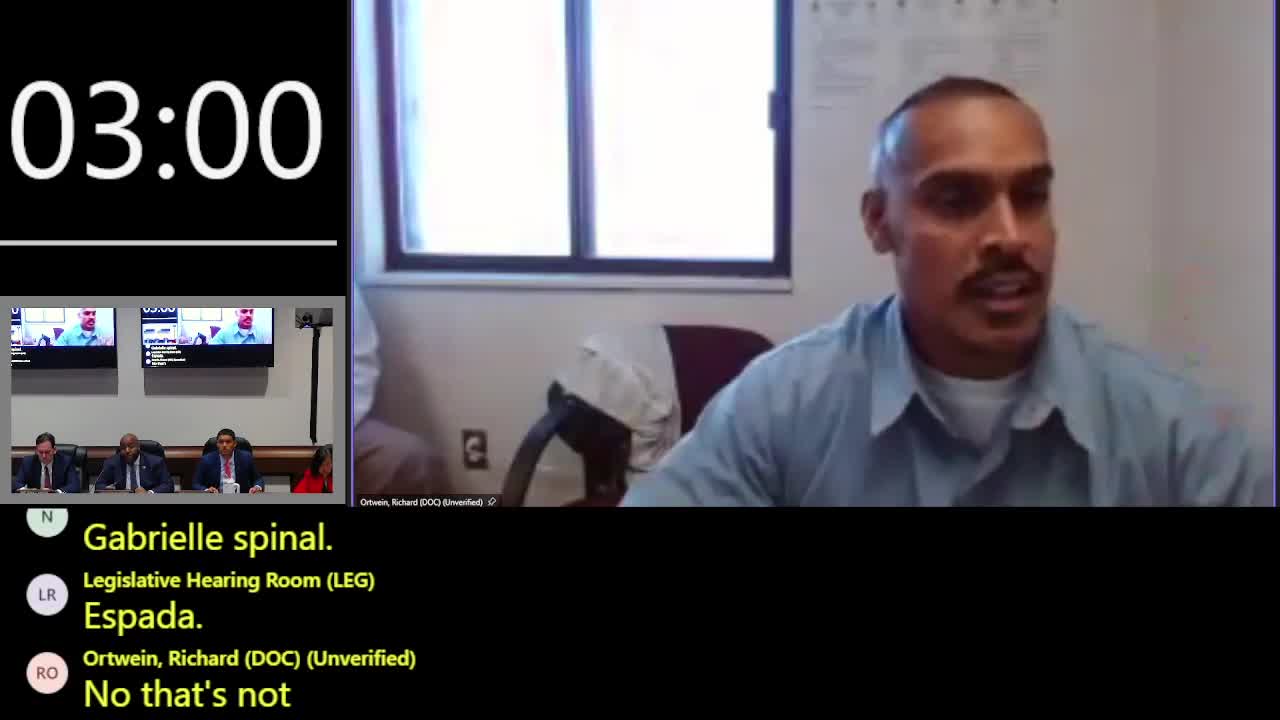
Representative Christopher Worrell called the joint hearing to order and said the first portion would include remote testimony from currently incarcerated people. Over many hours of testimony the committee heard repeated appeals to change visitation rules that family members and advocates say have become more restrictive since 2018 and since the pandemic.
In testimony supporting S.1720 and H.2591, people held in Massachusetts prisons and their relatives described a pattern of long, invasive application processes, caps on who can be on a visitor list, short timed visits, and inconsistent or overzealous enforcement of dress and conduct rules. “Visitors are turned away for a zipper, a green sweater, a hooded jacket,” said a woman who identified herself as a frequent visitor and family member. Children and grandparents, she said, often travel long distances only to be refused entry or to experience humiliation at the door.
Multiple incarcerated witnesses told the committee that visits were central to rehabilitation, reentry planning and family mental health. Hector Soto, Raymond Colon and others described the emotional and practical benefits of in-person contact for children, parents and aging relatives and warned that restrictions weaken the social ties that support successful reentry. Several witnesses said policies requiring a limited “approved visitor” list force people to rotate family members and exclude extended relatives and community mentors who provide steady support.
Advocates from Prisoners Legal Services and community groups provided data and legal context. Prisoners Legal Services said DOC visitation across institutions has fallen sharply since restrictive rules were adopted, citing a decline from roughly 128,000 visits in 2018 to far fewer visits in early 2025. They argued research shows visits reduce recidivism and improve mental health. Family members described scheduling lines that are only open during weekday business hours and pre-approval windows that create barriers for working people.
Department of Correction officials did not present policy testimony at the hearing; committee members asked questions but no votes were held.
Supporters asked the committee to report S.1720 / H.2591 favorably, saying statutory changes would codify fair, consistent visitation standards, simplify preapproval processes, and preserve family visits as part of rehabilitation.
Ending
Witnesses asked lawmakers to prioritize the bills now, saying change would have immediate effects for families and for the people incarcerated in Massachusetts facilities. The Joint Committee did not take votes during the hearing.