Get Full Government Meeting Transcripts, Videos, & Alerts Forever!
Get email alerts on the Statutory Reports Review topic
No spam. Unsubscribe anytime.
Senate Revenue & Tax Committee directs DFA to seek repeal of several statutorily required reports, retains others
Summary
The Senate Revenue & Tax Committee reviewed a package of statutory reports from the Department of Finance and Administration and instructed staff to draft repeal language for several low‑use reports while retaining others the committee said provide oversight value.
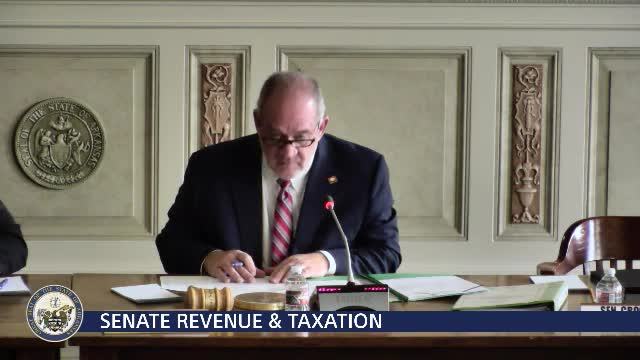
The Senate Revenue & Tax Committee reviewed a batch of statutorily required reports from the Department of Finance and Administration on Thursday, directing DFA to prepare repeal language for several low-use reports while keeping others that legislators said provide oversight value.
DFA budget analyst Paul Gehring opened the discussion, describing the agenda as a line-by-line review of reports that DFA prepares under statute. "Our next report is the property tax relief trust fund report, required by statute," Gehring said, and recommended the committee continue that report. The committee agreed to keep it.
The review covered roughly 40 reports. Committee members and DFA staff repeatedly weighed the time DFA spends producing each report against how often legislators or the public use them. Several reports were marked for repeal or further action: DFA recommended eliminating the annual report on Arkansas' involvement with the Multistate Tax Commission, the report on federal income tax changes, an annual Office of Motor Vehicles report on automatic and expedited occupational licensure, the Alcoholic Beverage Control (ABC) permits and taxes report, and a short revenue-division report on employees in extra-help positions that exceed seven months. The committee directed staff to prepare statute-repeal language for those items and to produce talking points for floor debate.
Other reports were retained. Gehring and senators agreed to keep updates on required rule promulgation because it helps the legislature track whether agencies have submitted rules, held public hearings and obtained gubernatorial approval. The committee also kept the semiannual report on pending litigation, which DFA said is valuable for evaluating state litigation risk and possible negotiated settlements. "That report is helpful and should be kept," Gehring said.
The Assessment Coordination Division's annual reports — (1) an inventory of all taxable property and assessed values and (2) a methodology report describing any changes to land‑valuation or capitalization formulas — drew particular attention. DFA estimated the inventory report takes about 200 hours annually and the methodology/change report about 100 hours. Secretary Jim Hudson said of the capitalization/formula material, "I believe that is strictly land. It's not improvements upon the land, just the land." Committee members asked DFA to circulate the methodology report for review and to return with a recommendation about frequency or streamlining; the committee did not act to repeal it.
On tax litigation reporting, DFA described a newly required annual report (due Jan. 10) listing tax litigation resolved where more than $25,000 was in controversy. DFA indicated this report overlaps with other litigation reports; senators asked DFA to discuss timing and whether a change in frequency or consolidation might reduce duplication.
Several senators emphasized practicalities: where reports are sent, how often members actually request them, and the staff hours required to assemble them. When asked who uses a given report, Gehring said some go to the Arkansas Legislative Council (ALC) or committee chairs, but usage varies by report. For reports DFA recommended retaining, senators said they provide transparency about agency activity or potential liabilities; for candidate repeals, the committee sought talking points so sponsors could explain the change on the floor.
The committee asked DFA to return with bill language and supporting talking points and to follow up on a small group of reports that committee members asked for more information on (notably the land‑valuation methodology and the assessment inventory). The committee also scheduled the Arkansas Economic Development Commission and related reports to appear at a later meeting.
No formal roll-call vote was recorded in the transcript for any repeal or retention action; instead, committee members indicated informal agreement and directed staff to prepare legislation and follow-up materials.
The committee adjourned after setting next steps and asking DFA staff to circulate requested materials before the next meeting.