Get Full Government Meeting Transcripts, Videos, & Alerts Forever!
Get email alerts on the Legislation Votes topic
No spam. Unsubscribe anytime.
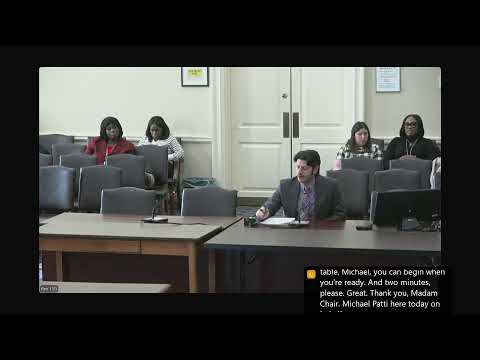
Health and Social Services Subcommittee unanimously passes HB214 and HB43
Summary
The subcommittee approved HB214, which codifies an existing assistive-technology program, and HB43, which allows federally qualified health centers to use existing grant funds to buy land. Both bills passed by unanimous voice votes with no recorded opposition or fiscal notes increasing spending.
The Health and Social Services Subcommittee voted unanimously Feb. 13 to pass two bills relating to health services funding and program structure.
HB214, described by the committee as the human services Maryland Assistive Technology Program establishment bill, codifies an existing assistive-technology program administered within the Department of Disabilities. The bill was reported to the subcommittee with no recorded opposition and no fiscal note, and was moved by Delegate Rufe and seconded by Vice Chair Jones before passing on a voice vote.
HB43, introduced by Delegate Jazz Lewis, adds acquisition of land to the list of allowable uses for an existing grant program for federally qualified health centers (FQHCs). The bill does not allocate new funds to the grant program; it only expands eligible uses so FQHCs could apply for grant money toward land purchases. The motion to pass HB43 was moved by the vice chair and seconded by Delegate McCaskill; the bill also passed by unanimous voice vote.
Why it matters: HB214 formally places the assistive-technology program into statute, potentially clarifying administration and oversight even though the program currently exists. HB43 changes eligible uses for a state grant program used by safety-net clinics; advocates said the change could help clinics acquire land for expansion or stability, but the bill does not increase the total grant pool.
Votes at a glance: - HB214 — "Human services — Maryland Assistive Technology Program establishment." Moved by Delegate Rufe; seconded by Vice Chair Jones. Outcome: passed unanimously (voice vote). Opposition: none recorded. Fiscal note: none. - HB43 — "Federally Qualified Health Centers Grant Program — Acquisition of Land." Sponsor: Delegate Jazz Lewis. Moved by Vice Chair Jones; seconded by Delegate McCaskill. Outcome: passed unanimously (voice vote). Opposition: none recorded. Fiscal impact: no additional funds; adds allowable use only.
Speakers listed in the record for the votes included Chair Shetty, Delegate Rufe, Vice Chair Jones, Delegate McCaskill and the bill sponsor attribution to Delegate Jazz Lewis. The verbatim segments in the transcript record the committee chair reading the bills, noting lack of opposition, and conducting voice votes.