Get Full Government Meeting Transcripts, Videos, & Alerts Forever!
Get email alerts on the Community Corrections Updates topic
No spam. Unsubscribe anytime.
Community Corrections director: Dove House talks, domestic-violence app review and major repairs at Duval facility
Summary
Community Corrections Director Scott Holt said the county is negotiating a Dove House partnership to restore female work-release beds, reviewing a domestic-violence geolocation pilot based on King and Cook County models, and flagged substantial repair costs at the Duval facility, including a roof quote exceeding $1.3 million.
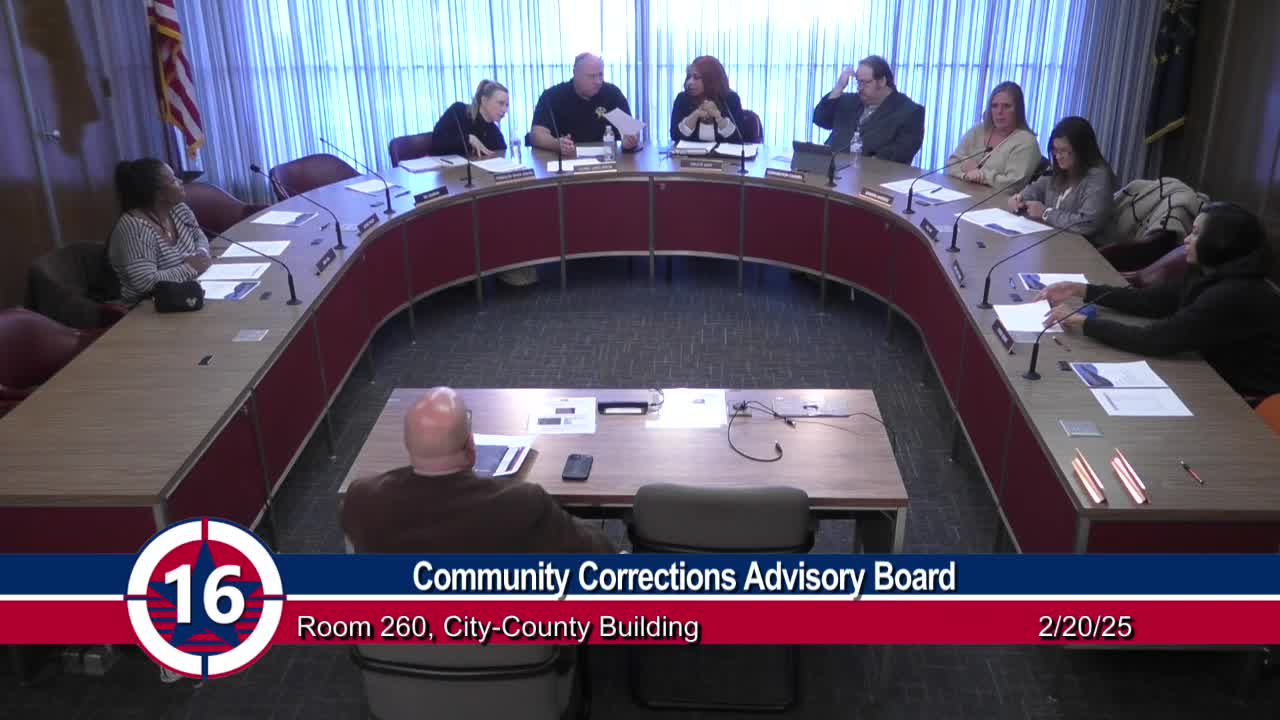
Community Corrections Director Scott Holt told the Marion County Community Corrections Advisory Board on Feb. 2025 that the department is in early contract talks with Dove House to provide female work-release services, is supporting partners reviewing a domestic-violence geolocation application pilot, and is tracking increasing, unbudgeted repair and replacement costs at the Duval facility.
Holt said the Dove House discussions are promising but not yet final: the county is drafting a contract to send to Dove House for review and redlines. He said the initial plan is to secure about six to eight dedicated beds for community corrections, with a flexible pool of additional beds available as Dove House expands its facility. “We’re starting off at about 6 to 8,” Holt said. He noted that before fall 2023 the county contracted for a larger number of beds at Crane House and that the county went more than a year without a female housing contract after that change.
On a proposal to adapt software used in King County and Cook County to manage survivor protections, Holt said local domestic-violence providers, the prosecutor’s office and IMPD are reviewing implementation documents and logistics. He described the proposed system as a geolocation-based protection zone that would travel with a survivor; alerts would trigger through the county’s 24/7 call center when a protected individual’s buffer zone is breached, prompting outreach to the survivor and, if the proximity continues, law-enforcement notification. Holt said participation rates in the Washington and Cook County models hover around 40% among eligible survivors.
Holt also provided an itemized update on Duval facility costs that have exceeded the department’s normal maintenance budget: roughly $70,000 in unbudgeted repairs in 2024 and about $20,000 to date in 2025. He said a rental generator would cost a minimum of about $36,000; replacing the county’s end-of-life generator would likely be a six-figure expense after removal and installation. He listed a needed boiler repair (about $18,000), additional kitchen work tied to the new food-service contractor (about $20,000), and a roof replacement quote the department holds at about $1.3 million (the quote is at least six months old and likely higher today).
Board members pressed for additional detail on ownership and insurance. Holt said the Duval building is city-owned; he and others noted the city is generally self-insured. Council members requested the county’s Office of Finance and Management or its risk manager be asked to present on insurance status and liability for the building at a future meeting.
Holt said the department is engaging the county controller’s office on options to manage these unbudgeted capital costs and reiterated his long-term preference — previously discussed with the board — for evaluating a combined, modern facility to replace aging infrastructure.
No formal action on contracts or capital expenditures was taken during the meeting; the Dove House arrangement was described as a pending contract under negotiation, and the domestic-violence software review remains in the planning stages.