Get Full Government Meeting Transcripts, Videos, & Alerts Forever!
Get email alerts on the Performance Measures topic
No spam. Unsubscribe anytime.
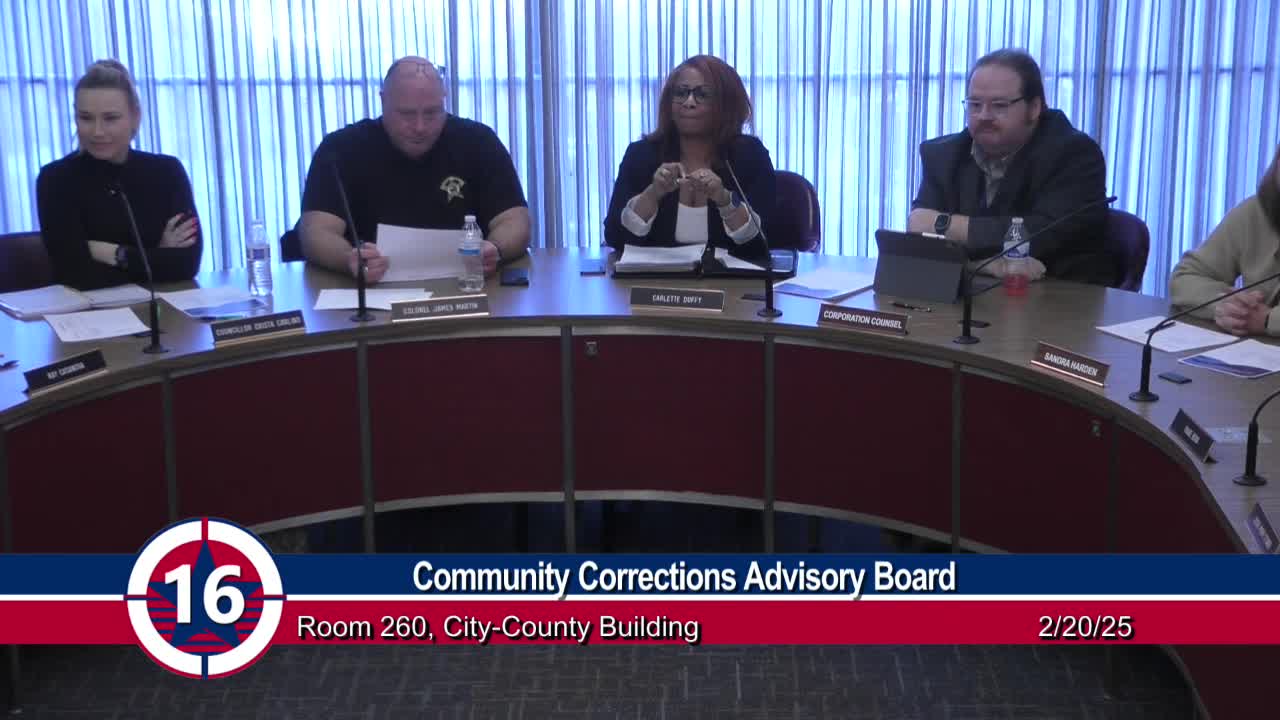
Marion County board approves 2025 performance goals for drug, reentry, veterans, mental-health, pretrial and probation programs
Summary
The Marion County Community Corrections Advisory Board and Local Justice Reinvestment Advisory Council on Feb. 2025 approved performance goals for drug treatment, reentry, veterans, mental-health, pretrial and probation programs.
The Marion County Community Corrections Advisory Board and Local Justice Reinvestment Advisory Council on Feb. 2025 approved formal performance goals for the county’s alternative-court programs, including adult drug treatment court, reentry court, the Indianapolis Veterans Court, the mental-health alternative courts, pretrial services and probation programs.
Court Director Jeffrey Yanes said the drug treatment court’s 2025 targets are to enroll 50 new clients, graduate 20 clients and limit terminations to no more than 20; the reentry court’s goals are to enroll 50 new clients, graduate 25 and limit terminations to no more than 25. “The goal for drug treatment court is we’re gonna look at enrolling 50 new clients this year, graduating 20 clients, and trying not to terminate more than 20 clients this year,” Yanes said during the board meeting.
Lindsey O’Connor, who presented for Indianapolis Veterans Court and the mental-health alternative courts, said the veterans court will seek to enroll 43 participants in 2025, increase therapeutic adjustments through staff training and accept more post-conviction cases. For the mental-health courts, she said the program will try to increase referrals from community corrections, raise the number of graduates and maintain enrollment at about 71 participants.
Joshua Herman, chief deputy probation officer, described goals for pretrial work tied to an IDOC grant: increase the appearance rate for pretrial clients by 2 percentage points, improve overall success rates and increase safety measures by connecting people leaving the jail with immediate resources. Herman described exploring QR-code access to resource lists at release and noted the county’s previous court-notification text line ran through the Odyssey system and has not been reenabled since the remote-hearing period during the COVID pandemic.
Board members asked for a midyear update on progress; one member requested a status report around July. After brief discussion, the board moved and seconded each set of measures and approved them by voice vote. Meeting minutes from the Jan. 16 meeting and the board’s calendar dates for 2025 were also approved by voice vote during the session.
Votes at a glance - Approval of Jan. 16 meeting minutes — approved by voice vote (no opposed voices recorded). (Motion recorded in meeting transcript.) - Approval: 2025 performance goals, Drug Treatment Court and Reentry Court (Court Director Jeffrey Yanes) — approved by voice vote. - Approval: 2025 performance goals, Indianapolis Veterans Court and Mental-Health Alternative Courts (Lindsey O’Connor) — approved by voice vote. - Approval: 2025 performance measures, Pretrial and Probation (Chief Deputy Joshua Herman) — approved by voice vote. - Approval: Calendar-year 2025 meeting dates — approved by voice vote.
The approvals formalize targets that feed the department’s 10-06 funding submissions to the Indiana Department of Correction and will guide reporting and midyear check-ins requested by board members. Several presenters noted that enrollment figures reflect new enrollees within the calendar year rather than active caseloads carrying over from prior years; Yanes said waiting lists are already in place for drug court because the program is near capacity.
Board members and staff did not adopt new policy language or change eligibility requirements during the votes; most questions focused on operational capacity, referral sources and how program lengths (often 12 to 24 months) affect graduation counts within a single calendar year.
The board did not record roll-call tallies in the public transcript; motions were taken, seconded and passed by unanimous voice votes recorded as “Aye” with no opposed votes noted.