Get Full Government Meeting Transcripts, Videos, & Alerts Forever!
Get email alerts on the Rules Of Procedure topic
No spam. Unsubscribe anytime.
Sedona council updates rules of procedure; moves agenda team to city manager, adds executive‑session reporting
Summary
The Sedona City Council reviewed and approved several edits to its rules of procedure, shifting routine agenda management to the city manager’s office, adding executive‑session reporting to future agendas and raising the threshold for council‑initiated agenda items.
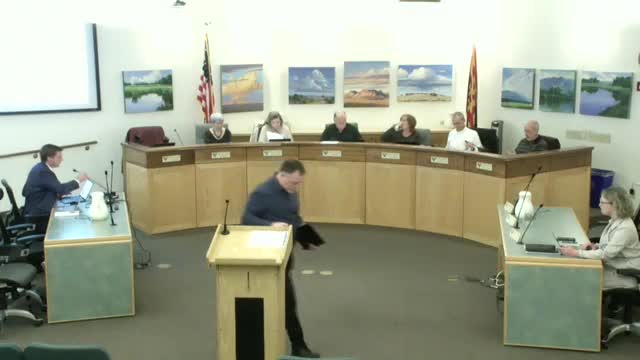
The Sedona City Council spent a substantive portion of its work session reviewing redlined revisions to the council rules of procedure. Kurt (staff) walked the council through the proposed edits and explained each change in turn. Much of the discussion focused on transparency, council‑manager roles and practical meeting operations under Arizona’s open‑meeting law.
On agenda setting, councilors agreed that the operational agenda‑team task should be carried out under the city manager or city clerk rather than by a permanently constituted council agenda team. Kurt summarized the practical intent: the city manager would decide who to involve in staff agenda planning and could still invite the mayor, vice mayor or a councilor when appropriate. Councilors discussed whether those agenda‑team sessions should be public or viewable; staff said the meeting could be made available as a view‑only Teams link if council wants broader observation.
Councilors also agreed on a change to the threshold for placing a council‑initiated item onto a future meeting agenda. The current rules allowed two councilors to request an introductory item; the council agreed to raise that threshold and will require at least three councilors to initiate an agenda item that directs staff to conduct additional work. Annette cautioned that staff capacity and the time required to research new requests would still guide whether an item appears immediately or is scheduled later.
A new procedural item won support: adding a short "executive session report" to the next open agenda after any closed session. Kurt described the proposal as a brief, broadcastable statement that would note whether council took action in executive session or directed staff to proceed — without revealing privileged legal advice or personnel details. "It would be executive session report, none — 99% of the time it will be a none," Kurt said; council agreed this would give the public clearer notice of outcomes from any closed sessions.
On a high‑visibility language point, councilors debated a line that cites Arizona law and labels the mayor "the chief executive officer of the city." After discussion about how the council‑manager form of government assigns day‑to‑day executive authority to the city manager, the council decided to remove the paragraph's recital from their local rules while leaving state law unaffected. Councilor Fuhrman explained his preference to keep the council‑manager division clear to the public. Several councilors noted the change would not alter statutory law but would reduce public confusion in local rules.
Other edits discussed and adopted by consensus or directed for staff redrafting included removing a specific example reference to the city publication "City Talk" from a rule on council‑assigned articles, clarifying public‑comment practices (keeping public forum at regular council meetings and public input on agenda items for council meetings while allowing flexibility for special sessions like budget work sessions), and striking wording that allowed an "absent councilor" to trigger reconsideration — instead limiting reconsideration requests to a member of the prevailing side.
Councilors and staff flagged operational follow‑ups: better labeling of multi‑page rule sections for ease of use, a way to provide councilors with access to meeting transcripts/search tools for internal use, and a staff review of how a mayoral emergency proclamation interacts with council authority and state law. Annette and Kurt said they would bring revised ordinance language and a clean draft of the rules back to a future meeting for formal adoption.
Ending: Council asked staff to prepare a clean ordinance and rules packet incorporating the agreed edits for formal consideration at a future meeting. Several items were earmarked for additional legal review and drafting before being placed on a formal ordinance or consent calendar.