Get Full Government Meeting Transcripts, Videos, & Alerts Forever!
Get email alerts on the Budget topic
No spam. Unsubscribe anytime.
Freetown-Lakeville superintendent presents FY2026 budget recommending $49.1 million; towns' assessments to rise
Summary
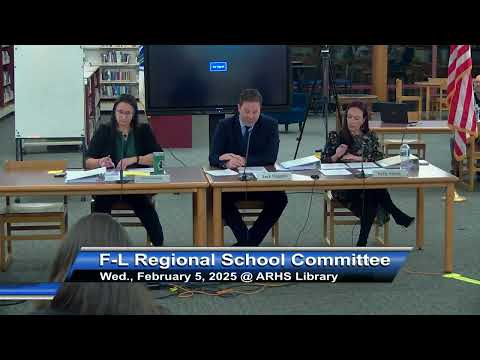
Jack Higgins, the district director, presented the Freetown-Lakeville Regional School District's initial FY2026 budget at the school committee meeting on Feb. 5, recommending a total budget of $49,135,217 and a general fund of $46,665,011.
Jack Higgins, the district director, presented the Freetown-Lakeville Regional School District's initial FY2026 budget at the school committee meeting on Feb. 5, recommending a total budget of $49,135,217 and a general fund of $46,665,011.
Higgins said the recommendation includes use of $800,000 in School Choice funds, $1,590,206 from Circuit Breaker reimbursements and $80,000 from miscellaneous revenue. He told the committee that the FY2026 general fund represents a $2,584,258 increase, or 5.55 percent, above the FY2025 general fund of $44,313,814.
The presentation identified health insurance as a major pressure on the budget, with an estimated rate increase of about 11 percent for FY2026. Higgins also flagged ongoing collective bargaining with teachers, paraprofessionals and secretaries as a driver of costs; the district has completed negotiations with custodians and is entering the second year of that contract.
Higgins walked through revenue-line changes provided in the state’s initial estimates: Chapter 70 state aid was shown as an increase of $196,500 (about $75 per pupil), and regional transportation (Chapter 71) showed an initial decrease of $46,905 in the district’s preliminary materials. School Choice revenue used in the budget is proposed to increase from roughly $700,000 to $800,000 in FY2026.
He described a reallocation of some special-education grant spending: the district plans to shift roughly $704,633 away from transportation line items because prior practice had used grant funds to pay salaries (which require fringe benefit set-asides). Moving grant-funded positions out of salary lines increases salaries in the general fund while reducing transportation in the budget presentation.
Higgins provided the town-level assessment estimates included in the packet: the FY2026 assessment is $14,066,791 for Freetown (a $655,000 increase, roughly 4.89 percent) and $18,681,260 for Lakeville (a $1,626,000 increase, roughly 9.54 percent). He attributed the disproportionate town increases to differing enrollment counts and the state’s foundation funding formulas.
Committee members asked procedural questions about the budget review schedule. Higgins outlined next steps: continued committee review (Feb. 26), a regional finance committee meeting (March 5), a public hearing (March 26) and a school committee vote planned for April 9 ahead of town meetings in June. He agreed to supply a digital folder with the budget PDFs to committee members and regional FinCom representatives.
Higgins also reviewed other fiscal drivers in the packet: an expected increase in circuit-breaker reimbursements, estimated retirement assessments from the Bristol County Retirement Association, and a note that one small debt payment remains in the coming year. He highlighted efforts to reduce supply and textbook lines where feasible and said technology costs were reduced for this cycle.
The director closed by noting enrollment trends, special-education placement projections, and that out-of-district placements—while numerically small—can have disproportionately large per-student costs. He invited committee members to direct questions at future meetings broken out by building or department.