Get Full Government Meeting Transcripts, Videos, & Alerts Forever!
Get email alerts on the Humanitarian Assistance Gaza Unrwa topic
No spam. Unsubscribe anytime.
UN warns UNRWA operations in occupied Palestinian territory risk collapse as aid steps up during ceasefire
Summary
United Nations officials told reporters that legislation in the Israeli Knesset could cripple UNRWA operations within days even as U.N. agencies and partners are scaling up food, medical and shelter assistance during a ceasefire in Gaza.
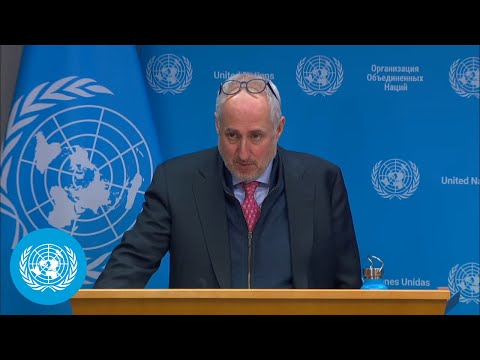
Steph, the U.N. spokesperson, said Wednesday that U.N. officials and agency heads warned the Security Council that legislation passed by the Israeli Knesset could cripple the operations of the United Nations Relief and Works Agency for Palestine Refugees (UNRWA) within two days if implemented.
Philippe Lazzarini, Commissioner-General of UNRWA, told council members that full implementation of the Knesset legislation "would be disastrous," saying it would degrade the agency’s capacity just when humanitarian assistance must be scaled up. "UNRWA staff is determined to stay and deliver until it is no longer able to do so," Steph said, quoting the commissioner-general’s remarks and reaffirming that the United Nations considers UNRWA’s work "irreplaceable in many areas."
The warning came as humanitarian agencies reported an increase in deliveries during the ceasefire. U.N. humanitarian partners told the briefing that more than 375,000 people had moved from south to north since roads opened, and that the World Food Programme (WFP) reached more than 330,000 people across Gaza in the first week of the ceasefire with food parcels, hot meals and cash assistance. WFP said it had moved more than 10,000 metric tons of food into Gaza and that families were receiving larger rations, including two food parcels and a 25-kilogram bag of wheat flour in recent distributions.
Agencies said they are also prioritizing vulnerable groups. WFP reported distribution of nutrition products to about 46,000 people, including children under 5 and pregnant and breastfeeding women, and that bakeries in the south — eight previously existing and five newly operational — were producing bread to help families in shelters.
The U.N. Mine Action Service and partners have assessed sites across Gaza to reduce risks from unexploded ordnance, and humanitarian teams are warning civilians of explosive hazards. The agencies also said some humanitarian and health facilities have been struck in the fighting and that warehouses have been looted in some areas.
Steph said the U.N. had written to Israeli authorities and would share a letter the secretary-general sent to Ambassador Daniel (last name not specified at the briefing) outlining the U.N. position and stressing that changes to UNRWA’s status in the occupied Palestinian territory require prior consultations and negotiations between Israel and the United Nations. "Any change in UNRWA’s status in the occupied Palestinian territory requires prior consultations and negotiations between Israel and the United Nations. That has not happened," Steph said.
While other U.N. agencies have stepped up distributions, Steph repeated a point attributed to Lazzarini that UNRWA’s footprint on education, health and protection cannot be fully replaced by other U.N. agencies.
The U.N. spokesperson said the United Nations would "do whatever we can" to ensure humanitarian needs are met but also cautioned that predicting what will happen when the law takes effect is difficult. "UNRWA will continue to do its work until it is no longer able to do so," Steph said.
The briefing closed with officials saying more detailed operational briefings would be given to the Security Council later in the day and with a pledge to keep member states informed if the situation changes.