
Winter Springs commission directs staff to draft referendum changing mayor selection; 4–1 vote advances ordinance drafting
Get AI-powered insights, summaries, and transcripts
Subscribe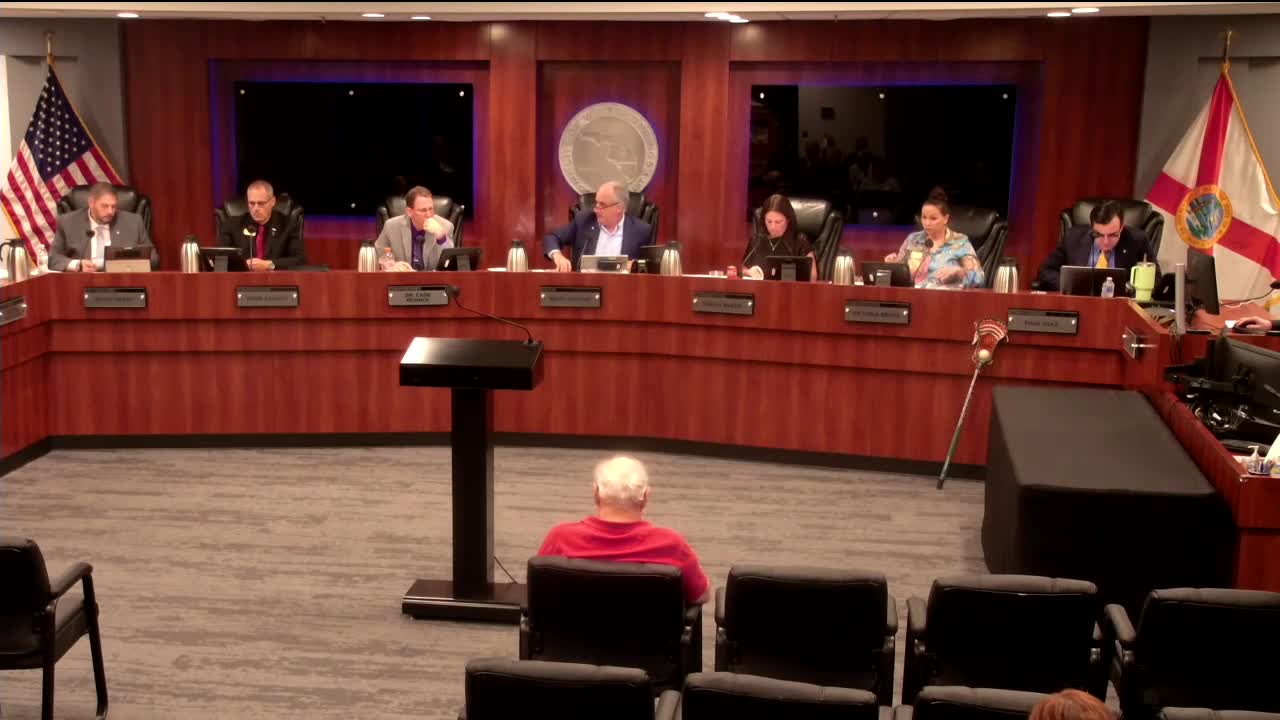
Summary
Facing a local bill from the Seminole County delegation, the Winter Springs City Commission on Oct. 27 directed the city attorney to draft ordinance language for a referendum to change how the mayor is chosen — a motion the body approved 4–1 after extended debate and public comment
After extended debate and public comment, the Winter Springs City Commission on Oct. 27 voted 4–1 to direct the city attorney to draft ordinance language for a proposed charter referendum for the 2026 ballot that would change how the mayor is selected and how commissioners are elected.
The motion approved by the commission directed the city attorney to prepare language that would: remove the separately elected office of mayor while keeping five city commissioners; have the five commissioners select a mayor and deputy mayor each year by vote of their peers; move commissioner elections to single‑member districts; and make any voter‑approved changes effective in 2030. Deputy Mayor Kate Resnick made the motion and Commissioner Mark Caruso seconded. The vote was Resnick, Caruso, Paul Diaz and Victoria Bruce — yes; Sarah Baker — no.
Commissioners framed the action as an attempt to respond to pressure from the Seminole County Legislative Delegation and to give residents a local option before the delegation or the Legislature moved a local bill. "I've called them as recently as today and had that conversation again," Resnick said, noting representatives told her they expected a referendum that included a voting mayor. "That accomplishes what Tallahassee has asked and would not change us too drastically from where we sit," Resnick said when describing the form of a possible ballot question that keeps five districts and adds a voting mayor.
Concerns and dissent
Mayor Kevin McCann and Commissioner Sarah Baker strongly opposed aspects of the proposal. McCann argued the change could erode years of relationship‑building with state and county officials and harm the city's ability to secure funding and project support. "We are potentially, due to those relationships…and me going back and forth to Tallahassee…and doing those things, you're potentially giving up millions of dollars in influence every year," McCann said. He called the options "awful" and said they risked destabilizing city management and staff.
Baker voted against the motion and urged more time for public input and process; she described the Legislature's action as a "gun to our head" and urged caution. Several public speakers also urged the commission to slow the process or to take the issue to a charter review committee instead of rushing a ballot measure.
Process and next steps
City Attorney Anthony Agan told commissioners a charter amendment ordinance would require two readings before the commission to place an amendment on the ballot; commissioners directed staff to prepare ordinance language in time to return for readings in November and December if possible. Staff also discussed the practical constraint that ballot language can be limited by word counts; commissioners asked staff to advise whether the mayor selection and the single‑member district proposal should be presented as a single question or two separate questions.
Separately, commissioners agreed to begin work toward a charter review committee as a longer‑term, more comprehensive review process for the city's charter, with staff suggesting 12–18 months is a typical timeframe for a full review and community engagement. Several commissioners said they supported a charter review process but that the immediate drafting direction was necessary to ensure the city's voice is represented before Tallahassee acts.
Votes at a glance
- Motion to direct city attorney to draft ordinance language for a 2026 referendum changing mayor selection and commissioner election method: approved 4–1 (Resnick, Caruso, Diaz, Bruce — yes; Baker — no).
Public comment
Multiple residents addressed the commission during public input. Art Gallo said he opposed the delegation's action and asked the commission to establish a charter review committee and let residents decide. Resident Gina Schaefer said she supports putting the issue on the ballot. Several speakers urged clear ballot language and encouraged commissioners to assemble an inclusive charter review process.
Ending
The commission's action directs staff to prepare ordinance language and to return to the commission with draft language and scheduling for required readings; any final charter changes would require formal commission action and voter approval.