Get Full Government Meeting Transcripts, Videos, & Alerts Forever!
Get email alerts on the Procurement Disparity Study topic
No spam. Unsubscribe anytime.
City procurement office reviews disparity study, recommends compliance fixes amid DBE uncertainty
Summary
City procurement staff updated the task force on a multi-year disparity study, 30-plus recommendations to improve minority and small-business participation in city contracts, progress on bonding thresholds and plans for improved tracking — while flagging recent federal and state changes to DBE and DEI rules as risks.
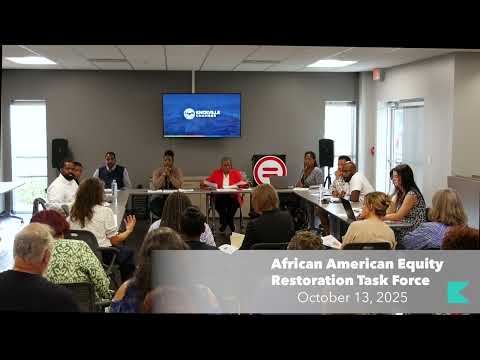
City procurement staff briefed the African American Equity Restoration Task Force on a disparity study and a menu of recommendations intended to increase contracting opportunities for minority- and women-owned businesses.
The city hired Miller3, a consulting firm, to perform a disparity study covering fiscal years 2017–2021. Procurement staff said the study analyzed the city's market availability and utilization and produced more than 30 recommendations that range from small administrative changes to larger reforms. The study, staff said, helped the city refine its methodology for counting minority, women and small-business participation.
Key recommendations procurement staff described include stronger contract compliance monitoring, a supplier-performance program to assess contractor delivery and outcomes, improved forecasting and outreach for small-dollar purchases (the city allows departments to spend up to $12,500 without competition), and formalized partnerships with community technical-advice providers. Staff said they promoted an internal employee into contract compliance work and that a formal contract compliance function is now in place.
Procurement staff also described recent operational changes the council approved to lower barriers: the construction contract bond threshold was raised from $25,000 to $100,000 and the city will allow phased bonds so smaller firms need not post 100% performance and payment bonds for large multi-zone projects. Procurement staff said those changes remove a common barrier for smaller contractors.
Staff warned of external headwinds. They said recent state-level legislation and federal moves have affected diversity program implementation: federal Department of Transportation guidance on DBE (disadvantaged business enterprise) goals was changing, and procurement staff said TDOT contracts that previously included DBE goals may not include them in forthcoming solicitations for the near future. Staff said those developments and reductions in available grant funds complicate efforts to increase diverse participation in projects that use state or federal funds.
Procurement staff said they are implementing a software platform to automate tracking, reporting and outreach (replacing manual spreadsheets). They described a planned supplier training series, small targeted vendor fairs and ongoing outreach including an expanded quarterly newsletter that reaches thousands of businesses.
Task force members asked whether the primary problem was a lack of bids, insufficient outreach, or that the small-business pipeline was not ready to pursue city contracts. Procurement staff said it was a mix — some small businesses do not complete applications because of documentation burdens, and some are unsure how to navigate procurement. Staff said formalized partnerships with technical-advice providers and more proactive department-level forecasting should help improve participation.