Get Full Government Meeting Transcripts, Videos, & Alerts Forever!
Get email alerts on the Voting Rights topic
No spam. Unsubscribe anytime.
Broad coalition backs Maryland Voting Rights Act bills to prevent vote dilution and require pre‑clearance in high‑risk jurisdictions
Summary
Civil‑rights, legal and civic groups urged the House Ways and Means Committee to pass two measures in the Maryland Voting Rights Act—HB 10‑43 to create a state cause of action to challenge vote dilution, and HB 10‑44 to require pre‑clearance in jurisdictions with evidence of discriminatory practices—saying federal protections are no longer sufficient.
(Combined coverage: HB 10‑43 and HB 10‑44)
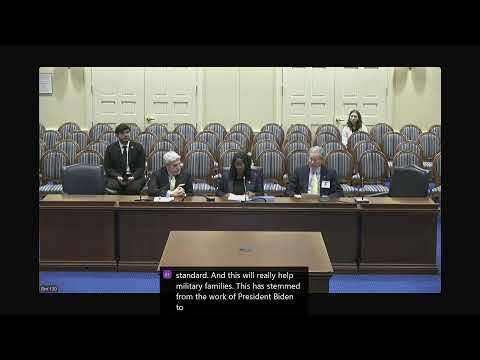
A broad coalition of civil‑rights, legal and civic organizations urged the Ways and Means Committee to advance two linked bills in the Maryland Voting Rights Act package: HB 10‑43, which would establish state‑level causes of action and streamlined standards to challenge racial vote dilution and suppression, and HB 10‑44, which would require pre‑clearance of covered changes in election administration for jurisdictions with evidence of past discriminatory practices or disparities.
Speakers included representatives of the League of Women Voters, ACLU of Maryland, Campaign Legal Center, Legal Defense Fund, Common Cause Maryland, and the Maryland Episcopal Public Policy Network. Testimony recounted litigation in Federalsburg and Baltimore County and argued federal enforcement is increasingly uncertain and costly; the advocates said state tools would enable quicker, less costly remedies and encourage pre‑litigation negotiation.
HB 10‑43 would create a streamlined state right of action and modify remedy standards to reduce litigation expense and allow courts to order appropriate remedies. Proponents said the bill also requires written notice before litigation and a chance for local governments to collaborate on a cure. HB 10‑44 would create a state‑tailored, targeted pre‑clearance program for jurisdictions identified via specific coverage prongs (e.g., past violations, disparities in turnout or criminal‑justice contact). The attorney general would publish covered jurisdictions and offer an accelerated review for proposed changes; appeal to court is possible.
Speakers described recent local examples — Federalsburg, Wicomico County, and Baltimore County ballot measures and redistricting disputes — and urged that pre‑clearance and a state statutory cause of action could have prevented prolonged litigation and costly court battles. Advocates emphasized the bills are tailored to Maryland: the pre‑clearance list is limited in scope, differentiates municipal and county processes, and offers an opportunity for collaborative review rather than automatic injunctions.
Committee members asked procedural questions about state vs. federal remedies and appeals; witnesses explained that claims under the proposed state statutes would proceed in state court and that federal law remains supreme where direct conflict exists. No final committee action or vote was recorded; proponents said the bills are designed to provide faster, less expensive remedies than federal Section 2 litigation and to preserve voting rights if federal protections continue to erode.
Why it matters: proponents said the measures would provide state‑level enforcement tools to address racially discriminatory election practices more efficiently than federal litigation alone, with potential to change local electoral outcomes and reduce long litigation burdens on plaintiffs.