Get Full Government Meeting Transcripts, Videos, & Alerts Forever!
Get email alerts on the Replacement Levy topic
No spam. Unsubscribe anytime.
Superintendent outlines $40 million shortfall risk as Battle Ground prepares levy re-run
Summary
Superintendent Denny Waters briefed the board on a failed replacement levy and presented possible cuts totaling $40 million over two years if a second ballot in April fails, including staff reductions, program eliminations and service cuts.
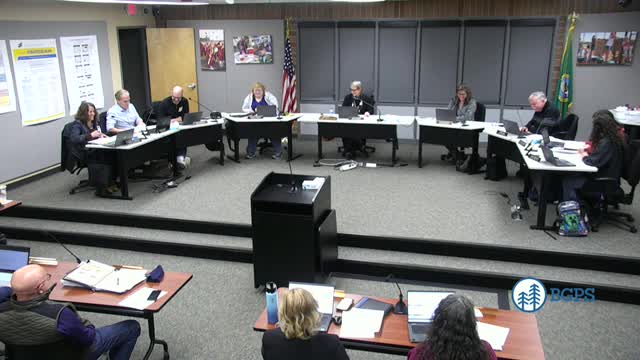
Superintendent Denny Waters told the board on Feb. 24 that the district will re-run a replacement levy on April 22 after the measure fell short by about 60 votes in the prior election. Waters said the district could need roughly $40 million in cuts over two years if voters do not approve the levy.
Waters said the previous levy failed with a result near 49.86% to 51.04%, leaving the district about 60 votes short. The board accepted administration’s recommendation to re-run the levy at the same dollar amount. "We were 60 votes short," Waters said.
Waters described the potential fiscal consequences if the levy fails again. Because the district will still receive half of the levy amount in the first year (the current levy overlaps into January), he said the district would need to cut approximately $20 million for the next school year and another $20 million the following year. He said district leaders had already cut $6.5 million last year when federal relief funds ended.
Waters gave examples of the depth of possible reductions: eliminating middle school sports; removing courses with fewer than 25 students (including some AP and CTE classes); eliminating or reducing support and intervention services; increasing student activity fees; deferring new curriculum for two years; reducing building maintenance and custodial services; consolidating transportation routes; and cutting certificated and classified positions districtwide. He said a $20 million cut approximates more than 200 staff positions, noting the district employs about 1,600 people.
The superintendent also explained how the district could use its fund balance to soften cuts. The board’s fund balance was about 5%; each 1% of fund balance equates to roughly $2.5 million, Waters said, but cautioned that drawing down the fund balance leaves less cushion for emergencies.
Waters discussed impact fees and state legislation that could change bond thresholds, saying House Bill 11032 (as discussed in the meeting) could lower the bond approval requirement from 60% to 55% or 50–55% while potentially restricting impact fees — a change that could reduce local capital funding options. He said the district collected about $8 million in impact fees last year and used impact fees for facilities and growth projects, not to replace levy funds or pay teacher salaries.
Waters emphasized timing constraints: if cuts are required, staff decisions must be finalized by May 15 to meet notification deadlines. He urged transparency with the community while district staff work through potential cuts and a prioritized approach.
The board did not take a formal vote on cuts at the meeting; Waters said administration would return with specific proposed reductions after additional analysis.