Get Full Government Meeting Transcripts, Videos, & Alerts Forever!
Get email alerts on the Annexation Dispute Resolution topic
No spam. Unsubscribe anytime.
Committee advances cleanup to annexation dispute process to speed arbitration panel empaneling
Summary
House Bill 155, presented as a committee substitute, would expand the pool of potential arbitration panelists, extend timeframes and allow the Department of Community Affairs to appoint panelists when no strikes are made — changes proponents say will reduce docketing delays and lower litigation costs in annexation disputes.
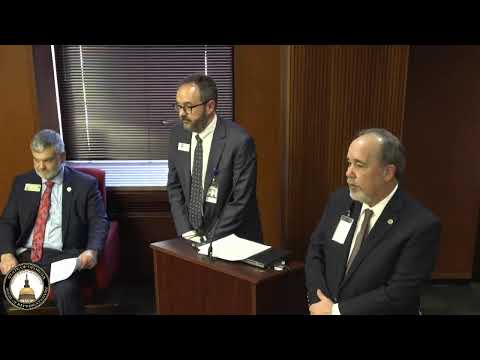
Representative Chairman Anderson presented a committee substitute to House Bill 155, saying the measure fixes recurring logjams in Georgia’s annexation dispute resolution process by expanding the pool of potential arbitrators, lengthening timeframes and allowing the Department of Community Affairs (DCA) to appoint panelists when local parties do not exercise strikes.
Why it matters: proponents said the existing process was too constrained to function as intended. Todd Edwards of the Association County Commissioners of Georgia and Jim Thornton of the Georgia Municipal Association told the committee they worked with DCA and stakeholders to develop the revisions, which include allowing county and city managers and administrators to serve on panels under restrictions; increasing the time window for empaneling from 15 calendar days to 20 business days; allowing DCA to randomly appoint a panel if no strikes are exercised; permitting replacement of a panelist who becomes unavailable; and increasing compensation for panel members to encourage participation.
Committee action: After testimony from county and municipal associations and DCA-aligned presenters, the subcommittee voted to pass the committee substitute by voice vote.
Process and limits: supporters said the changes are procedural, intended to make arbitration panels available and avoid shifting disputes into the court system. The presenters emphasized safeguards to manage conflicts of interest and described joint training efforts to implement the updated process.
Next steps: The committee advanced the substitute and will consider the measure in full committee.