Get Full Government Meeting Transcripts, Videos, & Alerts Forever!
Get email alerts on the Procurement Qualifications Based Selection topic
No spam. Unsubscribe anytime.
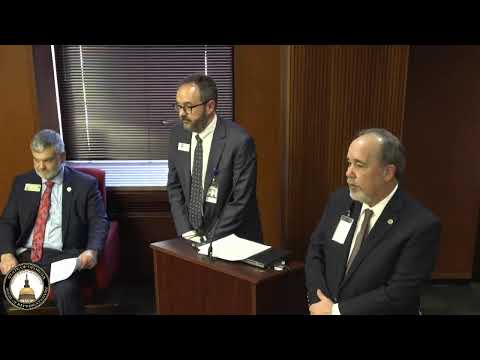
Subcommittee hears mixed testimony on bill to require qualifications-based selection for local design contracts
Summary
House Bill 152 would require cities and counties to use qualifications-based selection (QBS) for procurement of architecture, engineering and similar professional services above specified thresholds. Supporters say QBS improves project outcomes; local government groups say a mandate would burden small counties and limit procurement flexibility.
Representative Reeves presented House Bill 152, which would extend qualifications-based selection (QBS) procurement requirements to city and county governments for professional services such as architecture, engineering, land surveying and landscape architecture. Reeves said the approach mirrors the Brooks Act and the state’s existing Mini-Brooks law for state agencies and would allow project owners to rank firms by qualifications and then negotiate price with the highest-ranked firm.
Why it matters: supporters argued QBS focuses selection on technical competence and reduces lifecycle cost and risk. Kenneth Scott Gordon, the Cherokee County general services agency director and a registered architect, said QBS treats complex design services as professional services rather than commodities and helps local governments “deliver quality projects.” Michael Sullivan, president and CEO of ACEC Georgia, said the proposal reflects years of stakeholder discussions and noted studies that favor QBS for public works procurement.
Local-government concerns: Kaylin Day of the Association County Commissioners of Georgia and Ted Burgess, Fayette County’s chief of procurement, told the subcommittee they are not opposed to QBS as a tool but opposed to a statewide mandate. They argued that many smaller counties lack procurement staff and that the bill would eliminate methods local governments use to compare prices before negotiations, leaving them at a disadvantage when negotiating fees. Burgess cited an example in Fayette County where proposal prices ranged from $327,000 to more than $1 million for an architecture/engineering solicitation.
Other testimony: Jim Thornton of the Georgia Municipal Association said cities generally support QBS and do not oppose the bill. Small-business owners who testified in favor said QBS can help small firms compete by emphasizing qualifications rather than low initial price. Cedric Clark, president of Southeastern Engineering, and Taylor Anderson of Blue Landworks described local experiences where low-bid selections led to change orders or litigation and urged adoption of QBS.
Committee action: The subcommittee held a hearing and took testimony but did not take a final vote on the measure; the chair said questions remain and the committee will decide whether to act in full committee the next day.
What the bill would change: according to testimony, HB 152 would add local governments to the OCGA provisions that govern QBS (OCGA chapter 50-22), define professional services subject to the requirement, preserve local discretion to set qualifications, and set an effective date in 2026 to allow local governments time to implement changes.
Remaining issues identified in testimony included administrative burden for smaller jurisdictions, definitions (for example, what constitutes an “existing working relationship”), and how small counties would judge market pricing when cost proposals are withheld until negotiations begin.