Get Full Government Meeting Transcripts, Videos, & Alerts Forever!
Get email alerts on the Tobacco Retail Licensure topic
No spam. Unsubscribe anytime.
Committee approves licensing regime to curb youth access to nicotine products; creates ABC tobacco division
Summary
Senate Bill 100 would create a tobacco, nicotine, and vapor product licensing division within the Department of Alcoholic Beverage Control, require retailer licensure and annual compliance checks, and impose escalating criminal and civil penalties for unlicensed sales and sales to underage buyers.
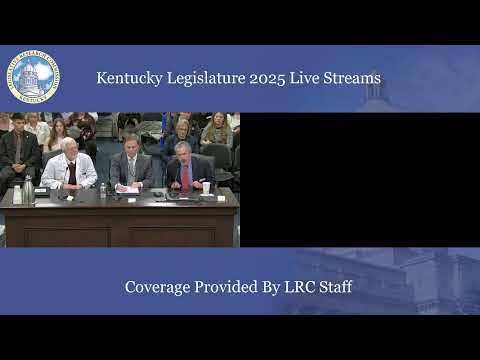
The Senate Standing Committee on Licensing and Occupations voted Tuesday to advance a substitute to Senate Bill 100, which would require all retailers of tobacco, nicotine, and vapor products to obtain an annual license, create enforcement authority within the Department of Alcoholic Beverage Control (ABC), and establish escalating penalties for violations.
The bill, sponsored by Sen. Jimmy Higdon, creates a Division of Tobacco, Nicotine and Vapor Products within ABC, authorizes investigators to inspect premises where such products are manufactured, stored, or sold, and mandates at least one random compliance check per year for every licensed retailer. Sponsors framed the measure as a supply-side approach to reduce youth nicotine access.
Delaney Crump, youth advocate (Delaney): “I’m here not just as a youth advocate, but as a representative of a generation that's being targeted and exploited by an industry that profits from addiction.”
Why it matters: Kentucky is among a minority of states without a comprehensive tobacco retail licensing law. Supporters said retailer licensure and annual compliance checks are necessary tools to enforce the Tobacco 21 law and reduce youth access to flavored and menthol products that public-health witnesses say appeal to minors.
Major provisions and penalties - Licensure: Any person, firm or corporation selling tobacco, nicotine, or vapor products must hold a license; annual license fee $250 and an application fee of $50.
- Compliance and enforcement: ABC investigators would have authority to inspect premises and seize contraband; ABC must conduct at least one random compliance check annually for each retailer.
- Penalties for unlicensed sales: Operating without a license triggers criminal penalties — first offense class B misdemeanor, second offense class A misdemeanor, third and subsequent offenses class D felony (as drafted in substitute and consistent with prior HB 11 language).
- Penalties for selling to underage buyers: Escalating penalties beginning with a $100 fine to the sales clerk plus a written warning to the owner; later violations carry increased fines to the clerk and retailer and eventually license loss and a two-year bar on reapplying.
- Wholesale penalties: Wholesalers selling unauthorized vape products face fines (first citation $5,000; second and subsequent $15,000) consistent with prior House Bill 11 language.
- Use of fines: Half of collected fines would fund enforcement; the remaining half would be directed to youth education programs.
Support and concerns Sen. Higdon and youth advocates from the University of Kentucky’s I Can End the Trend program urged passage. Griffin Nemeth, youth advisory board coordinator, and Delaney Crump spoke about flavors, social marketing and addiction risk. Tony Florence, a vapor retailer and member of the Kentucky Smoke Free Association, testified he supports licensure but urged definitional clarity for “authorized” versus “unauthorized” vapor products to avoid sweeping in hemp or future medical marijuana products. He also suggested the bill’s effective date be delayed pending a pending U.S. Supreme Court decision tied to FDA review processes.
Chair Rocky Adams and multiple committee members expressed support for the bill’s supply-side approach; the committee adopted PSS 1 and passed the substitute with favorable expression.
Votes at a glance - Committee adopted substitute PSS 1 and voted to advance Senate Bill 100 with favorable expression.
Ending Supporters said the licensing scheme is designed to hold bad actors accountable, fund enforcement and prevention work, and reduce youth nicotine initiation; industry witnesses urged precise definitions and timing adjustments to align with federal regulatory developments.