Get Full Government Meeting Transcripts, Videos, & Alerts Forever!
Get email alerts on the Cosmetology Regulation topic
No spam. Unsubscribe anytime.
Senate committee approves bill allowing unlimited cosmetology retests, emergency facility closures and broader hiring rules
Summary
Senate Bill 22, a cleanup bill for last year’s cosmetology reforms, passed the Senate Standing Committee on Licensing and Occupations on Feb. 18, 2025.
Senate Bill 22, a cleanup bill for last year’s cosmetology reforms, passed the Senate Standing Committee on Licensing and Occupations on Feb. 18, 2025.
The bill’s sponsor, Senator Reginald Thomas, told the committee the measure makes four targeted changes to the cosmetology law passed last year. “If nail technicians and aestheticians can take the exam a number of times, why can’t we as cosmetologists?” Thomas said, describing the first change as extending the right to retake licensing exams to all cosmetologists with a one-month waiting period between attempts. He said the bill “does 4 things” and then outlined the exam-retake provision, emergency closure authority, broader executive director hiring qualifications and expanded reciprocity for comparable licenses from U.S. territories.
The committee’s ranking and oversight context prompted the bill. Thomas referenced a legislative oversight and investigations committee report last November that found “scathing” problems at the Kentucky Board of Cosmetology; SB 22 is intended to address remaining technical or procedural gaps left after SB 14’s reforms, he said.
Key provisions explained to the committee: - Exam retakes: The bill extends the ability to retake cosmetology licensing examinations to all cosmetologists; a one-month waiting period between test attempts is required. The committee clarified that each retest requires payment of the examination fee and that, per testing vendor practice, examinees retake the full exam rather than only individual sections. As Senator McDaniel summarized, “it's a cumulative exam.” - Emergency facility closure: The bill gives the board the authority to close a facility immediately when it determines the facility is knowingly and intentionally employing unlicensed individuals; the bill preserves due-process rights and provides for a subsequent hearing. Thomas told the committee that the change is aimed at facilities “intentionally using unlicensed people” and that due process must be protected because “that’s a property interest involved.” - Executive director qualifications: The law would allow the board to hire an executive director who is either a licensed cosmetologist or a licensed nail technician — or someone with comparable managerial qualifications — rather than requiring the director be a cosmetologist. Thomas said the intent is to provide “flexibility” so the board can hire qualified managers even if they are not cosmetologists. - Reciprocity from U.S. territories: The bill adds explicit reciprocity for comparable licenses from U.S. territories such as Guam, American Samoa or Puerto Rico.
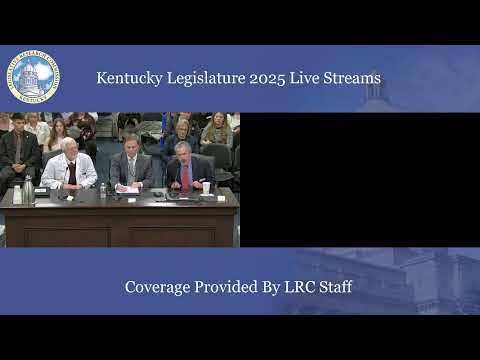
Board officials who testified were Joni Upchurch, executive director of the Kentucky Board of Cosmetology, and Ena Stevens, the board’s general counsel. Upchurch said SB 22’s “intentions are just to ensure more accurate fairness and equality among all of our licensees across the Commonwealth.” Stevens said the board is focused on implementing due-process protections and narrow emergency orders and is “actively working on new regulations and internal policies regarding the due process and administrative process in general.”
Committee members asked clarifying questions about fees and the structure of the exam. Senator Higdon asked whether examinees must pay for each retest; Upchurch confirmed “Every examination is required a fee.” Senator McDaniel asked whether retakes could be limited to failed sections; staff and witnesses clarified the retest is for the entire exam. Several senators remarked in support of removing limits on attempts as a workforce measure.
The committee adopted the committee substitute (PSS 2) and approved SB 22 with favorable votes.
What’s next: SB 22 will move to the full Senate for further consideration following the committee’s favorable report.