Get Full Government Meeting Transcripts, Videos, & Alerts Forever!
Get email alerts on the Homelessness And Public Safety topic
No spam. Unsubscribe anytime.
Bangor public comments press council to prioritize homelessness, drug response and protest naming practices; debate continues over inclusion resolution
Summary
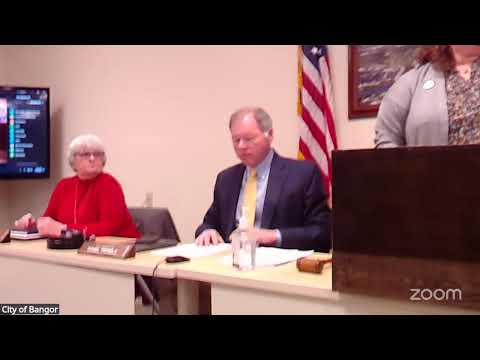
At public comment during the Feb. 24 Bangor City Council meeting, residents urged alternatives to encampment sweeps, criticized local drug and public-safety responses, raised concerns about ceasing proclamations (including Black History Month) and objected to personal attacks during a prior meeting.
Members of the public and several councilors addressed homelessness, the downtown safety climate and the council's recent handling of an inclusion resolution during public comment at the Bangor City Council meeting on Feb. 24, 2025.
Colleen O'Neil, a Bangor resident, criticized the council for failing to rebuke audience members who called council members derogatory names during the previous meeting, saying, "This behavior is neither inclusionary nor equal" and that the council "needs to make a formal apology" to several councilors for allowing personal attacks. O'Neil also urged the council to spend time on "failed policies on homelessness" and questioned the distribution and accountability of ARPA spending.
Multiple commenters focused on homelessness and related public-health and safety concerns. Mike Burrow, a longtime Bangor resident, criticized existing harm-reduction efforts and asked whether taxpayers would ultimately bear the cost of programs; he told the council, "You're not helping them. You're torturing them." Business owner James Gallagher, who said he operates several downtown businesses, recounted a recent violent incident involving a customer wielding "a machete at least 14 inches in length," and said a December apartment fire left one downtown business a total loss and raised questions about downtown safety and city response. Gallagher urged the council to take stronger action on loitering, solicitation and theft.
Speakers also raised concerns about public-health indicators. Burrow cited increases in HIV/AIDS, chlamydia, syphilis and gonorrhea locally and questioned the effectiveness of needle programs; he asked whether the city would assume more operational responsibility for needle pickup and other harm-reduction services.
Supporters of encampments urged alternatives to sweeps. Jillian McCarthy and Luke Sekara (a social worker with Beetle Point Sanctuary) urged the city to consider permanent or supportive housing options rather than eviction from public land. Sekara said encampment sweeps impose health costs and displace people into more hazardous situations and called for a data-driven approach grounded in evidence and outreach.
Another public concern involved proclamations: Hillary Simmons asked why the city had stopped issuing proclamations after approving a general "welcoming and inclusive" proclamation and specifically asked why Black History Month was not recognized with a separate proclamation. Simmons said proclamations "are a symbol of our city's values" and asked that the council continue to recognize events and communities.
Council reactions in closing comments addressed tone and process. Councilor Mallon said she found the disrespect shown toward council members "disappointing" and called for more respectful public discourse. Councilor Fish read a prepared statement explaining why she had voted "no" on a recent resolve reaffirming the city's commitment to being welcoming and inclusive; Fish said portions of the process and the wording caused her concern and that "just because I voted against this doesn't mean that I am against immigrants." Fish said she would be open to private conversations with constituents who disagreed with her vote.
Public health staff and community-service speakers were referenced but did not present a new funding plan during the meeting; a commenter noted that Penobscot County and the city will soon receive opioid settlement funds and urged the council to coordinate an open process for allocating those resources.
What happens next: The council did not take formal policy action on the public comments during the meeting. Several speakers called for the city to convene stakeholders, consider alternatives to encampment sweeps, and use data when planning responses to homelessness and substance use disorder.
Quotes (selected): "This behavior is neither inclusionary nor equal," said Colleen O'Neil, a Bangor resident, describing the prior meeting's audience remarks. "You're not helping them. You're torturing them," said Mike Burrow, criticizing current local responses to substance use disorder during public comment. "A customer came into Salty Brick Market wielding a machete at least 14 inches in length," said James Gallagher, a downtown business owner describing a recent incident. "Proclamations are more than just words on paper," said Hillary Simmons, asking why Black History Month had not been recognized with a separate proclamation. "Just because I voted against this doesn't mean that I am against immigrants," Councilor Carolyn Fish said in a prepared statement addressing her prior vote on a resolve.
Sources: Public comment and council closing remarks recorded during the Bangor City Council meeting, Feb. 24, 2025.