Get Full Government Meeting Transcripts, Videos, & Alerts Forever!
Get email alerts on the Emergency Medical Services topic
No spam. Unsubscribe anytime.
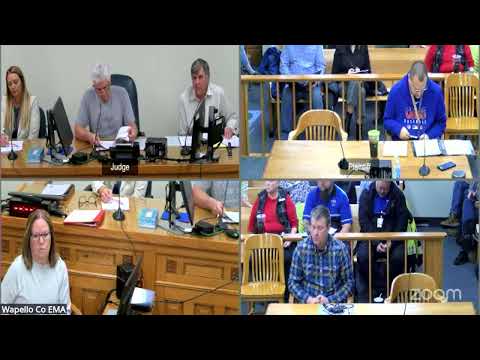
Wapello County board votes to publish 60-day notice on declaring EMS an essential service
Summary
The Wapello County Board of Supervisors voted to publish a 60-day notice and schedule a first reading on a resolution that would create an advisory council to study and recommend a countywide emergency medical services system and potential funding options.
Wapello County supervisors voted unanimously by voice to publish a 60-day public notice and schedule a first reading on April 8 for a resolution that would declare emergency medical services (EMS) an essential service and create an advisory council to study the county’s EMS needs.
County staff member Tim, who presented a historical overview and the rationale for the resolution, told the board that declaring EMS essential would allow the county to study system options, estimate costs and — if necessary — ask voters for funding. "The short answer is nothing. Most people are not aware that EMS as a service, as a public service, is absolutely not required by Iowa code," Tim said, describing the county’s limited statutory authority and the role the advisory council would play.
Tim reviewed national and local developments that shaped modern EMS, including the 1966 report Accidental Death and Disability (the “White Paper”), the federal EMS Systems Act of 1973 and later state EMS system standards. He described decades of local funding challenges — from funeral-home transport in the 1940s to repeated subsidy arrangements and tax-levy proposals in the 1970s and 1980s — and said recent pressures from the COVID-19 pandemic, staffing losses and rising costs prompted renewed requests for local assistance from local ambulance operators.
The presenter provided operational context: the county’s ambulance service responds primarily to medical and trauma calls, plus a portion of interfacility transfers. He summarized workforce and recruitment steps the county and partners have tried, including a multi-county summer EMT internship program, pay adjustments and partnerships with Indian Hills Community College to build a pipeline of EMS workers.
Under the resolution the board approved to publish for 60 days, the advisory council would be an advisory research arm to the board: it would study system structure, meet standards, estimate costs, propose a governance structure and recommend whether to seek voter funding or take other steps. "The advisory council will study the needs and develop a comprehensive system, recommend a structure and associated costs of what that will look like back to the board," Tim said.
At the meeting staff indicated the notice will inform the public that the resolution is scheduled for a first reading on April 8. The motion to publish the 60-day notice was made and seconded and approved by voice vote; no roll-call counts were provided in the transcript.
Votes at a glance (routine business passed by the board at this meeting): - Motion to approve the agenda — approved by voice vote. - Motion to approve minutes of the Jan. 14 meeting — approved by voice vote. - Resolution 5-2025 (utility values for 2024) — approved by voice vote. - Request from First Presbyterian Church for $5,000 donation for food boxes — approved by voice vote. - Liquor license for Elliott Oil (Highway 63 South BP) — approved by voice vote. - Resolution 1-2025 to abate property taxes for City of Ottumwa (per transcript reference to Iowa Code section) — approved by voice vote. - Guardian RFID agreement for the sheriff’s office — approved by voice vote. - Multiple personnel and payroll items (new hires, promotions) — approved by voice votes.
All of the above motions were recorded in the meeting transcript as approved by voice; the transcript did not report individual roll-call tallies. The board set the April 8 meeting as the date for the resolution’s first reading after the 60-day notice period.
Background and next steps: Declaring EMS essential does not itself create a new tax. According to the presentation, the declaration would enable the advisory council to develop options and estimated costs and then return to the board with recommendations that could include asking voters for funding. The advisory council’s scope and any ongoing duties will depend on board direction and the council’s findings. The board directed staff to publish the required notice and will consider the resolution at a first reading on April 8.